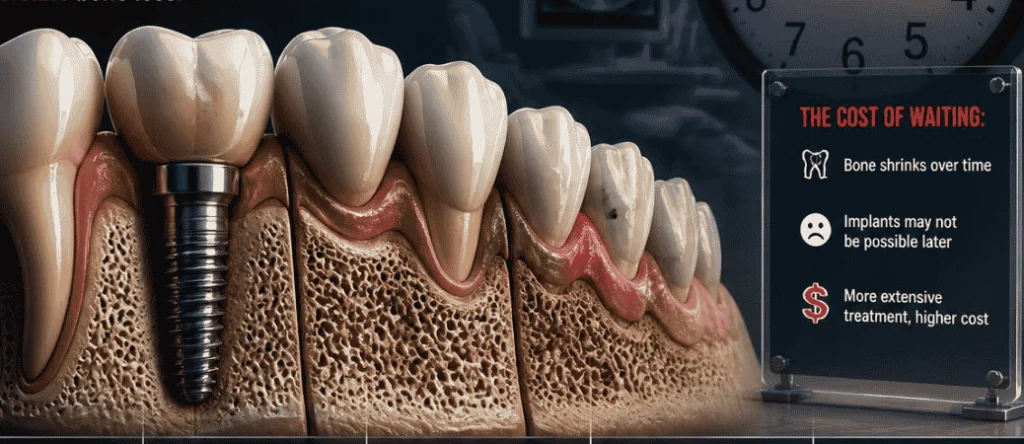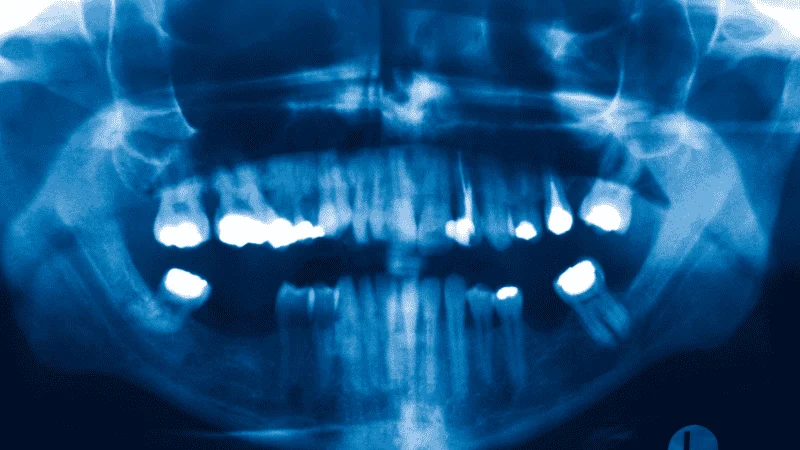

If you plan to get dental implants, you need strong jawbone support. When you lose a tooth, your jaw can shrink over time. Gum disease, injury, or long-term tooth loss can also weaken the bone.
You need bone grafting before dental implants when your jaw does not have enough height or width to hold the implant securely. Without enough bone, the implant may not stay stable or last as long as it should.
A simple exam and 3D imaging can show if your jaw can support an implant as it is. If not, a bone graft can rebuild the area and create a solid base.
Knowing when grafting is necessary helps you avoid problems and plan for long-term success.
Key Takeaways
- Dental implants need enough healthy jawbone to stay stable.
- Bone grafting is required when bone loss prevents secure implant placement.
- Careful exams and imaging guide treatment and support long-term results.
Understanding Bone Loss and Its Impact on Dental Implants
Bone loss changes the shape and strength of your jaw. That change can affect how well a dental implant heals and how long it lasts.
How Bone Loss Affects Implant Success
When you lose a tooth, your body starts a process called bone resorption. The jawbone in that area no longer gets pressure from chewing, so it slowly shrinks.
Dental implants need solid bone to stay stable. If you have bone loss, the implant may not bond well with your jaw. This bond, called osseointegration, is key to long-term implant success.
If the bone is too thin or soft, the implant can loosen. In serious cases, this leads to implant failure.
Research shows that early bone changes around implants can raise the risk of problems if not treated, as discussed in this review on factors affecting bone loss in dental implants.
You can still get implants with bone loss. Your dentist may suggest bone grafting to rebuild support before placing the implant.
Causes of Jawbone Loss
Several factors can lead to jawbone loss. The most common cause is missing teeth.
When you lose a tooth and do not replace it, bone resorption begins within months. The longer the gap stays empty, the more bone you may lose.
Other causes include:
- Gum disease (periodontitis)
- Infection around teeth or old implants
- Ill-fitting dentures
- Trauma or injury
- Smoking and uncontrolled diabetes
Age can also affect bone density. As you get older, your body may rebuild bone more slowly.
Understanding the cause of your bone loss helps your dentist plan the right treatment.
In many cases, modern options allow you to get implants even after bone shrinkage, as explained in this guide on dental implants with bone loss treatment options.
Importance of Bone Density for Implant Placement
Bone density refers to how strong and compact your jawbone is. Dentists often use 3D scans to measure bone height, width, and density before implant surgery.
You need enough bone volume to fully cover and support the implant. If the bone is too thin, the implant threads cannot grip securely.
Low bone density can also slow healing. The implant may take longer to fuse with the bone, and the risk of movement increases during recovery.
Your dentist may classify bone loss as mild, moderate, or severe.
- Mild loss may allow direct implant placement.
- Moderate loss often requires bone grafting.
- Severe loss may need advanced grafting or staged treatment.
By checking bone density early, you improve your chances of stable placement and long-term implant success.
Considering implants in Brentwood, TN, but worried about bone loss? Don’t worry and schedule your consultation today and take the first step toward a stable, lasting smile.
When Is Bone Grafting Necessary Before Dental Implants?
You need enough healthy jawbone to hold a dental implant in place. When bone volume or density falls short, a bone graft before implant placement helps build a stable implant foundation and lower the risk of failure.
Key Indicators for Bone Grafting
Your dentist looks for clear signs of bone loss before placing dental implants. One common sign is a narrow or thin ridge where a tooth has been missing for a long time. The bone shrinks after tooth loss, especially in the first year.
You may also need bone grafting if you have a history of gum disease, injury, or infection. These problems can destroy bone around the teeth and weaken the area.
Other key indicators include:
- Reduced bone height near the sinus in the upper back jaw
- Bone defects from past extractions
- Trouble getting strong initial implant stability during planning
In many cases, a dental bone graft before implants helps prevent problems and supports long-term success.
Evaluating Bone Volume and Quality
Your dentist measures both bone volume and bone quality before surgery. Volume refers to the height and width of the jawbone. Quality refers to how dense and strong the bone is.
A 3D scan such as CBCT shows the exact shape of your jaw. It helps your dentist see if the implant will fit without damaging nearby nerves or the sinus. Clinical exams also check gum health and ridge shape.
If the scan shows thin or soft bone, a dental bone graft can rebuild the area. Strong bone improves implant stability. Weak bone raises the risk of movement and delayed healing.
Consequences of Skipping Bone Grafting
If you skip bone grafting when you need it, the implant may not anchor well. Poor implant stability can lead to loosening or early failure.
You may also face:
- Improper implant angle
- Gum recession around the crown
- Ongoing bone loss around the implant
In the upper jaw, placing an implant without enough bone height can affect the sinus area. In other areas, thin bone can cause the metal parts to show through the gums.
A stable implant foundation protects both function and appearance. When bone volume is too low, bone grafts give your dental implants the support they need to handle daily chewing forces.
Types of Bone Grafts and Materials Used
Dentists use several types of bone grafts to rebuild your jaw before placing implants. Each option differs in where the material comes from, how it heals, and what it means for your recovery.
Autograft Procedures
An autograft uses bone taken from your own body. Your surgeon may collect donor bone from your chin, jaw, hip, or another area during the same surgery.
Because the bone comes from you, your body accepts it well. Autografts contain living cells that help form new bone. This supports strong healing and solid implant support.
You will need a second surgical site to remove the bone. That can mean more swelling, soreness, and longer healing time.
Dentists often choose autografts when you need a large amount of bone or when fast, reliable healing is important. Many studies consider it the gold standard among the types of bone grafts used in dental medicine.
Allograft and Xenograft Options
An allograft uses donor bone from another person. Tissue banks clean and process the bone to make it safe for use.
This option avoids a second surgery site. You heal in one area, which can reduce discomfort.
A xenograft comes from animal sources, often cow bone. The material acts as a framework that helps your own bone grow into it.
Both allografts and xenografts work mainly by supporting new bone growth. They do not contain your own living cells, but they provide structure and stability.
Dentists often compare these options when planning care. You can learn more about their pros and cons in this guide to bone graft materials for dental implants.
Synthetic Grafts and Alloplasts
A synthetic graft, also called an alloplast, uses lab-made materials. These often include calcium phosphate or similar minerals that match natural bone.
Alloplasts do not come from human or animal donor bone. This removes the risk of disease transmission and avoids ethical or religious concerns for some patients.
Synthetic grafts act as a scaffold. Your natural bone grows around and replaces the material over time. Many dentists use synthetic grafts for small to moderate bone defects.
Find out if bone grafting for dental implants is right for you. Visit our local office for a comprehensive exam and 3D imaging to assess your jawbone health.
Bone Grafting Techniques and Procedures
Dentists use different bone grafting techniques based on where and how much bone you have lost. Your oral surgeon will match the procedure to your jaw shape, bone height, and implant plan.
Ridge Augmentation
Ridge augmentation rebuilds the width or height of your jawbone after tooth loss. When a tooth is missing for a long time, the bone shrinks and leaves a narrow ridge. That ridge may not hold an implant securely.
During this type of dental bone grafting, your oral surgeon makes a small incision in your gum. They place graft material along the thin area of bone.
The graft may come from your own body, a donor, an animal source, or a synthetic material.
Your surgeon may cover the graft with a membrane to protect it while it heals. The area is then stitched closed.
Healing often takes several months. As the graft blends with your natural bone, it creates a wider and stronger base for your implant.
Sinus Lift Surgery
A sinus lift is a special type of advanced bone grafting done in your upper back jaw. In this area, the sinus sits just above the roots of your molars. When teeth are lost, the sinus can expand and reduce available bone.
In sinus lift surgery, your oral surgeon gently raises the sinus membrane. They then place bone graft material beneath it to increase bone height.
This added height allows your dentist to place implants safely without touching the sinus cavity.
You may need several months for the graft to heal before implant placement. Some cases allow implant placement at the same time, depending on how much bone you have.
Minor vs. Advanced Bone Grafting
Not all bone grafts are the same. Your treatment may involve a minor bone graft or a more advanced procedure.
Minor bone grafts often:
- Repair small defects
- Add limited bone around a single implant site
- Heal in a shorter time
Your dentist may place the graft at the same time as your implant if the bone loss is mild.
Advanced bone grafting may involve:
- Large areas of bone loss
- Severe ridge shrinkage
- Sinus lift procedures
- Block grafts secured with small screws
These cases often require careful planning and sometimes staged oral surgery. Healing usually takes longer, but it creates the stable support your implant needs.
Assessment and Diagnosis Before Bone Grafting
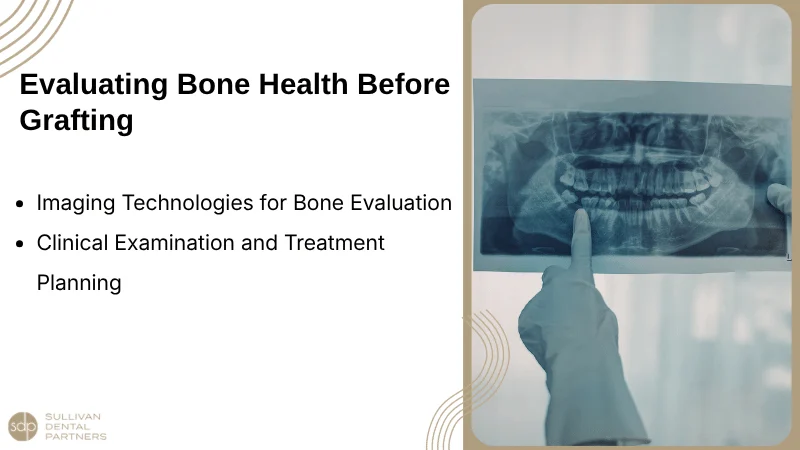
Your dentist must measure your bone height, width, and density before planning implant placement. Clear imaging and a careful exam help decide if you need a graft and what type will work best.
Imaging Technologies for Bone Evaluation
You need detailed images to see how much bone remains in your jaw. Standard dental X‑rays show basic bone levels, but they do not give a full three‑dimensional view.
Cone beam computed tomography (CBCT) provides 3D imaging of your jaw. It shows bone height, bone width, and bone density in exact measurements.
Your dentist can also see nearby structures like nerves and sinuses, which helps avoid problems during implant placement.
CBCT scans are often used during preoperative dental implant site evaluation. These scans help your dentist decide if your jaw can hold an implant or if you need bone grafting first.
With 3D imaging, your dentist can also plan the angle and depth of the implant. This step improves fit and long‑term stability.
Not sure if you need a bone graft? Contact us today to learn how we can rebuild your jawbone for successful implant placement.
Clinical Examination and Treatment Planning
Imaging is only part of the process. Your dentist will also examine your gums, bite, and overall oral health.
During the exam, your dentist checks for:
- Gum disease
- Loose teeth
- Thin or uneven ridges
- Signs of long‑term tooth loss
Teeth missing for many years often lead to steady bone shrinkage. In many cases, this bone loss makes grafting necessary before implants, as explained in this guide on why you may need a bone graft before dental implants.
Your medical history also matters. Conditions like uncontrolled diabetes or smoking can slow healing after a graft.
After reviewing your scans and exam findings, your dentist creates a clear treatment plan. This plan outlines whether you can move forward with implant placement right away or need bone grafting to build a stable base first.
Bone Graft Recovery and Long-Term Implant Success
Your recovery plays a direct role in how well your implant bonds with the bone. Healing time, daily care, and healthy habits all affect bone regeneration and long-term implant stability.
Healing Timeline and Aftercare
Bone graft recovery usually starts with mild swelling and soreness for a few days. You can control this with prescribed medicine, cold packs, and rest.
Most patients return to normal daily activity within a day or two. However, the graft site needs more time to fully heal.
Bone regeneration often takes 3 to 6 months. During this period, your body replaces the graft material with natural bone. This process prepares the area for strong osseointegration once your implant is placed.
Follow these key aftercare steps:
- Eat soft foods for several days
- Avoid smoking and alcohol
- Keep the area clean but do not disturb the site
- Take all medications as directed
- Attend every follow-up visit
Your dentist will monitor healing with exams or imaging to confirm the bone is strong enough for implant placement.
Potential Risks and Complications
Most bone graft procedures heal without problems. Still, you should understand possible risks.
Common short-term issues include:
- Swelling
- Bruising
- Minor bleeding
- Temporary discomfort
These symptoms usually improve within a week.
Less common complications may include infection, delayed healing, or graft failure. Smoking, uncontrolled diabetes, and poor oral hygiene increase these risks.
Call your dentist if you notice severe pain, pus, fever, or swelling that gets worse after several days. Early treatment protects bone regeneration and keeps your implant plan on track.
Supporting Bone Regeneration for Implant Longevity

Strong bone supports long-term implant stability. Your daily habits directly affect how well osseointegration occurs after implant placement.
To support healing:
- Maintain good oral hygiene
- Brush gently around the area
- Use any recommended mouth rinse
- Keep regular dental visits
Good overall health also matters. Balanced nutrition with enough protein and vitamins helps bone regeneration. Managing medical conditions like diabetes improves healing outcomes.
Research also shows that rebuilding lost bone creates a stable base for implants and supports long-term success, as discussed in this review on guided bone regeneration and implant survival rates.
If you have concerns about healing or want to know if your bone is ready for implants, schedule a consultation. Early evaluation helps prevent delays and protects your investment in a lasting smile.
Been told you have too much bone loss for implants? Don’t give up. Call now to discuss your candidacy and explore your options for a permanent tooth replacement solution.
Frequently Asked Questions
Bone grafting adds strength and volume to your jaw so it can support a dental implant. Timing, cost, healing stages, and proper aftercare all affect your final results.
How much does a dental bone graft typically cost?
You can expect the cost to vary based on the size of the graft and the material used. Small grafts cost less than large grafts that rebuild a wide area of bone.
Your dentist will also factor in imaging, sedation, and follow-up visits. Insurance may cover part of the cost if the graft supports tooth replacement for health reasons, but many plans limit coverage.
What is the ideal time frame between a bone graft and placing a dental implant?
Your jaw needs time to form strong new bone before it can hold an implant. Initial recovery takes about a week, but full healing takes longer.
After healing, you should not wait too long. Once the graft is ready, many providers suggest placing the implant within six to twelve months so the new bone does not shrink.
Is a bone graft always necessary for a dental implant procedure?
You do not always need a bone graft. If your jaw has enough height and width, your dentist can often place the implant without extra steps.
Many patients only need grafting when bone loss has occurred from gum disease, injury, or long-term tooth loss.
Your dentist will use X-rays or 3D scans to measure your bone and decide.
What are the stages of healing following a dental bone graft?
You will likely notice swelling, mild pain, and bruising during the first few days. These symptoms usually improve within one to two weeks.
During the first week, your gum tissue closes over the graft. Under the surface, your body begins to replace the graft material with natural bone.
Over the next three to six months, your jaw continues to build and harden new bone. This stage is critical because it creates a stable base for your implant.
How can you tell if a dental bone graft has been unsuccessful?
You may notice ongoing pain, swelling that gets worse instead of better, or signs of infection such as pus or fever. These symptoms require a call to your dentist.
Some people lose small particles that look like grains of sand in the first few days. This can be normal, but losing a large amount of material should be checked.
Your dentist will confirm success with an exam and imaging. If the bone does not form as expected, you may need additional treatment before implant placement.
What are the best practices to ensure a quick recovery after a bone graft?
You should follow your dentist’s instructions closely. Rest during the first 48 hours and avoid heavy lifting or intense exercise.
Use ice packs on the outside of your jaw to reduce swelling. Keep your head elevated when you lie down.
Eat soft foods and avoid smoking, vaping, alcohol, and forceful rinsing. These steps protect the graft and help your body heal properly.