The days after wisdom teeth removal can feel confusing. Your face is swollen, your mouth is sore, and it can be hard to tell if what you’re feeling is normal healing or something that needs attention.
Most people move through wisdom teeth removal recovery in a fairly predictable order, even though the pace differs from person to person.
Swelling and soreness build for the first couple of days, then ease steadily as the week goes on.
Knowing the general pattern makes it much easier to relax into the process instead of worrying over every twinge.
This guide walks through what a typical recovery timeline looks like day by day after oral surgery, so you can understand expected discomfort, normal healing, and symptoms that may need additional attention.
Key Takeaways
- Swelling and soreness usually peak around day two or three, then improve steadily through day seven.
- Protecting the blood clot in the socket during the first 24 to 48 hours lowers your risk of painful setbacks like dry socket.
- Pain that gets worse after it starts getting better, or new symptoms like fever or spreading swelling, are signs to call your oral surgeon.
The First 24 Hours: Protecting the Healing Clot
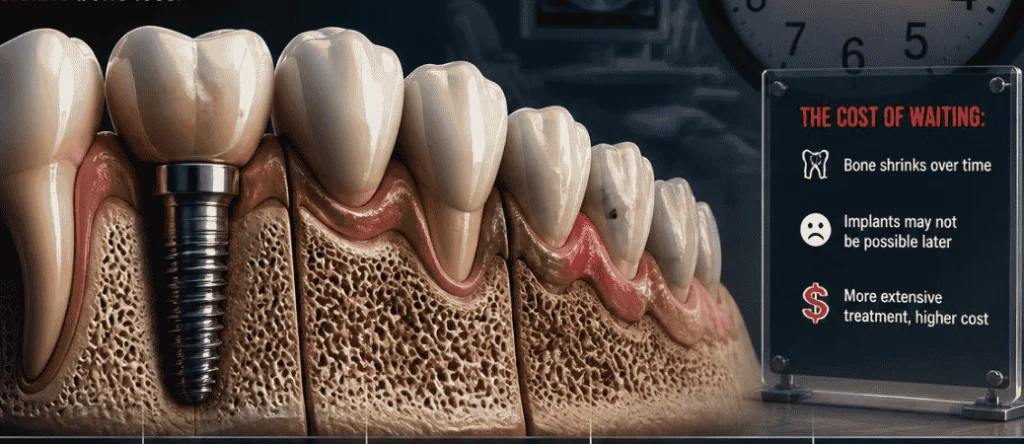
The first day after your tooth extraction is about protecting the blood clot that forms in each socket.
That clot works like a natural bandage over the bone and nerve endings underneath, and disturbing it in the first 48 hours is one of the main reasons for painful complications later.
During this window, your job is mostly to rest, keep pressure off the surgical sites, and let your body start its work.
What Bleeding, Numbness, and Oozing Are Normal After Surgery
Light oozing and pink-tinged saliva are normal for the first 24 to 48 hours after your procedure. Saliva mixes with small amounts of blood and can look more dramatic than it actually is.
Numbness from the local anesthetic can also last several hours after you leave the office, so be careful not to bite your cheek, lip, or tongue while you can’t feel it fully.
Call your surgeon’s office if bleeding is heavy and soaks through gauze repeatedly, or if it continues steadily beyond four to six hours despite firm pressure.
How to Care for Gauze and the Extraction Site
Bite down gently but firmly on the gauze pad placed over each extraction site for 30 to 45 minutes at a time.
Replace it if it’s soaked through, but avoid checking it every few minutes, since that can disturb the forming clot.
A few things to avoid near your extraction sites in the first day:
- Spitting or rinsing forcefully
- Using a straw
- Touching the area with your tongue or fingers
- Smoking or vaping
Each of these creates suction or pressure that can dislodge the clot before it has time to stabilize.
Managing Anesthesia and Sedation Effects at Home
Grogginess, mild nausea, or a shaky feeling are common after anesthesia or sedation and usually fade within several hours.
You’ll need someone to drive you home and stay with you for the rest of the day, since reflexes and judgment can stay impaired even after you feel “back to normal.”
Avoid driving, operating machinery, or making important decisions until the effects have fully worn off, generally by the next morning.
Why Rest, Hydration, and Soft Foods Matter Right Away
Resting with your head elevated, drinking plenty of water, and sticking to soft, cool foods all support clot formation and reduce swelling.
Lying flat can increase blood flow to your face and worsen puffiness, so extra pillows help.
Cool, soft foods like yogurt, smoothies (no straw), and mashed potatoes give you nutrition without disturbing the extraction sites, and following your surgeon’s post-operative instructions closely during this window sets the tone for the rest of your recovery.
Days 2–3: When Swelling and Jaw Soreness Peak
Swelling, jaw stiffness, and general soreness typically reach their highest point on day two or three, not on the day of surgery itself.
This surprises a lot of patients, who expect the worst discomfort right away.
Instead, puffiness can build for 48 to 72 hours before it starts to level off, and this pattern is considered normal healing rather than a warning sign.
Is More Swelling on Day Two or Three Normal?
Yes, increased swelling on day two or three is expected and usually peaks in that window before gradually easing. You may also notice bruising along the jaw, cheek, or even down toward the neck.
This bruising is a cosmetic side effect of the surgery and fades on its own over the following week, similar to a bruise anywhere else on the body.
Using Ice Packs and Cold Compresses Safely
Ice packs work best when used in the first 48 hours, applied for 20 minutes on and 20 minutes off against the outside of your cheek.
A cold compress or wrapped ice pack helps limit how much swelling develops, but it won’t reverse swelling that has already peaked.
After the first two days, some people switch to gentle warmth to help with jaw stiffness, though this should follow your surgeon’s specific advice.
Why Jaw Stiffness and Limited Mouth Opening Happen
Jaw stiffness after wisdom tooth removal comes from stress placed on the surrounding muscles and jaw joint during surgery, not from a problem with healing.
It’s common to have a smaller mouth opening for several days, making wide yawns or big bites uncomfortable.
This soreness typically improves gradually over the first few days and continues loosening through the rest of the week.
Pain Relief Options and When to Take Them as Directed
Ibuprofen and acetaminophen, taken as directed, are often enough to manage pain during this peak period.
Many oral surgeons recommend alternating the two for steadier coverage, such as ibuprofen every six hours and acetaminophen staggered in between.
Take medication on a schedule rather than waiting for pain to build, and only use prescription pain medication exactly as your surgeon directs.
Days 4–7: Signs You Are Turning the Corner
By day four, most people notice a clear shift: swelling starts going down, jaw movement loosens, and eating becomes less of a chore.
This is the point in wisdom tooth extraction recovery where daily improvement becomes noticeable instead of gradual.
How Pain, Swelling, and Eating Should Change by the End of the Week
Pain and swelling should be steadily declining by days four and five, with most visible puffiness resolved by the end of the week.
You’ll likely feel comfortable adding slightly firmer soft foods, like scrambled eggs or oatmeal, back into your diet.
If pain or swelling increases instead of easing during this stretch, that’s a signal worth calling your surgeon about.
When to Start Gentle Saltwater Rinses and Oral Hygiene
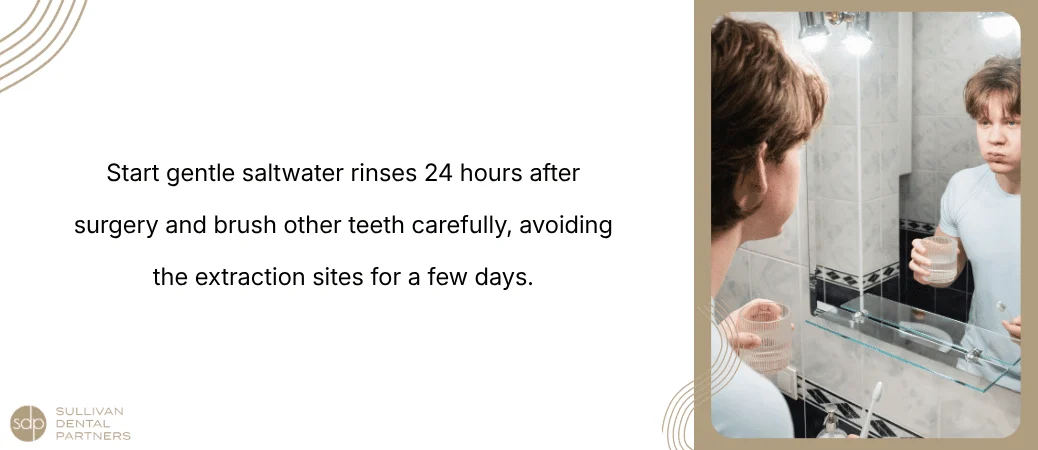
Gentle saltwater rinses usually begin 24 hours after surgery and continue several times a day through the first week to support gum healing.
Mix about half a teaspoon of salt into eight ounces of warm water, let it sit gently in your mouth, then tilt your head to let it drain out instead of spitting.
You can resume careful brushing of your other teeth right away, just avoid the extraction sites directly for the first few days.
Returning to School, Work, Exercise, and Regular Foods
Many patients return to school or desk work within three to five days, once pain is manageable without strong medication.
Exercise needs more patience, since raising your heart rate too soon can restart bleeding or increase swelling; most surgeons suggest waiting one to two weeks before resuming anything strenuous.
Regular, firmer foods usually aren’t comfortable again until closer to the 7 to 10 day mark, once soft tissue healing is further along.
What Dissolvable Stitches and Healing Gums May Look Like
Dissolvable stitches often loosen or fall out on their own within the first week or two, which is expected and not a cause for concern.
The gum tissue around each socket may look pale pink or slightly whitish as new tissue forms over the site, a normal part of early bone healing underneath.
If a stitch falls out and you’re unsure whether that’s expected for your case, a quick call to your surgeon’s office can offer reassurance.
When Symptoms Are Not Normal: Dry Socket and Other Red Flags
The clearest warning sign in wisdom teeth recovery is pain that gets worse after it had started getting better.
Normal soreness follows a steady downward curve; a red flag interrupts that curve with new or intensifying pain, often days after surgery when you expected to be feeling more comfortable.
What Does Dry Socket Feel Like, and When Does It Usually Start?
Dry socket usually causes intense, throbbing pain that begins two to four days after extraction and can radiate toward your ear, eye, or temple on the same side.
You may notice an empty-looking socket, a bad taste, or an unpleasant smell coming from the area.
How to Tell Worsening Pain From Normal Post-Operative Soreness
The direction of your pain over time tells the story more clearly than its intensity on any single day.
Normal soreness eases a little more each day; dry socket pain often spikes around days three to five, after you’d started to feel better.
New or sharply increasing pain during the first week is worth a call, regardless of exactly what the socket looks like.
Signs of Infection, Persistent Bleeding, and Severe Swelling
Contact your oral surgeon if you notice fever, pus, a foul taste that doesn’t improve with rinsing, or swelling that keeps growing past day three instead of shrinking.
Bleeding that won’t slow down after four to six hours of steady gauze pressure also needs prompt attention. These are considered clear signs of infection or complication rather than normal parts of healing.
When Difficulty Swallowing Requires Urgent Care
Difficulty swallowing, trouble breathing, or swelling that spreads toward your throat or eye needs urgent medical care right away.
This combination can point to a spreading infection and should never wait for a routine callback.
If you experience these symptoms, go to an emergency room or urgent care center instead of waiting for regular office hours.
Following Your Surgeon’s Instructions Supports a Smoother Week

Your post-operative instructions are based on the details of your procedure, so following them closely can support a smoother recovery.
Every patient’s case is different depending on factors such as how many teeth were removed, whether they were impacted, and the type of anesthesia used.
At Sullivan Dental Partners, Dr. Keely Stofer can provide guidance based on your procedure and healing progress, including what to expect after an extraction and when a symptom may need additional evaluation.
If a symptom or instruction feels unclear, calling your surgeon’s office is always better than guessing.
Sticking to the plan, from medication timing to when you can return to normal foods, is one of the most reliable ways to avoid setbacks after wisdom teeth removal.
If your procedure is still ahead of you, learning how to prepare for oral surgery and reviewing ‘tips for a smooth oral surgery recovery’ can help you understand what to arrange before treatment and what to expect afterward.
Conclusion
Most wisdom teeth removal recovery follows a gradual pattern, with swelling and soreness improving as the first week progresses.
Pain that suddenly worsens, persistent bleeding, fever, or increasing swelling deserves professional attention.
If you’re preparing for wisdom teeth removal or are concerned about how you’re healing, Sullivan Dental Partners can evaluate your needs and provide personalized guidance.
Schedule a visit with our dental team in Brentwood, TN to discuss your procedure, recovery, or symptoms.
Frequently Asked Questions
What should I expect one week after wisdom teeth removal?
By one week, most swelling should be resolved and pain should be mild or gone.
Eating soft foods should feel comfortable, and any stitches may have dissolved or fallen out. Some jaw stiffness or minor tenderness at the extraction sites can still linger a little longer.
What is usually the worst day of wisdom teeth recovery?
Day two or three is usually the hardest, since swelling and soreness peak during that window before starting to improve.
This can feel discouraging if you expected the surgery day itself to be the worst point. After day three, most people notice steady, day-by-day improvement.
How do I know if my wisdom teeth recovery is going well?
Recovery is on track when pain, swelling, and stiffness improve a little each day rather than getting worse.
Being able to eat slightly firmer soft foods and open your mouth more comfortably by days four to five are good signs. Any reversal of that pattern, especially new or worsening pain, is worth mentioning to your surgeon.
How common is dry socket after seven days?
Dry socket almost always develops within the first two to four days after surgery, so new pain appearing after day seven is unlikely to be dry socket.
Dry socket affects an estimated 2 to 5% of routine extractions, with higher rates for impacted teeth. Persistent pain past the first week deserves a call to your surgeon regardless of the cause.
Is it normal to still have jaw stiffness after a week?
Mild jaw stiffness can linger past the one-week mark, especially after a longer or more complex extraction. It should feel like it’s gradually loosening rather than staying the same or getting worse.
If your mouth opening still feels very limited or painful after two weeks, check in with your oral surgeon.