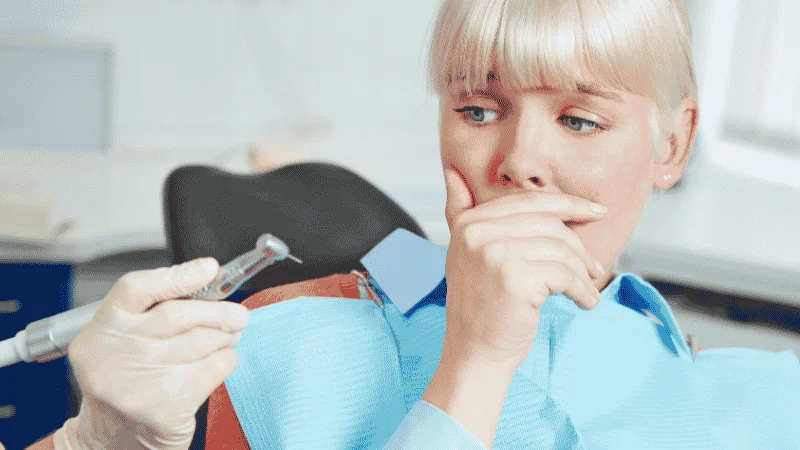
A single bad experience in a dentist’s chair during childhood can shape your relationship with dental care for decades.
About 50% of adults who struggle with dental fear and anxiety developed their fear in childhood, often from one negative visit.
If you’ve been avoiding dental care because memories of pain, helplessness, or fear still feel fresh, you’re far from alone.
Sedation dentistry for dental anxiety is a way to receive necessary treatment while staying calm and comfortable, breaking the cycle of avoidance that stems from traumatic dental experiences.
The approach uses medication to help you relax during appointments, with options ranging from mild sedation that keeps you awake to deeper levels that let you rest through the entire procedure.
Getting back in the chair doesn’t mean reliving your childhood experience.
Modern sedation options for dental phobia are tailored to your specific needs and comfort level, giving you control over your care while addressing the dental anxiety that has kept you away.
Key Takeaways
- Childhood dental trauma is a common cause of adult dental phobia that leads to years of avoiding necessary oral care
- Sedation dentistry provides multiple medication options that help you stay relaxed and comfortable during dental procedures
- Working with a trained sedation provider allows you to personalize your treatment and return to routine dental visits with confidence
Table of Content
- Understanding Dental Phobia Rooted in Childhood
- Common Triggers: Needles, Gag Reflex, and Beyond
- How Sedation Dentistry Addresses Adult Dental Phobia
- Types of Sedation: What to Expect and Who Benefits
- Personalizing Dental Care for Phobic Adults
- Practical Steps: Returning to the Dentist With Confidence
- Frequently Asked Questions
Understanding Dental Phobia Rooted in Childhood
Bad experiences at the dentist during childhood can create lasting fear that follows you into adulthood.
These early traumatic moments often lead to severe dental anxiety that makes it hard to seek necessary care, which can harm your oral health over time.
How Traumatic Dental Experiences Shape Adult Fear
A single painful or scary visit to the dentist as a child can affect how you feel about dental care for decades. Maybe you felt trapped in the chair during a procedure.
Maybe a dentist didn’t listen when you said something hurt.
These childhood experiences are linked to dental fear later in life. Your brain remembers the fear and creates a protective response.
When you think about going to the dentist now, those old memories come back.
The connection between childhood trauma and adult dental anxiety is strong. Your body learned to see the dental office as a dangerous place. Even the smell of a dental office or the sound of drilling can trigger panic.
Recognizing Severe Dental Anxiety and Extreme Phobia
Dental fear exists on a scale. Some people feel a little nervous before appointments. Others experience extreme dental phobia that stops them from going at all.
You might have severe dental anxiety if you:
- Feel panic when thinking about dental visits
- Have trouble sleeping the night before an appointment
- Feel sick to your stomach when entering a dental office
- Cancel appointments at the last minute repeatedly
Nearly 40 percent of people admit to having anxiety or fear of the dentist. Extreme phobia goes beyond nervousness. It can make you shake, cry, or feel like you can’t breathe.
Consequences of Avoiding Dental Care as an Adult
When you skip dental visits because of fear, small problems become big ones. A tiny cavity turns into a bigger issue, leading to a root canal. Gum disease gets worse without treatment.
Avoiding dental care creates a harmful cycle. Your teeth get worse, which makes you more afraid to see a dentist. You might feel embarrassed about the condition of your teeth, adding shame to your fear.
Your overall health suffers too. Poor dental health connects to heart disease, diabetes, and other serious conditions.
You might also deal with constant pain, trouble eating, or difficulty speaking clearly. These problems affect your job, relationships, and quality of life.
Common Triggers: Needles, Gag Reflex, and Beyond
Adult dental phobia often centers around specific physical triggers that bring back uncomfortable childhood memories.
Needles, gagging sensations, and feeling trapped in the dental chair can each intensify fear of the dentist on their own.
Needle Phobia and Procedural Fears
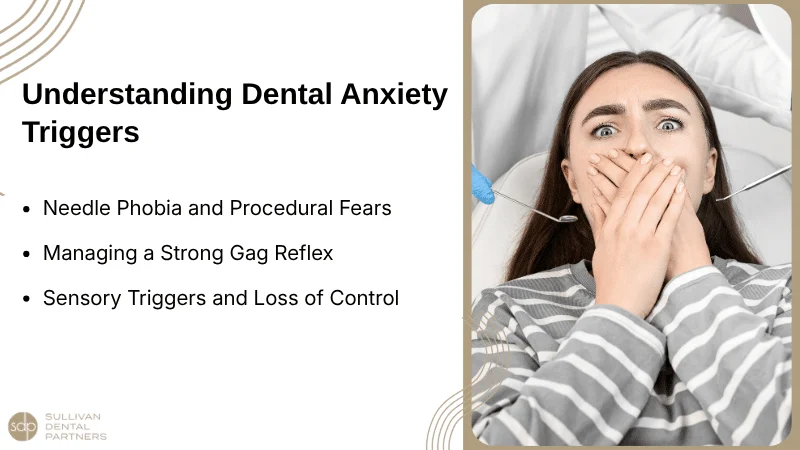
If you panic at the sight of a syringe, you’re not alone. Needle phobia affects many adults who had painful injections as children.
The fear often goes beyond the needle itself. You might dread the anticipation of pain, the pinch of the injection, or the numb feeling that follows.
Some people feel dizzy or faint when they see dental instruments.
Modern dentistry offers solutions. Dentists can apply numbing gel before injections to reduce discomfort. Sedation options like nitrous oxide or oral sedation help you stay calm during procedures.
Some patients choose IV sedation for deeper relaxation during treatments that require multiple injections.
Key benefits of sedation for needle fears:
- Reduces awareness of injections
- Calms anxiety before the procedure starts
- Can provide partial memory loss of the treatment
- Allows dentists to work more efficiently
Managing a Strong Gag Reflex
A strong gag reflex makes dental work difficult for both you and your dentist. Childhood experiences with gagging during X-rays or impressions can create lasting dental anxiety.
Your gag reflex is a protective response. It gets worse when you’re nervous or feel like you can’t control what’s happening in your mouth.
Sedation dentistry helps manage gag reflex by relaxing your throat muscles and reducing sensitivity. Nitrous oxide works well for mild cases during deep cleaning.
Oral or IV sedation provides deeper relaxation for longer procedures like crowns or fillings. The medication calms your nervous system so your body doesn’t react as strongly to objects in your mouth.
Sensory Triggers and Loss of Control
Dental anxiety stems from multiple sensory experiences including sounds, smells, and physical sensations. The dental drill’s whine, the smell of latex gloves, or bright overhead lights can instantly trigger childhood fears.
Feeling powerless makes these triggers worse. You’re lying back in a vulnerable position while someone works inside your mouth. You can’t speak or move freely.
Common sensory triggers include:
- High-pitched drilling sounds
- Chemical or antiseptic smells
- Feeling vibrations in your jaw
- Pressure on your face or mouth
- Not being able to see what’s happening
Sedation addresses these concerns by reducing your awareness and helping you feel detached from uncomfortable sensations. You remain responsive but calm throughout the procedure.


How Sedation Dentistry Addresses Adult Dental Phobia
Different sedation levels help you manage anxiety based on your specific fears and the dental work you need.
A sedation dentist can match you with the right option, whether you need light relaxation or deeper calming during your appointment.
Sedation Options: From Minimal to Deep Sedation
Sedation dentistry offers multiple medication options to help you feel comfortable during dental work. The three main levels of sedation give you and your dentist flexibility in managing dental anxiety.
Minimal sedation keeps you awake but relaxed. You breathe nitrous oxide (laughing gas) through a mask during your procedure. The effects wear off quickly, so you can often drive yourself home.
Moderate sedation makes you drowsy and less aware of what’s happening. You might slur your words or not remember much of the appointment. This level typically uses oral medication or IV drugs.
Deep sedation puts you on the edge of consciousness. You can still be awakened if needed, but you’ll have little to no memory of the procedure.
Your sedation dentist will check your medical history and anxiety level before recommending sedation levels. They’ll also consider how long your dental work will take and how invasive it is.
Choosing the Right Sedation Level for Your Needs
Your sedation appointment starts with an assessment of your fears and health status. Assessment tools help determine which sedation option fits your situation.
Dentists look at several factors:
- Your anxiety level – mild nervousness versus severe panic
- Type of dental work – simple cleaning versus tooth extractions
- Length of appointment – 30 minutes versus several hours
- Medical conditions – heart problems, breathing issues, or medications you take
- Past experiences – whether you’ve had sedation before
People with trauma from childhood dental visits often need moderate to deep sedation for their first few appointments. This helps break the cycle of fear.
As you build trust with your dentist, you might need less sedation over time.
You’ll need someone to drive you home after moderate or deep sedation. Plan to rest for the remainder of that day.
Benefits of Sedation for Traumatic Memories
Sedation dentistry helps your brain form new, calmer associations with dental care. When you’re relaxed during treatment, you’re less likely to create new traumatic memories that reinforce your phobia.
The medication reduces your fight-or-flight response. Your heart rate stays steady, and your muscles don’t tense up the way they would if you were anxious.
This physical calm helps you tolerate procedures that would normally trigger panic.
Many people with dental phobia have little memory of their sedation appointment. This memory gap works in your favor.
You know you got through the appointment successfully, but you don’t have vivid recall of needles, drills, or other triggers.
Research shows that psychotherapy combined with sedation options can help reduce long-term dental trait anxiety. Each positive experience under sedation builds your confidence for future visits.
Types of Sedation: What to Expect and Who Benefits
Dental offices offer several sedation methods that range from mild relaxation to complete unconsciousness.
Each option works differently and fits specific needs based on your anxiety level and the length of your dental procedure.
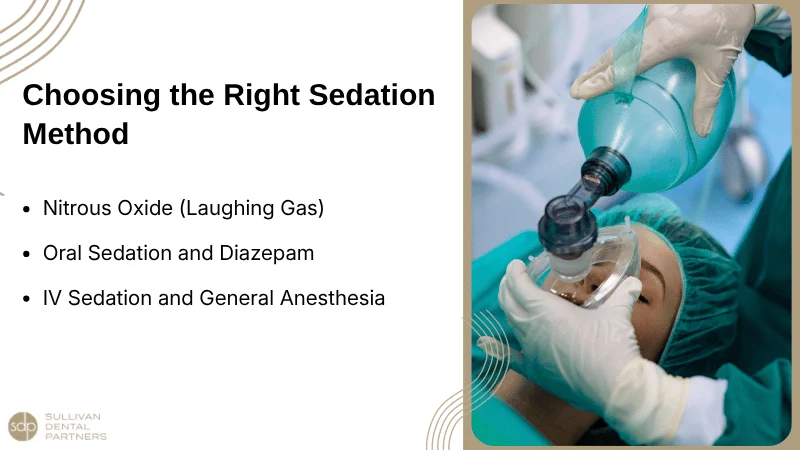
Nitrous Oxide (Laughing Gas)
Nitrous oxide is the mildest form of sedation available at most dental offices. You breathe it in through a small mask that fits over your nose.
The effects start within three to five minutes. You’ll feel calm and relaxed but stay fully awake and aware of what’s happening around you.
Your dentist can adjust the amount of laughing gas you receive during your appointment. When the procedure ends, you’ll breathe pure oxygen through the same mask to clear out the nitrous oxide quickly.
Key benefits of nitrous oxide:
- Wears off fast so you can drive yourself home
- Your dentist controls the level throughout treatment
- Works well for mild to moderate anxiety
- Safe for most patients
This option works best if you have general nervousness about dental work but don’t experience severe panic. People with dental phobia from childhood trauma may need stronger sedation depending on their anxiety level.
Oral Sedation and Diazepam
Oral conscious sedation involves taking a prescription pill about an hour before your appointment. Common medications include triazolam, which belongs to the same family as diazepam.
You’ll feel very drowsy and may even fall asleep in the dental chair. But you can still respond when your dentist needs you to open wider or turn your head.
Many adults who avoid the dentist because of bad childhood experiences benefit from this deeper level of sedation. You won’t feel pain during the procedure, and you might not remember much about it afterward.
Important things to know:
- You must have someone drive you to and from your appointment
- The effects can last several hours after treatment
- You’ll need to avoid eating or drinking for a specific time before sedation
- Your dentist will give you detailed instructions
Children with dental anxiety can receive liquid versions of these medications, like midazolam syrup.
IV Sedation and General Anesthesia
IV sedation provides the deepest level of conscious sedation available in a regular dental office.
A dental anesthesiologist or specially trained dentist places a small tube in your arm that delivers medication directly into your bloodstream.
This option works best for severe dental phobia or long procedures like multiple extractions. You’ll likely fall asleep and won’t remember anything about your treatment.
Your provider monitors your heart rate and blood pressure throughout the entire procedure. They can adjust your medication level as needed to keep you comfortable and safe.
General anesthesia puts you completely unconscious. This typically happens in a hospital or surgical center rather than a dental office.
You’ll need this level of sedation only for complex oral surgeries or if you have special medical needs.
Most adults with trauma from childhood dental experiences find IV sedation gives them the complete break from anxiety they need to receive care.
Personalizing Dental Care for Phobic Adults
Adults with dental phobia need more than standard treatment, they require customized care that addresses their specific fears and past trauma.
Finding the right provider and environment can make the difference between avoiding dental care and finally getting the help you need.
Working With a Sedation Dentist
A sedation dentist specializes in helping anxious patients receive care comfortably. They offer different levels of sedation based on your needs.
Your dentist will start with a thorough consultation. They’ll ask about your past experiences and current fears. This helps them choose the right sedation method for you.
Common sedation options include:
- Nitrous oxide – mild relaxation while you stay awake
- Oral sedation – moderate relaxation through a pill
- IV sedation – deeper relaxation with quick adjustment
The dentist will monitor you throughout your appointment. They track your breathing, heart rate, and oxygen levels. You’ll have an escort requirement for moderate to deep sedation.
Many sedation dentistry practices for dental phobia also offer comprehensive treatments like aesthetic smile reconstruction and smile makeovers.
This means you can address years of neglected dental issues in fewer appointments.
Specialized Clinics and Trauma-Informed Approaches
Some dental practices focus specifically on treating phobic patients. These clinics use trauma-informed approaches that recognize how childhood experiences affect your current anxiety.
Staff at these clinics receive special training. They understand that your fear is real and valid. They won’t rush you or minimize your concerns.
Trauma-informed care includes:
- Giving you complete control over the pace
- Explaining every step before it happens
- Using hand signals so you can pause treatment
- Offering breaks whenever you need them
These practices often combine behavioral techniques with sedation. You might work with a therapist who uses cognitive behavioral therapy alongside your dental treatment.
This dual approach helps you manage anxiety both during appointments and long-term.
Some specialized clinics also handle complex cases like TMJ treatment while keeping your comfort as the top priority.
Innovative Comfort Features: Cinema-Style Operatories
Modern dental offices are redesigning their treatment rooms to reduce anxiety. Cinema-style operatories let you watch movies or shows during your procedure.
You wear headphones and look at a screen mounted on the ceiling. This gives your mind something to focus on besides the dental work. The visual and audio distraction helps time pass more quickly.
Other comfort features you might find include heated massage chairs, warm blankets, and aromatherapy options. Some offices have natural lighting and calming color schemes instead of harsh fluorescent lights.
These features work well alongside sedation. Even with medication helping you relax, environmental comfort adds another layer of ease.
You’re not just medicated—you’re in a space designed to feel safe and peaceful.
Practical Steps: Returning to the Dentist With Confidence
Getting ready for your first appointment involves planning ahead, knowing what sedation will feel like, and building habits that keep fear from returning.
Preparing for Your Sedation Appointment
Start by finding a dentist who has experience working with anxious patients. Look for practices that specifically mention treating patients with dental phobia or those who have returned after years away.
Call the office before you book. Tell them about your childhood experience and explain that you need extra support. Ask how they handle nervous patients and what sedation options they offer.
Choose the right sedation level for your needs. Nitrous oxide (laughing gas) works well for mild to moderate anxiety and wears off quickly.
Oral sedation uses a pill taken before your appointment and creates deeper relaxation. IV sedation allows the dentist to adjust your comfort level throughout the procedure.
Before your sedation appointment:
- Arrange for someone to drive you home
- Avoid eating or drinking if instructed (especially for IV sedation)
- Wear comfortable, loose-fitting clothes
- Write down any questions you have
- Bring headphones if listening to music helps you relax
Tell your dentist about any medications you take and any health conditions you have. This information helps them choose the safest sedation option for you.
What Happens During and After Treatment
Your dentist will start with a consultation visit if you have been avoiding dental care for years. This first visit usually involves just talking and maybe taking X-rays. No treatment happens unless you feel ready.
When you arrive for treatment with sedation, the team will review the plan with you. For nitrous oxide, you breathe through a small mask.
You stay awake but feel calm and less aware of sounds and sensations. With oral sedation, you will feel drowsy and may not remember much of the appointment.
IV sedation puts you in a deeper state where you can still respond to the dentist but likely won’t remember the procedure.
Most people feel groggy after sedation wears off. You will need to rest at home for several hours. Avoid driving, making important decisions, or operating machinery until the next day.
Long-Term Strategies for Managing Dental Anxiety
Regular visits prevent problems from building up and making future appointments scarier. Start with cleanings every six months once you complete any needed treatment.
Daily habits that reduce anxiety:
- Brush twice daily and floss once to keep your teeth healthy
- Schedule morning appointments when you feel less tired
- Practice deep breathing before and during visits
- Use a signal (like raising your hand) to pause treatment if you need a break
Consider working with a therapist who specializes in managing dental anxiety. Cognitive behavioral therapy (CBT) helps you change thought patterns that trigger fear.
Many people combine therapy with sedation at first, then gradually reduce sedation as their confidence grows.
Keep a journal of positive dental experiences. Write down what went well after each visit. This helps your brain build new associations with dental care instead of only remembering the bad childhood experience.
Ask your dentist about sedation dentistry options for future appointments. You don’t have to stop using sedation just because you have been a few times.
Many adults continue using mild sedation for routine care, and that is perfectly fine.
Frequently Asked Questions
Adults with dental phobia from childhood trauma often have similar concerns about returning to the dentist.
These questions cover anxiety management techniques, sedation options, safety considerations, and finding the right dental provider.
How can I manage severe dental anxiety before and during an appointment?
You can use several strategies to reduce anxiety both before and during your dental visit.
Before your appointment, practice deep breathing exercises like box breathing (inhale for 4 counts, hold for 4, exhale for 4, hold for 4). This helps calm your nervous system.
Schedule your appointment first thing in the morning to minimize anticipation time. Tell your dentist about your childhood experience and specific triggers so they can adjust their approach.
During the appointment, establish a stop signal with your dentist. A raised hand that pauses treatment gives you back the sense of control that childhood trauma often took away.
Bring noise-canceling headphones with calming music or audiobooks. The sound of dental tools is a common trigger for people with past bad experiences.
Ask for a weighted blanket if your dental office offers them. The deep pressure can reduce anxiety naturally during treatment.
What types of sedation are available for adults with dental phobia, and how do they feel?
Three main sedation levels help adults with dental fear. Nitrous oxide (laughing gas) is the mildest option and creates a sense of relaxation and warmth within 3-5 minutes.
You stay fully aware and can respond to your dentist, but you feel calmer.
Oral conscious sedation uses a prescription pill taken before your appointment. You feel drowsy and deeply relaxed, almost like you’re between awake and asleep.
Most patients don’t remember much about the procedure afterward.
IV sedation provides the deepest level of conscious sedation. You remain technically awake, but the medication creates amnesia so you typically remember nothing from the procedure.
It feels like you fell asleep for 10 minutes even if the treatment took 2 hours.
For moderate to severe dental anxiety, oral sedation often works well. If you’re having multiple procedures or experienced severe childhood trauma, IV sedation might be better.
Is sedation dentistry safe if I have medical conditions or take daily medications?
Sedation dentistry is generally very safe when dentists screen patients properly. Serious problems happen in only about 1 in 200,000 to 400,000 sedation appointments with proper monitoring.
You need to share your complete medical history with your dentist. Certain conditions require extra precautions or different sedation approaches.
Sleep apnea, severe obesity, recent heart problems, and liver disease can affect which sedation options are safest for you.
Tell your dentist about all medications you take, including over-the-counter drugs and supplements. Some medications interact with sedatives.
MAO inhibitors, certain seizure medications, and some psychiatric drugs need careful planning.
Your dentist may ask for medical clearance from your doctor before sedation. This isn’t meant to discourage you from treatment but to ensure your safety.
Pregnancy, especially in the first trimester, limits sedation options. If you’re pregnant or might be, discuss this with your dentist before scheduling sedation.
How do I find a dentist who is experienced with anxious or trauma-affected patients?
Look for dentists who specifically mention anxiety or phobia treatment on their websites. Dentists who understand trauma don’t rush you or minimize your fears.
Ask potential dentists these questions during a consultation visit. Do they offer sedation options? How do they handle patients who need to pause during treatment? What’s their experience with patients who have past dental trauma?
Check online reviews for mentions of how the dentist treats anxious patients. Look for phrases like “gentle,” “patient,” “understanding,” or “took time to explain everything.”
Consider scheduling a consultation without any treatment planned. This lets you meet the dentist, see the office, and ask questions without the pressure of actual dental work.
Some dentists specialize in treating patients with severe dental phobia. These providers often have additional training in anxiety management and sedation techniques.
Can childhood dental trauma cause dental PTSD, and what treatment options can help?
Yes, a traumatic childhood dental experience can create lasting fear that resembles PTSD.
You might have flashbacks, nightmares, panic attacks when thinking about the dentist, or physical symptoms like rapid heartbeat and sweating.
Roughly 12% of American adults have dental phobia severe enough that they avoid dental care for years. Your reaction to past trauma is real and common.
Cognitive behavioral therapy (CBT) with a psychologist who specializes in phobias can help you work through the trauma. Exposure therapy gradually helps you become comfortable with dental settings again.
Sedation dentistry doesn’t treat the underlying phobia, but it lets you get necessary dental care while you work on the anxiety.
Think of sedation as a tool that keeps your oral health from declining while you address the emotional aspects.
Some patients combine therapy with sedation dentistry. They use sedation for urgent procedures while working with a therapist to reduce long-term anxiety.
What can I do if I panic during procedures like X-rays, impressions, or injections?
Tell your dentist about specific triggers before the appointment starts. X-rays, impressions, and injections are common panic triggers for people with past trauma.
For X-rays, practice holding the sensors at home with small objects. Ask your dentist if they have smaller, more comfortable digital sensors. You can take breaks between X-rays if you need them.
Gagging during impressions is a common problem. Breathing through your nose and focusing on wiggling your toes can help.
Some offices use digital scanners instead of traditional impression materials, which many anxious patients find much easier.
Fear of needles is one of the most common dental anxieties. Nitrous oxide before the injection can help you relax. Your dentist can also use topical numbing gel and inject very slowly to reduce discomfort.
You don’t have to watch the injection happen.