You lost a tooth, and life got busy. A year later, the gap is still there, and you’re wondering if delaying dental implants really makes a difference.
It does, mostly because of your jawbone. Delaying dental implant treatment can lead to bone loss because once a tooth is gone, the bone that held it starts to shrink.
Much of the bone width can be lost within the first year, with the biggest changes often happening in the first three to six months. That shrinking bone is the foundation a dental implant needs.
Waiting doesn’t always rule out dental implants, but it can add steps. Less bone may mean a graft first, and nearby teeth that tilt or drift into the empty space can change your bite and your treatment plan.
Here’s what actually happens during that extra year, and how to protect your options if you’re not ready yet.
Key Takeaways
- Your jawbone starts shrinking soon after tooth loss because it no longer gets pressure from chewing.
- Waiting longer often means extra procedures, like bone grafting, and a higher total cost.
- Good oral hygiene and an early consultation help keep more implant options open.
Table of Content
- What Changes After You Lose a Tooth
- How Waiting Can Complicate Implant Treatment
- The Ripple Effects on Teeth, Bite, and Jaw Comfort
- Daily and Long-Term Costs of Leaving a Gap
- When Waiting Is Reasonable and How to Protect Your Options
- Frequently Asked Questions
What Changes After You Lose a Tooth
The moment a tooth comes out, your jawbone starts to change shape, and the bone under that empty space begins to shrink.
Those changes affect how much bone you have, how strong it is, and how ready your mouth will be for an implant later.
Why Bone Resorption Begins at the Extraction Site
Your tooth root does more than hold a tooth in place. Every time you chew, the root pushes against the jawbone and tells your body to keep that bone strong.
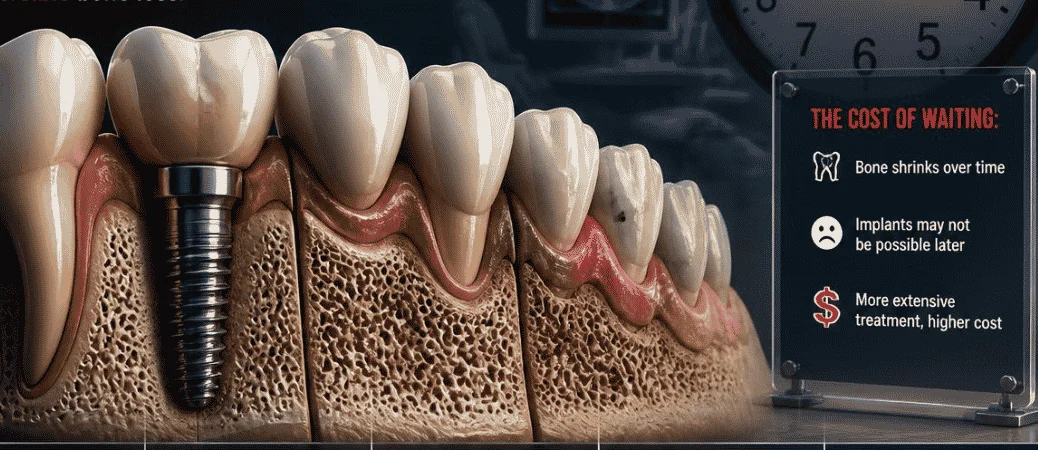
Take the root away, and that signal stops. Your body treats the bone at the extraction site as bone it no longer needs, so it starts breaking it down and using those minerals elsewhere. This is called bone resorption.
The process is quiet. You will not feel it happening, and you will not see it in the mirror right away.
Roots also help with supporting the jawbone and keeping nearby teeth steady, which is why one gap can lead to more problems later.
How Bone Loss Affects Bone Volume, Density, and Quality
Bone loss after tooth extraction shows up in three ways, and they all matter for implants.
| What changes | What it means for you |
| Bone volume | The ridge gets shorter and narrower, so there is less room to place an implant. |
| Bone density | The bone becomes less solid, which affects how tightly an implant can hold. |
| Bone quality | The internal structure weakens, making healing around an implant harder. |
Width usually shrinks faster than height, especially on the cheek side of the ridge.
When bone deterioration goes far enough, a bone graft or sinus lift may be needed first. That adds months to your timeline and cost to your bill, which is why jawbone loss is such a big part of implant planning.
Why the First Year Matters Most
The fastest changes happen early, not years down the road.
Here is a rough timeline of what many patients experience:
- 1–3 months: Bone shrinkage starts, but implant placement is often still simple.
- 6–12 months: Noticeable bone loss and shifting teeth can show up.
- 2+ years: More advanced loss is likely, and extra procedures are often needed.
That first year is your best window, and timing after an extraction shapes how many options you have.
Waiting longer does not close the door. It just means more steps and higher costs before you get to the same finish line.
How Waiting Can Complicate Implant Treatment
Delaying dental implants doesn’t just push your timeline back a few months; it can change the whole plan. Extra steps like bone grafting, detailed scans, and sinus surgery are often needed to rebuild what was lost while you waited.

When Bone Grafting May Be Needed
Your jawbone needs pressure from a tooth root to stay thick and strong. Once that root is gone, the bone starts to shrink, and you can lose up to 25% of the bone width in that spot within the first year.
An implant needs enough bone to hold it firmly in place. If there isn’t enough left, your surgeon will suggest a bone graft or bone augmentation to build the ridge back up before implant placement.
Here’s how the timing usually compares:
| Timing | What’s often involved |
| Immediate implant placement | Implant placed the same day as extraction |
| Early implant placement | Placed within a few weeks or months, often with minimal grafting |
| Delayed placement | Grafting first, then 4–6 months of healing before the implant |
That healing wait is the part most people don’t expect.
How 3D Imaging Helps Plan a Delayed Implant
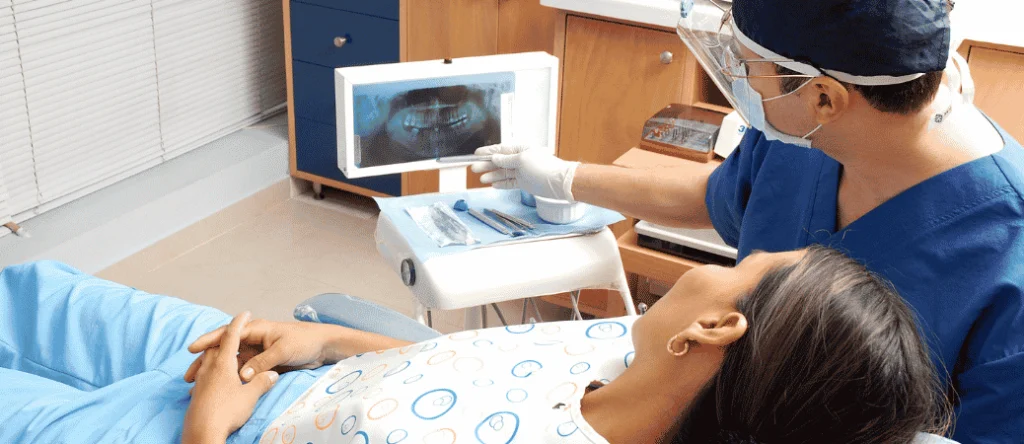
A regular X-ray shows a flat picture. When bone has already shrunk, your dentist needs more than that; which is where 3D imaging, usually a CBCT scan, comes in.
The scan measures how much bone height and width you have left in millimeters. It also shows where your nerves, tooth roots, and sinuses sit, so nothing gets in the way.
With that information, your dentist can pick the right implant size and angle before surgery day. Many practices use the scan to make a surgical guide, a small custom template that keeps drilling on target.
Careful planning with detailed imaging and precise measurements also tells you honestly whether grafting is needed first.
When a Sinus Lift May Be Part of Treatment
Your upper back teeth sit right below the maxillary sinuses, which are hollow spaces in your cheekbones. When an upper molar is missing for a long time, the bone thins out and the sinus floor can drop lower.
That leaves too little bone to anchor an implant. A sinus lift gently raises the sinus lining and adds graft material underneath to create room.
It’s one of the additional procedures such as bone grafting or sinus lifts that may be required before an implant can be placed at all.
Expect several months of healing after a sinus lift before the implant goes in. Acting sooner often means you can skip this step completely.



The Ripple Effects on Teeth, Bite, and Jaw Comfort
Bone loss is only part of the story when a gap sits empty for a year. Your other teeth start to drift, your bite changes, and your jaw joints can begin to feel the strain.
Why Adjacent Teeth Shift Into an Empty Space
Teeth stay in place partly because they lean on each other. Remove one, and the support on that side disappears.
Over the following months, the adjacent teeth slowly tip or slide toward the opening. The tooth in the opposite jaw can also grow longer into the gap, since nothing is biting against it anymore. Dentists call this over-eruption.
This kind of shifting after tooth loss creates tilted teeth with odd angles between them. Those angles trap plaque and are hard to reach with floss, which raises your risk of decay and gum problems in teeth that were perfectly healthy before.
How Tooth Migration Creates Bite Problems
Once tooth migration begins, your bite alignment changes with it. Your upper and lower teeth no longer meet the way they used to, so chewing pressure lands in the wrong spots.
You might notice you favor one side when eating, or that food keeps getting stuck in new places.
Here is the practical part: tilted teeth can block the space an implant needs.
| What changes | Why it matters for implants |
| Tooth tips into the gap | Space is too narrow for the implant crown |
| Opposite tooth over-erupts | Not enough room between the jaws |
| Bite shifts sideways | Uneven force on the finished implant |
At that point, orthodontic treatment may be needed to reopen the space before the implant can go in. That means more visits, more months, and more cost than if you had acted sooner.
Read this guide to understand if dental implants are worth your money.
Uneven Tooth Wear, Jaw Pain, and TMJ Symptoms
When a few teeth take on the work of many, they wear down faster. You may see flattened chewing surfaces, small chips, or new sensitivity on the side you chew with most.
Your temporomandibular joint feels the imbalance too. An uneven bite can leave your jaw muscles working harder to find a comfortable resting position.
That extra effort shows up as jaw pain and bite issues, clicking sounds, soreness when you wake up, or tension headaches near your temples.
These symptoms tend to build slowly, so they are easy to blame on stress. Mentioning them at your next appointment helps your dentist connect them back to the missing tooth.
Daily and Long-Term Costs of Leaving a Gap
A missing tooth changes more than your smile. It affects what you can comfortably eat, how well you can clean your mouth, and how much dental work you may need down the road.

Difficulty Chewing and Changes in Food Choices
Chewing puts real pressure on your back teeth. Lose one, and the teeth around it have to pick up the extra work.
Most people start favoring one side without noticing. Steak, crusty bread, raw carrots, and nuts often get pushed off the plate.
That shift matters. When you avoid crunchy foods and switch to softer, easier options, your diet can get less varied over time.
There’s also the daily annoyance of food packing into the space after almost every meal. Some people find that difficulty chewing and reduced chewing function is what finally pushes them to ask about treatment.
Chewing on one side more than the other can also lead to jaw soreness and faster wear on those overworked teeth.
Gum Disease, Infection, and Risks to Remaining Teeth
Empty spaces are hard to keep clean. Food and plaque collect along the edges of the gap and against the neighboring teeth, where your brush doesn’t reach as well.
That makes gum disease more likely in that area so you should look out for early warning signs.
This article discusses the early warning signs of advanced gum disease you should never ignore.
Inflamed gums bleed, pull back from the tooth, and can lead to infection if plaque keeps building up.
There’s a second problem happening quietly. The tooth behind the gap tends to tip forward, and the tooth above or below drifts down into the space over months or years.
Tipped teeth create new angles and pockets that are even harder to clean. This is how one missing tooth turns into additional tooth loss and more treatment than you expected.
Keeping the area clean helps, but it doesn’t stop the drifting.
Dentures and Partial Dentures as Temporary Options
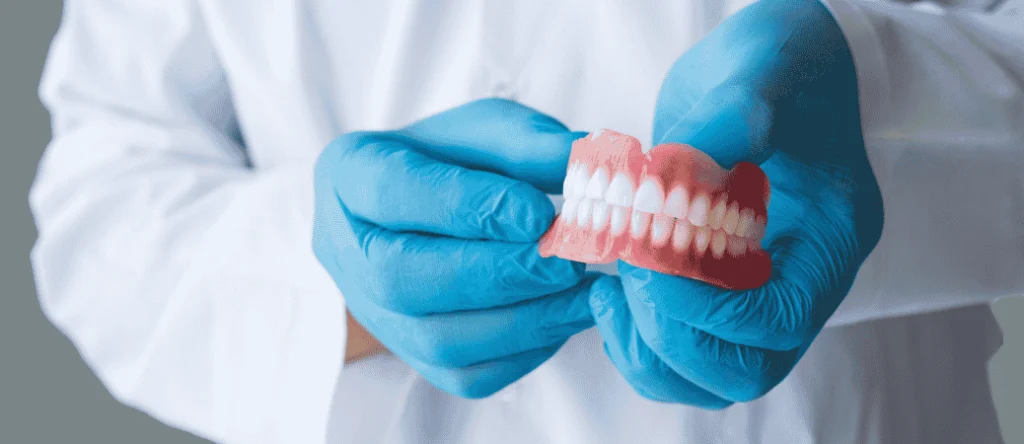
If you’re not ready for an implant yet, a removable snap in denture can fill the space. It’s usually the least expensive option and can be made fairly quickly.
Here’s what to know before you go that route:
| Feature | What to expect |
| Cost | Lowest upfront of the tooth replacement options |
| Timeline | Often ready in a few weeks |
| Bone loss | Does not stop the jawbone from shrinking |
| Daily care | Removed for cleaning; may need adjusting as bone changes |
| Chewing | Better than an open gap, but weaker than an implant or bridge |
A partial holds your teeth in position and restores some function. Just remember it sits on top of the gum, so the bone underneath keeps changing shape, and the fit will loosen over time.
That’s why many dentists treat it as a placeholder rather than a permanent answer.
Impact on Confidence, Appearance, and Quality of Life
Front gaps show. But even back gaps affect how your face looks as bone shrinks and your cheek loses a bit of support.
You may catch yourself covering your mouth when you laugh, or speaking a little differently because your tongue hits the space. Some sounds, like “s” and “th,” change slightly.
Plenty of people say they stop ordering certain foods when eating out or feel self-conscious in photos. Those small choices add up.
Replacing the tooth usually brings back normal speaking, chewing, and smiling, which is a real gain in oral health and quality of life. The longer you wait, the more likely you’ll need bone grafting or orthodontic work first.
When Waiting Is Reasonable and How to Protect Your Options
Not every delay is a problem. A short, planned wait can be part of good treatment, as long as your dentist has a plan to guard the bone and keep implant placement on the table.
Planned Healing After an Extraction
Sometimes waiting is the smart move. An infection may need to clear up first, or your bone may need time to heal before an implant can be placed safely.
There are also personal reasons, like spacing out costs or fitting surgery around other medical care.
Dentists usually pick from three timing options:
- Immediate implant placement: the implant goes in the same day the tooth comes out, when the bone and gums allow it.
- Early implant placement: a few weeks to a few months after extraction, once the soft tissue heals.
- Delayed placement: several months later, often after grafting.
The right choice depends on infection, bone volume, and how stable the site is. A planned delay with a clear timeline is very different from putting off tooth replacement with no end date.
Socket Preservation and Post-Extraction Care
Socket preservation is a small bone graft placed in the empty socket right after your tooth is removed. It fills the space with graft material so the bone walls hold their shape while you heal.
This matters because the ridge shrinks fastest in the first few months. Keeping that width and height now can save you from a larger graft later.
Post-extraction care helps too:
- Follow your dentist’s instructions on rinsing, eating, and avoiding suction.
- Don’t smoke, since it slows healing.
- Keep your follow-up visits so the site can be checked.
If a graft is placed, 3 to 6 months of healing before implant placement is common. Waiting well past that can mean more bone work is needed first.
Questions to Ask Before Delaying Treatment

Bring these questions to your next visit so you know what a year of waiting really means for you:
- How much bone do I have now, and how much am I likely to lose?
- Can you place a socket graft today to protect the site?
- Will I need bone grafting later if I wait 6 or 12 months?
- Could nearby teeth drift or tilt into space?
- What temporary option can I use for chewing and appearance?
- What is the cost difference between treating now and treating later?
Asking early helps you avoid common mistakes that come with putting off a dental implant. Get the answers in writing, along with a target date to revisit your plan.
Frequently Asked Questions
Bone loss starts within weeks of losing a tooth, and about a quarter of the jawbone in that spot can disappear during the first year.
Below are straight answers about timing, bone grafts, age limits, and the newer ways dentists rebuild bone that has already been lost.
How quickly does jawbone loss happen after losing a tooth?
Faster than most people expect! Chewing sends pressure through the tooth root into the jaw, and that pressure tells your body to keep the bone strong.
Once the root is gone, that signal stops. Studies show up to 25% of the jawbone in that area can be lost in the first 12 months.
The change slows down after that, but it never fully stops. Over several years, the ridge can become too thin and short to hold an implant without extra work.
Can delaying a dental implant make bone loss worse?
Yes. Every month without a root in that spot means less stimulation for the bone, so delaying an implant keeps the bone thinning and lowers its density.
There are side effects beyond the bone, too. Nearby teeth can drift into the empty space, your bite can shift, and the tooth above or below the gap may start to move down or up.
Those changes matter because an implant needs enough room and a stable bite to work well. Fixing crowded or tilted teeth first can add braces or aligners to your treatment plan.
Can I still get a dental implant if I already have severe bone loss?
Often, yes, but the plan gets bigger. Your dentist may need to rebuild the ridge with a graft, wait several months for it to heal, and then place the implant.
In some cases, a different approach works better. Shorter or narrower implants, tilted implants, or implants anchored in the cheekbone can sometimes avoid grafting altogether.
The tradeoff is time and money. Waiting too long limits your replacement options, and some people end up choosing a bridge or denture instead.
Will I need a bone graft if I wait another year for an implant?
Maybe. It depends on how much bone you started with, where the tooth was, and whether the socket was preserved when the tooth came out.
Back teeth in the upper jaw are the most at risk because the sinus sits right above them. As bone shrinks, the sinus floor drops lower, and a sinus lift is often needed.
Adding a graft raises the total cost of treatment and stretches the timeline by several months. A cone beam scan can tell you where you stand right now, before another year passes.
Is it too late for a 70-year-old to get dental implants?
No. There is no upper age limit for implants, and plenty of people in their 70s and 80s get them.
What matters is your health, not your birthday. Your dentist will look at things like diabetes control, smoking, medications that affect bone (such as some osteoporosis drugs), and how well your gums are doing.
Healing may take a little longer with age, but success rates stay high when the bone is healthy and you keep up with cleanings.
What are the latest treatment options for rebuilding jawbone loss?
Dentists now have several ways to add bone back. Common choices include:
- Socket preservation: a graft placed right after extraction to keep the ridge from collapsing.
- Guided bone regeneration: a membrane holds graft material in place while new bone forms.
- Sinus lift: the sinus floor is raised so there is room for an implant in the upper back jaw.
- Ridge augmentation: bone is added to a ridge that has grown too thin or too short.
Newer tools have made these steps more predictable. Growth factors from your own blood, such as PRF, can support healing, and 3D scans with printed surgical guides help place implants more precisely.
Conclusion
Delaying dental implants can lead to bone loss that makes replacement more complex and costly than it needs to be.
The jawbone begins shrinking within months of tooth loss, and that first year often determines whether you need a simple implant or a longer treatment with grafting and sinus lifts.
Nearby teeth drift, your bite shifts, and everyday chewing can become less comfortable over time.
The good news is that you still have options, even if years have passed. A cone beam scan and a thorough evaluation can show exactly where your bone stands and what it takes to move forward.
Acting sooner protects your foundation, but consulting a dentist today is the best step you can take, regardless of how long you have waited.
Schedule your implant evaluation at Sullivan Dental Partners in Brentwood, TN to preserve your smile and your oral health.