
Your gums might be sending you warning signals that are easy to miss or ignore. Many people assume bleeding gums or bad breath are minor issues that will go away on their own.
Gum disease can progress from reversible gingivitis to severe periodontitis much faster than most people realize, especially when early symptoms go untreated.
You might think your oral health is fine because you brush regularly. But gum disease affects many people even with proper brushing and flossing, since bacteria can still build up in hard-to-reach areas.
The difference between catching gum disease early and dealing with tooth loss often comes down to recognizing the warning signs before they become serious problems.
Understanding what to look for can help you protect your teeth and overall health. The bacteria from periodontitis can enter your bloodstream and affect your heart, lungs, and blood sugar control.
Learning the signs of advancing gum disease gives you the power to take action before permanent damage occurs.
Key Takeaways
- Gum disease can advance from mild gingivitis to severe stages faster than expected if warning signs are ignored
- Symptoms like persistent bleeding, bad breath, and loose teeth indicate your gum disease is progressing and needs immediate attention
- Regular dental visits and good oral hygiene are essential to catch and treat gum disease before it causes permanent damage
Book an advanced gum disease evaluation in Nashville, TN before symptoms worsen.
Recognizing the Red Flags: Key Signs Your Gum Disease Is Rapidly Progressing
When gum disease advances quickly, your body sends clear warning signals that demand immediate attention.
Bleeding that increases in frequency, breath that stays foul despite brushing, gums that feel puffy and painful, and teeth that suddenly react to hot or cold foods all point to a problem that’s getting worse fast.

Bleeding Gums That Worsen Over Time
Your gums shouldn’t bleed when you brush or floss. If you notice blood on your toothbrush occasionally, that’s concerning, but when the bleeding becomes more frequent or heavier, your gum disease is likely progressing.
Early bleeding gums might show up as light pink streaks in your spit. As the condition advances, you may see darker red blood pooling around your teeth or blood when brushing or flossing that seems to happen every single time.
Pay attention to how often this happens. Bleeding that occurs daily or multiple times a day signals that bacteria have created deeper pockets between your teeth and gums.
These pockets trap more bacteria, creating a cycle that speeds up tissue damage.
The intensity matters too. Light spotting is different from active bleeding that takes minutes to stop.
If you’re spitting out noticeable amounts of blood or seeing it mix with your saliva throughout the day, the infection has likely spread deeper into your gum tissue.
Persistent Bad Breath or Halitosis
Bad breath that won’t go away no matter how much you brush points to bacteria thriving below your gumline. This isn’t the temporary morning breath everyone experiences.
Persistent bad breath or halitosis comes from bacterial waste products and decaying tissue.
When gum disease progresses, bacteria multiply in the pockets around your teeth. These organisms produce sulfur compounds that create a distinctly unpleasant smell.
Mints and mouthwash might mask the odor temporarily, but it returns within minutes or hours.
You might also notice a constant bad taste in your mouth.
This metallic or sour flavor often accompanies the smell. If family members or friends mention your breath, or if you find yourself constantly checking it, these social signals indicate a problem that’s beyond surface-level cleaning.
The smell often gets worse throughout the day as bacteria continue producing waste. Morning breath that never really goes away suggests deep infection.
Swollen or Tender Gums
Healthy gums fit snugly around your teeth and feel firm to the touch. When you notice swollen or tender gums, your body is fighting an active infection.
Swelling makes your gums look puffy and feel soft or spongy instead of firm. They might appear shiny or stretched. The color often changes too, shifting from healthy pink to bright red, dark red, or even purple.
Common signs of inflamed gums:
- Gums that hurt when you touch them
- Pain while chewing food
- Discomfort when brushing
- Throbbing sensation in your gums
- Visible puffiness between teeth
The tenderness tells you that inflammation has set in. Even gentle pressure from your toothbrush or certain foods might cause pain.
This sensitivity often means the infection has moved beyond the surface and is affecting deeper tissues that support your teeth.
Unexplained Tooth Sensitivity
New or worsening tooth sensitivity often signals that your gums are pulling away from your teeth. When gum disease advances, receding gums expose tooth roots that lack the protective enamel coating found on tooth crowns.
You might feel sharp pain when drinking cold water or eating ice cream. Hot beverages can trigger the same reaction. Sweet or acidic foods may cause sudden discomfort that makes you wince.
This sensitivity develops because nerve endings in the exposed root surface react directly to temperature changes and certain substances. If you find yourself avoiding certain foods or drinks that never bothered you before, or if you’re breathing through your mouth to avoid cold air hitting your teeth, your gums have likely receded significantly.
The sensitivity usually affects multiple teeth rather than just one. When several teeth suddenly become sensitive at once, especially along the gumline, advancing gum disease is often the culprit rather than simple tooth decay.
Visit our Nashville, TN dental office for expert periodontal care today.
Progression Through the Stages: How Gum Disease Advances
Gum disease moves through four distinct stages, each causing more damage to your gums and teeth. The disease can progress quickly from mild inflammation to bone loss if left untreated.
From Gingivitis to Early Periodontitis
Gingivitis is the first stage where your gums become red, swollen, and bleed when you brush. This happens when plaque builds up along your gum line and causes inflammation.
The good news is that gingivitis can often be reversed with professional cleanings and better brushing habits.
If you don’t treat gingivitis, it advances to early periodontitis. At this point, the infection moves below your gum line and starts attacking the bone that holds your teeth in place.
You might notice your gums pulling away from your teeth, creating small pockets.
Key differences between these stages:
- Gingivitis: Reversible, affects only gums, no bone loss
- Early Periodontitis: Irreversible, begins bone damage, gums recede slightly
Early periodontitis marks the point where damage becomes permanent, making quick treatment essential.
Moderate and Severe Changes: What to Watch For
Moderate periodontitis shows more obvious signs that something is wrong. Your gums recede further, exposing more of your tooth roots. The pockets around your teeth deepen to 6-7 millimeters, giving bacteria more space to grow.
You might feel your teeth shift or become slightly loose. Bad breath that won’t go away becomes more common. Your gums may bleed more easily and look darker red or purple.
Severe periodontitis happens when the stages of gum disease progress without proper care. The bone loss increases and your teeth become noticeably loose. Some teeth may even change position or develop gaps between them.
Advanced Periodontitis Warning Signs
Advanced periodontitis represents the final stage where your teeth are at serious risk of falling out. The bone supporting your teeth has experienced major damage, and the pockets around your teeth measure 7 millimeters or deeper.
Your teeth may hurt when you chew, and some might feel so loose they move when you touch them. Pus can appear between your teeth and gums, signaling active infection. Your bite may feel different because teeth have shifted.
Advanced gum disease requires aggressive treatment to save your teeth. Without intervention, tooth loss becomes likely. The chronic inflammation at this stage can also affect your overall health, not just your mouth.
Don’t ignore the signs; schedule your gum disease checkup today.
Hidden Symptoms That Signal Fast-Advancing Gum Disease
Some signs of gum disease are easy to miss because they happen slowly over time.
Your gums might be pulling back from your teeth, spaces might be forming between your gums and teeth, or your teeth might feel less stable than before.
Gum Recession and Longer-Looking Teeth
Gum recession happens when your gum tissue pulls away from your teeth. This makes your teeth look longer than they used to be. You might notice more of the tooth surface is visible or that the roots are starting to show.
Receding gums are a clear sign that gum disease is getting worse. When your gums pull back, they expose parts of your teeth that should stay covered. This tissue loss doesn’t grow back on its own.
You may also feel more sensitivity to hot or cold foods and drinks. The exposed tooth roots don’t have the same protective coating as the rest of your teeth.
This means everyday activities like drinking coffee or eating ice cream can become uncomfortable.
Development of Gum Pockets
Gum pockets form when the tissue separating your gums from your teeth breaks down. These spaces are called periodontal pockets.
Healthy gums fit snugly around your teeth, but diseased gums create gaps where bacteria can hide.
Your dentist measures these pockets during checkups. A pocket depth of 1-3 millimeters is normal. Pockets that are 4 millimeters or deeper signal gum disease that needs treatment.
These pockets trap food and bacteria that your toothbrush can’t reach. The deeper they get, the harder they are to clean. This creates a cycle where the infection keeps spreading and the pockets keep getting deeper.
Loose or Shifting Teeth
Loose teeth in adults are never normal. If your teeth feel wiggly when you push on them with your tongue, that’s a warning sign. Shifting teeth mean the bone and tissue holding them in place are breaking down.
You might notice gaps forming between teeth that used to touch. Your bite might feel different when you chew. Some teeth may start to tilt or rotate out of their normal positions.
Tooth mobility happens when gum disease reaches the bone that supports your teeth. This is a late-stage symptom that needs immediate attention. Without treatment, you could lose these teeth completely.
The Role of Plaque, Tartar, and Oral Hygiene
Plaque buildup starts within hours of brushing, and when it hardens into tartar, it creates a perfect environment for gum disease to advance rapidly. Your daily oral hygiene routine directly determines whether these substances stay under control or fuel inflammation that destroys gum tissue.
Plaque Buildup and Hard-to-Reach Places
Plaque forms constantly in your mouth as a sticky film of bacteria on your teeth. It accumulates fastest in areas your toothbrush struggles to reach, like the back molars and along the gum line.
When you miss these spots during brushing and flossing, bacteria multiply and release toxins that irritate your gums. Within 24 to 72 hours, plaque hardens into tartar if you don’t remove it.
The spaces between your teeth are especially vulnerable. Food particles and bacteria gather there, creating pockets where plaque thrives.
These hidden areas become breeding grounds for infection that can spread to surrounding gum tissue.
The Impact of Tartar on Disease Progression
Once tartar forms, you can’t remove it with regular brushing at home. Only a dentist or dental hygienist can remove it through professional cleaning.
Tartar buildup leads to gum disease by creating a rough surface where more bacteria attach and multiply. This accelerates inflammation and causes your gums to pull away from your teeth.
The gaps that form become deeper pockets where even more bacteria collect.
These pockets allow infection to spread below the gum line and eventually reach the bone supporting your teeth. Tartar also makes your teeth feel rough and increases sensitivity to hot, cold, or sweet foods.
Why Brushing and Flossing Matter More Than Ever
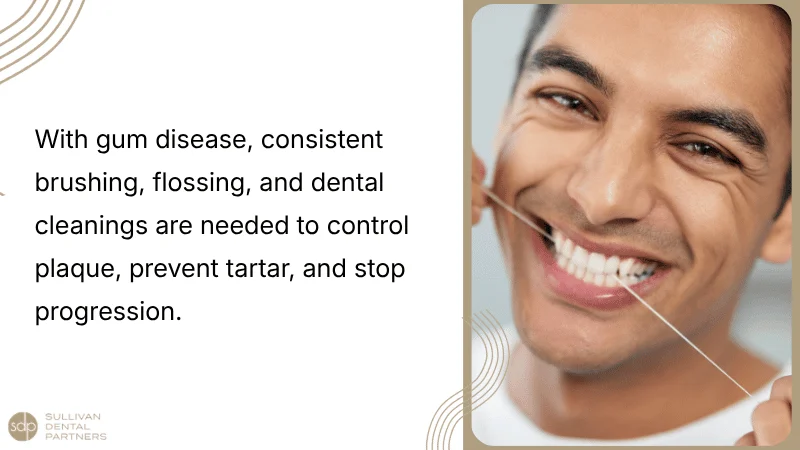
Your oral hygiene routine becomes critical once gum disease starts progressing. Brushing twice daily with fluoride toothpaste removes fresh plaque before it hardens.
Flossing reaches the 40% of tooth surfaces your toothbrush misses. You can also use interdental brushes, wooden picks, or water flossers to clean between teeth effectively.
Daily habits that protect your gums:
- Brush for two minutes, twice per day
- Floss at least once daily
- Clean along the gum line carefully
- Visit your dentist for regular professional cleanings
Skipping even one day gives bacteria time to multiply and form hardened plaque that advances your disease. Consistent care prevents new tartar from forming and keeps existing gum disease from worsening.
Dental Checkups and Advanced Diagnostic Tools
Regular dental visits give your dentist the chance to catch gum disease progression before it becomes serious. Professional tools and technology can spot problems you might miss at home.
The Importance of Regular Dental Visits
You should see your dentist at least twice a year for dental cleanings and checkups. Studies show that almost 42% of adults have some form of gum disease, making regular dental appointments essential for early detection.
During these visits, your dentist can identify subtle warning signs that you might not notice. Small changes in gum color, texture, or pocket depth often appear before obvious symptoms like bleeding or pain develop.
If you have risk factors like diabetes, smoking, or a family history of gum problems, you may need more frequent visits.
Some patients benefit from dental appointments every three to four months instead of the standard six-month schedule.
Professional cleanings remove tartar buildup that regular brushing and flossing can’t eliminate. This buildup creates spaces where bacteria accumulate and cause gum damage.
What to Expect During a Dental Exam
Your dentist begins with a visual check of your entire mouth. They look for changes in gum color, swelling, and signs of inflammation that indicate disease.
A periodontal probe measures the depth of spaces between your teeth and gums. Healthy pockets measure 1-3 millimeters, while depths of 4 millimeters or more typically signal gum disease.
Your dentist also checks for bleeding during this gentle probing. Healthy gums shouldn’t bleed when examined, so any bleeding suggests active infection and inflammation.
Modern dental offices use intraoral cameras to capture detailed images of your gums. These high-resolution pictures help your dentist spot early problems and show you exactly what’s happening in your mouth.
Some practices use laser detection systems that measure bacterial levels in your gum pockets. This technology provides real-time information about disease activity.
How Dental X-Rays and Deep Cleaning Help
Dental x-rays reveal bone loss around your tooth roots that isn’t visible during a regular exam. This imaging shows how far the disease has progressed beneath your gum line.
Digital x-rays can be enhanced to show subtle bone loss patterns. Your dentist uses these images to track changes over time and adjust your treatment plan.
Deep cleaning, also called scaling and root planing, removes bacteria and tartar from below your gum line. This procedure differs from regular dental cleanings because it targets the infected areas where gum disease develops.
During deep cleaning, your dentist smooths rough spots on tooth roots where bacteria tend to gather. This helps your gums reattach to your teeth and reduces pocket depths.
Some dental offices offer bacterial testing through plaque samples. These tests identify specific bacteria causing your gum disease, which helps your dentist choose the most effective treatment approach.
Treatment Strategies and Steps to Restore Gum Health
When gum disease advances quickly, you need professional treatment combined with improved home care habits to stop the damage and rebuild your oral health.
The right approach depends on how far the disease has progressed and how much damage has already occurred.
Scaling, Root Planing, and Surgical Options

Scaling and root planing is often the first treatment your dentist will recommend for advancing gum disease. This deep cleaning removes plaque and tartar from below your gumline where regular brushing cannot reach.
During scaling, your dentist scrapes away buildup from your tooth surfaces. Root planing smooths the tooth roots to help your gums reattach properly.
These procedures typically require local anesthesia and may be done over multiple visits.
If your gum disease has progressed to severe periodontitis, you might need surgical treatment. Flap surgery involves lifting back your gums to remove deep tartar deposits before securing the gums back in place.
Bone grafts can rebuild bone that has been destroyed by the disease. Tissue grafts help restore receded gum tissue around your teeth.
Your dentist may also prescribe antibiotics or antimicrobial gels to control bacterial infection in your gum pockets. These medications work alongside other treatments to improve healing.
Oral Care Tips for Managing Rapid Disease
You need to upgrade your daily oral hygiene routine to manage advancing gum disease effectively. Brush with fluoride toothpaste at least twice daily, paying special attention to the gumline where bacteria accumulate.
Use a soft-bristled toothbrush to avoid further irritating inflamed gums. Electric toothbrushes can be more effective at removing plaque than manual ones.
Floss every single day to clean between teeth where your toothbrush cannot reach.
An antibacterial mouthwash helps reduce bacteria in your mouth and can reach areas you might miss while brushing. Rinse after brushing and flossing for maximum benefit.
Water flossers or interdental brushes provide additional cleaning power for stubborn areas.
Avoid smoking, which severely impairs your gums’ ability to heal and fight infection. Eat a balanced diet with plenty of vitamin C to support gum tissue strength.
Tooth Replacement and Gum Regeneration
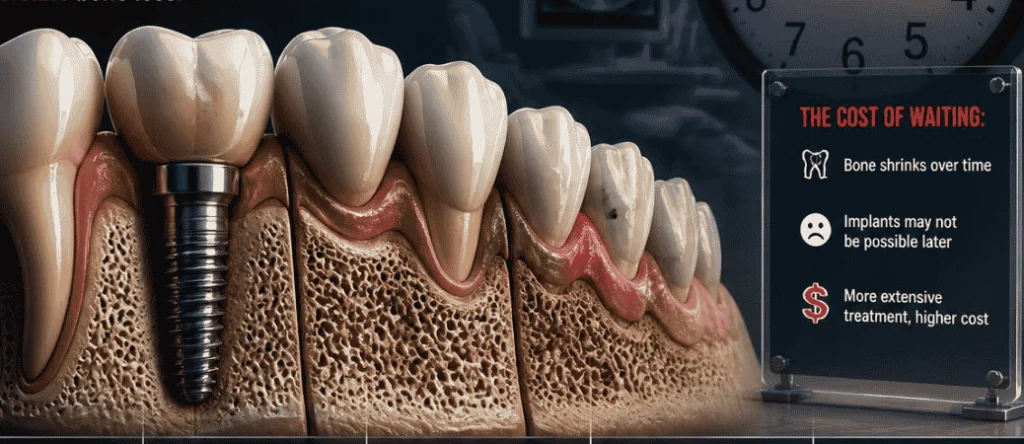
Advanced gum disease can lead to tooth loss, but dental implants offer a permanent replacement option once your gum health is restored. Implants require adequate bone support, so your dentist may need to perform bone grafts first.
The steps to restore your oral health include stabilizing the disease before considering tooth replacement. You cannot get dental implants while active infection is present.
Newer regeneration techniques can help rebuild lost bone and tissue. Guided tissue regeneration uses special membranes to encourage your body to regrow supporting structures.
Platelet-rich plasma therapy may accelerate healing in some cases.
Your dentist will create a personalized treatment plan based on how many teeth you have lost and the condition of your remaining gums and bone.
Frequently Asked Questions
Many people have questions about how quickly gum disease can progress and what warning signs to watch for. Understanding the difference between early symptoms and advanced disease helps you know when to seek treatment.
What are the early warning signs that your gum disease may be progressing?
The earliest signs of gum disease progressing include red or swollen gums that bleed when you brush or floss. You might notice your gums feel tender or look puffy.
Bad breath that doesn’t go away after brushing can signal that bacteria are building up below your gum line. Some people also notice a bad taste in their mouth that lingers throughout the day.
If your gums start pulling away from your teeth, making them look longer than before, this means the disease is moving past the earliest stage. You should contact your dentist right away if you see these changes.
Is it possible to reverse gum disease, and at which stages?
Gingivitis is reversible with professional cleaning and improved oral care at home. This is the mildest form of gum disease where your gums become red and swollen but no bone damage has occurred yet.
Once gum disease advances to periodontitis, the damage to bone and tissue cannot be fully reversed. However, treatment can stop the disease from getting worse and help save your remaining teeth.
The key is catching the disease during the gingivitis stage before it causes permanent damage. Regular dental checkups help identify problems early when they’re still reversible.
What symptoms indicate I might have advanced to stage 4 gum disease?
Stage 4 gum disease causes severe tooth mobility where your teeth feel very loose or shift position. You may have trouble chewing food because your teeth move when you bite down.
Deep pockets form between your teeth and gums, often measuring 7 millimeters or more. Pus may drain from these pockets, and you’ll likely experience frequent pain or discomfort in your mouth.
Your teeth may start to spread apart or change alignment as the bone supporting them breaks down. At this stage, you face a high risk of tooth loss without immediate treatment.
How can you tell if gum disease is worsening, especially from stage 3 to stage 4?
The main difference between stage 3 and stage 4 is how loose your teeth become. In stage 3, you might notice slight movement, but in stage 4, teeth can shift significantly or feel like they might fall out.
Bleeding becomes more frequent and severe as the disease advances. You may see blood when eating soft foods or even when you’re not touching your gums at all.
The amount of bone loss increases dramatically between these stages. Your dentist can measure this through X-rays and probing the depth of pockets around your teeth.
What treatments are available for advanced stages of gum disease?
Periodontitis treatment often starts with deep cleaning procedures called scaling and root planing. Your dentist removes plaque and tartar from below the gum line and smooths the tooth roots to help gums reattach.
For more advanced cases, you may need surgical treatments like flap surgery or bone grafts. These procedures reduce pocket depth and regenerate lost bone tissue when possible.
Antibiotics can help control bacterial infection, either applied directly to gum pockets or taken as pills. Your dentist might also recommend antimicrobial mouth rinses to use at home between visits.
In severe stage 4 cases where teeth cannot be saved, extraction followed by dental implants or dentures may be necessary. Regular maintenance cleanings every three to four months help prevent the disease from returning after treatment.
Can you provide visuals or photos to help identify different stages of gum disease?
Many dental websites and organizations provide photo galleries showing how gums look at different disease stages. Your dentist can also show you pictures during your appointment to compare with your own gum condition.
Healthy gums appear pink and firm, fitting snugly around each tooth. As disease progresses, photos show gums becoming darker red, pulling away from teeth, and developing visible pockets.
Advanced stage photos often display significant gum recession, exposed tooth roots, and teeth that appear longer or have gaps between them.
These visual references help you understand what changes to watch for in your own mouth.