
Getting your teeth whitened is an exciting step toward a brighter smile. But once you see those results, you probably wonder how long they will last.
Professional teeth whitening treatments can keep your smile brighter for up to one to three years when you take proper care of your teeth, while at-home treatments typically last four to six months.
The good news is that you have more control over your teeth whitening results than you might think. Your daily habits play a big role in whether your whiter smile stays bright or fades quickly.
Simple changes to your routine can make a real difference.
From what you eat and drink to how you care for your teeth each day, there are practical steps you can take to protect your investment.
Understanding what causes teeth to lose their brightness helps you avoid those pitfalls and enjoy your results much longer.
Key Takeaways
- Maintaining good oral hygiene and dental cleanings helps preserve your whitening results
- Avoiding stain-causing foods, drinks, and tobacco keeps your teeth brighter for longer
- Touch-up treatments and mindful daily habits can extend professional whitening results up to three years
Factors That Influence Whitening Longevity
Several key elements determine how long your teeth stay white after treatment. The type of whitening method you choose, your daily habits, and your natural tooth structure all play important roles in maintaining your bright smile.
Types of Whitening Treatments and Results
The whitening method you select directly affects how long your results will last.
Professional teeth whitening performed in a dental office can last up to 2-3 years because it uses stronger bleaching agents and controlled application techniques.
At-home whitening kits with custom whitening trays typically maintain results for 6-12 months. These trays fit your teeth precisely and deliver whitening gel evenly across your smile.
Take-home whitening systems from your dentist offer better concentration than store-bought options.
Over-the-counter whitening products provide the shortest duration of results.
Over-the-counter whitening kits, strips, and toothpastes only last a few weeks to a few months because they contain lower concentrations of active ingredients.
Professional whitening delivers the most dramatic and longest-lasting changes to your smile. The higher strength formulas penetrate deeper into tooth enamel, removing more stubborn stains that cause discoloration.
Individual Habits and Oral Health
Your daily choices significantly impact how long teeth whitening lasts. Drinking dark beverages like coffee, tea, and red wine can quickly stain your enamel and diminish whitening results.
Smoking and tobacco use cause deep stains that are difficult to remove. Quitting tobacco protects both your teeth and overall oral health while helping your whitening results last much longer.
Your oral hygiene routine makes a major difference in maintaining your bright smile. Brushing twice daily and flossing removes surface buildup before it can dull your teeth.
Rinsing with water after meals prevents stains from setting into your enamel.
Regular dental cleanings remove plaque and tartar that home brushing cannot eliminate. These professional cleanings keep your teeth smooth and less likely to trap staining particles.
Enamel Thickness and Age
Your natural enamel thickness affects how well whitening treatments work and how long they last. Thicker enamel responds better to whitening gel and maintains results longer because it can hold the brightening effects more effectively.
As you age, your enamel naturally becomes thinner and more porous. This makes teeth more susceptible to staining and can shorten the duration of your whitening results.
Teeth grinding or clenching wears down enamel over time. Worn enamel is more prone to discoloration and may not hold whitening results as long as healthy, intact enamel.
Some people naturally have more translucent enamel that shows the yellowish dentin layer underneath. These individuals may need more frequent touch-ups to maintain their desired level of whiteness.
Daily Oral Hygiene to Maintain a Brighter Smile
Building a solid oral hygiene routine with the right tools makes a real difference in keeping your teeth white.
Brushing twice daily with whitening toothpaste, flossing to prevent buildup, and using mouthwash all work together to protect your results.
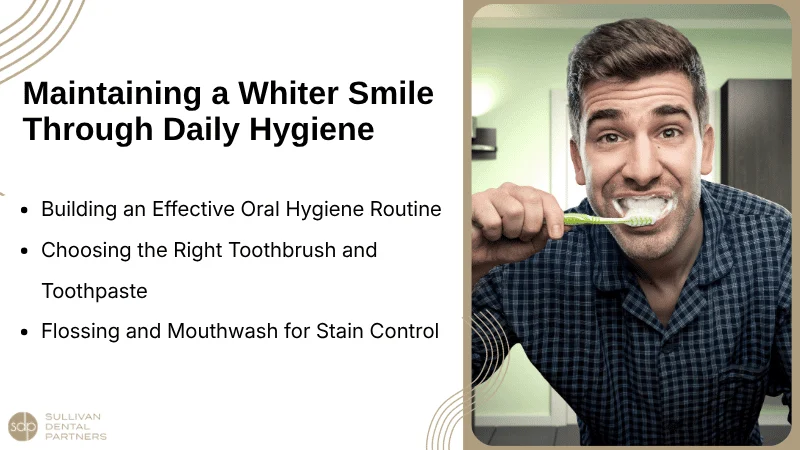
Building an Effective Oral Hygiene Routine
Your daily oral hygiene routine forms the foundation for lasting whitening results. You need to brush twice daily—once in the morning and once before bed, to prevent stains from settling on your teeth.
Brush for at least two minutes each time to thoroughly clean all surfaces of your teeth. This removes the protein-based film that constantly forms on your teeth and attracts food particles and bacteria.
Make sure you brush after eating foods that stain easily. Coffee, tea, berries, and red wine can quickly dull your bright smile if you don’t remove them promptly.
If you can’t brush right away, rinse your mouth with water to minimize staining.
Good oral hygiene also means replacing your toothbrush every three to four months. Worn bristles don’t clean as effectively and can leave surface stains behind that gradually build up over time.
Choosing the Right Toothbrush and Toothpaste
An electric toothbrush removes more plaque than a manual brush, helping prevent the discoloration that plaque buildup causes. The rotating or vibrating head reaches areas you might miss with regular brushing.
If you prefer a manual brush, choose a soft-bristled toothbrush to protect your enamel while still cleaning effectively. Hard bristles can damage your tooth enamel and make your teeth more prone to staining.
Whitening toothpaste helps maintain your results by gently removing surface stains through mild abrasives. While the effects aren’t as dramatic as professional treatments, consistent use prevents additional discoloration.
If you experience sensitivity after whitening, switch to sensitivity toothpaste for a few weeks. You can alternate between sensitivity toothpaste and whitening toothpaste to balance comfort with maintaining your bright smile.
Flossing and Mouthwash for Stain Control
Flossing daily removes food particles and bacteria from between your teeth where your toothbrush can’t reach. While flossing doesn’t whiten teeth directly, it prevents plaque buildup that leads to yellowing and discoloration.
You should floss at least once per day, preferably before brushing at night. This allows your toothpaste to reach the cleaned surfaces between your teeth for better protection.
Adding mouthwash to your routine provides extra defense against stains. An antibacterial mouthwash kills bacteria that contribute to plaque formation, while a whitening mouthwash can help remove mild surface stains.
Rinse for 30 seconds after brushing and flossing to maximize benefits and keep your smile brighter for longer.
Diet, Drinks, and Lifestyle for Lasting Whitening
What you eat and drink directly affects how long your whitening results stay bright. Certain foods leave behind pigments that dull your smile, while others actually protect your enamel and help with stain prevention.
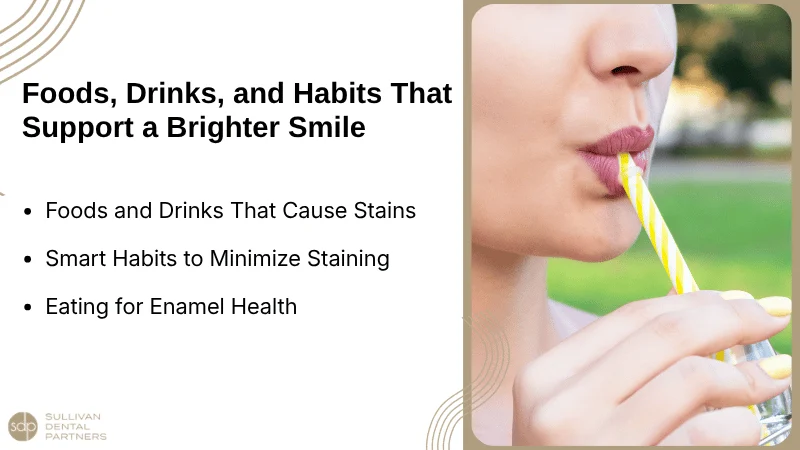
Foods and Drinks That Cause Stains
Your teeth are most vulnerable to staining right after whitening because the enamel is more porous. Dark-colored beverages like coffee, tea, red wine, and cola are among the worst culprits for creating surface stains.
Staining beverages aren’t the only concern. Pigmented foods can also leave marks on your teeth. Berries like blueberries and blackberries contain intense colors that cling to enamel.
Tomato-based sauces, soy sauce, balsamic vinegar, and curry are other common stain-causing foods.
Acidic items weaken your enamel, making it easier for stains to set in. Citrus fruits, pickles, and carbonated drinks fall into this category. Even healthy options like beets can discolor your teeth due to their deep red pigment.
You don’t have to avoid staining foods completely. Just limit how often you eat them and take steps to reduce their impact on your smile.
Smart Habits to Minimize Staining
Simple changes to your daily routine can protect your whitening results. Using a straw when drinking dark beverages reduces contact with your front teeth. This works especially well for iced coffee, tea, and sodas.
Rinse after meals with plain water to wash away food particles and pigments before they settle into your enamel. If you can’t brush right away, swishing water around your mouth for 30 seconds makes a real difference.
Chew sugar-free gum after eating to boost saliva production.
Saliva naturally cleans your teeth and neutralizes acids that weaken enamel. Wait at least 30 minutes after eating acidic foods before brushing, since your enamel is softer during this time and brushing too soon can cause damage.
Eating for Enamel Health
Enamel-friendly foods strengthen your teeth and make them more resistant to stains. Crunchy vegetables like celery, carrots, and cauliflower scrub your teeth as you chew them.
They also increase saliva flow, which helps wash away debris.
Dairy products provide calcium and phosphates that rebuild enamel. Cheese, milk, and plain yogurt are excellent choices. Lean proteins like chicken, turkey, and fish contain phosphorus, another mineral that keeps teeth strong.
Foods high in fiber stimulate your gums and clean tooth surfaces naturally. Apples, pears, and leafy greens all support oral health.
Drinking plenty of water throughout the day keeps your mouth clean and prevents dry mouth, which can lead to more staining.
Professional Care and Touch-Up Strategies
Regular visits to your dentist and strategic touch-up treatments work together to keep your smile bright for months or even years.
Professional cleanings remove buildup that dulls your teeth, while carefully timed whitening touch-ups counteract natural staining from daily life.
Benefits of Professional Dental Cleanings
Professional dental cleanings remove plaque and tartar that your regular brushing and flossing can’t reach. These buildups trap stains and make your teeth look yellow or dull over time.
Your dentist can polish away surface stains during these appointments. This helps maintain the brightness you achieved from your whitening treatment.
Scheduling cleanings every six months allows your dentist to catch new stains before they set in deeply.
These visits also let your dentist check your enamel health. Healthy enamel holds whitening results better and resists new stains more effectively.
Your dental team can spot issues like thinning enamel or gum recession that might affect how white your teeth stay.
Professional cleanings complement your home care routine. They tackle the hard-to-reach areas and stubborn buildup that gradually dim your smile between appointments.
When and How to Use Whitening Touch-Ups
Most people need whitening touch-ups every few months to maintain their results. The exact timing depends on your diet, habits, and how quickly your teeth naturally pick up new stains.
Custom whitening trays from your dentist offer the safest way to do touch-ups at home. These trays fit your teeth perfectly and distribute whitening gel evenly across all surfaces.
You typically wear them for shorter periods than your initial treatment.
Over-the-counter whitening products like strips and pens provide convenient options between professional treatments.
While not as strong as professional whitening, they help preserve your brightness when used correctly. Just follow the instructions carefully to avoid sensitivity or uneven results.
At-home whitening trays prescribed by your dentist give you precise control over maintaining your smile. Your dentist will recommend how often to use them based on your lifestyle and staining patterns.
Comparing At-Home and In-Office Maintenance
In-office maintenance treatments:
- Deliver stronger whitening agents under professional supervision
- Produce faster, more dramatic results in a single visit
- Cost more per session but require less frequent application
- Work best for stubborn stains or significant fading
At-home maintenance options:
- Allow you to whiten on your own schedule
- Use gentler formulas that reduce sensitivity risk
- Cost less per treatment but need more frequent use
- Include custom trays, over-the-counter whitening kits, and whitening strips
Your dentist can help you choose between these approaches based on your budget and how well you’ve maintained your results.
Many people combine both methods, using at-home products regularly and getting occasional in-office treatments for a brightness boost.
Custom whitening trays from your dentist offer better results than over-the-counter options because they fit your teeth precisely and prevent gel from irritating your gums.
Habits That Undo Whitening and How to Avoid Them
Tobacco use and certain daily behaviors can quickly reverse your whitening treatment and leave your teeth discolored.
Understanding which habits cause the most damage helps you protect your investment in a brighter smile.
Why Avoid Tobacco and Smoking
Smoking is one of the worst things you can do to your newly whitened teeth. Cigarettes contain tar and nicotine that create stubborn yellow and brown stains on your enamel.
These stains from tobacco products penetrate deep into your tooth structure. They’re much harder to remove than surface stains from food and drinks.
Even if you quit smoking after teeth whitening, existing damage may take time to fade.
Chewing tobacco causes similar problems. It contains chemicals that stick to your teeth and create dark patches.
If you want to keep teeth white for longer, quitting tobacco is essential. Your dentist can recommend cessation programs that help you stop smoking. This change benefits both your smile and your overall health.
Limiting Stain-Causing Behaviors
Certain daily habits beyond what you eat can undo your whitening results. Drinking dark liquids through a straw helps minimize contact with your front teeth.
Common staining behaviors to limit:
- Sipping coffee or tea throughout the day
- Drinking red wine frequently
- Using colored mouthwashes with dyes
- Biting or chewing dark foods like berries
Try to rinse your mouth with water after consuming anything that could stain. This simple step washes away particles before they settle on your enamel.
Brushing too hard can also damage your results. Use gentle pressure with a soft-bristled brush to avoid wearing down enamel that’s more porous after whitening.
Wait at least 30 minutes after eating acidic foods before brushing to protect sensitive teeth.
Frequently Asked Questions
Certain foods and beverages can quickly undo your whitening results, while proper daily care and smart timing can help you maintain that bright smile.
Understanding when to use touch-up treatments and which products work best makes a big difference in how long your teeth stay white.
What foods and drinks should I avoid after whitening to prevent new stains?
Dark-colored and acidic foods pose the biggest threat to your newly whitened teeth. Coffee, tea, red wine, cola, and dark sodas can leave pigments that cling to your enamel.
Berries like blueberries and blackberries contain natural dyes that stain easily. Soy sauce, tomato sauce, balsamic vinegar, and curry can also discolor your teeth over time.
Sticky or sugary foods create plaque buildup that traps stains against your teeth. Foods with artificial coloring, such as brightly colored candies or popsicles, should also stay off your plate in the days following treatment.
How long should I wait before drinking coffee, tea, or red wine after whitening?
You should avoid stain-causing foods and drinks for at least 24 to 48 hours after your whitening session. During this time, your teeth are more porous and absorb color more easily.
A good rule to follow is that if something would stain a white shirt, it can stain your teeth. After the first two days pass, you can slowly reintroduce these items into your diet.
When you do drink coffee or tea again, rinse your mouth with water right after. Using a straw helps keep dark liquids away from your front teeth and reduces contact with enamel.
What daily brushing and flossing habits help keep my smile brighter for longer?
Brushing twice a day and flossing once daily removes surface stains before they settle into your enamel. This routine prevents plaque and tartar buildup that makes your teeth look dull.
Use a soft-bristled toothbrush and gentle circular motions to avoid damaging your enamel. Flossing clears out food particles between teeth where stains can hide.
Rinsing with water after meals helps wash away pigments from foods and drinks. Keeping a travel toothbrush with you makes it easier to clean your teeth when you’re away from home.
Which toothpaste or mouthwash is best for maintaining a whiter shade without causing sensitivity?
Look for a whitening toothpaste that’s approved by dental professionals and designed for daily use. These products gently polish away surface stains without being too harsh on your enamel.
Avoid toothpastes with heavy abrasives, especially right after treatment. Your teeth may be more sensitive during this time, so choose formulas made for sensitive teeth if needed.
Mouthwashes that contain fluoride help strengthen enamel and protect against new stains. Avoid mouthwashes with dark coloring or those that contain alcohol if you experience sensitivity.
How often can I safely do touch-up whitening at home to maintain results?
Most dentists recommend touch-ups every 6 to 12 months, depending on your lifestyle and how quickly stains return. Whitening too often can lead to enamel damage and increased tooth sensitivity.
At-home whitening kits use lower concentrations of bleaching agents than professional treatments. Always follow the product directions exactly and don’t layer multiple treatments without asking your dentist first.
If you notice uneven fading or new stains forming, it might be time for a touch-up. Schedule a dental checkup to make sure your teeth and gums are healthy before starting any new whitening routine.
Is it okay to use snus or other nicotine products after whitening, and will it affect the color?
Any tobacco or nicotine product will stain your teeth and reverse your whitening results quickly. Snus, like cigarettes and chewing tobacco, contains chemicals that seep into your enamel and cause yellow or brown discoloration.
The nicotine and other compounds in these products are some of the hardest stains to remove. Even smokeless options leave residue that dulls your smile over time.
Quitting nicotine products protects your whitening investment and supports your overall health. If you’re not ready to quit completely, reducing your use can still help slow down new staining.