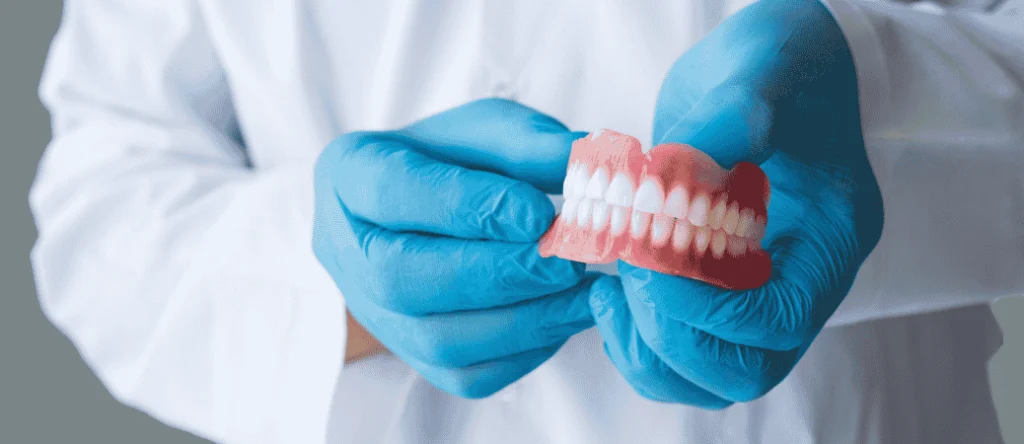
Food getting stuck under snap-in dentures is a common concern because the implant attachments secure the denture without creating a completely food-tight seal. Small gaps between the denture base and gum tissue can allow food particles to collect during meals.
Gentle cleaning, simple eating adjustments, and a professional fit assessment can help manage the problem.
With removable snap-in dentures, you have access to the underside for cleaning. A few particles after a meal do not, by themselves, mean your implants are failing.
Food beneath the base is also different from food sticking to the outside teeth or pink surfaces.
If you keep finding tightly packed debris against your gums, you deserve a closer look at the fit and shape of your denture, even when it feels secure.
Why Can Food Collect Beneath the Denture Base?
Your denture base rests against gum tissue, where small gaps allow food to enter. The amount you notice depends on how closely the base follows your gums and how food moves around its edges.
Implants Provide Retention, Not a Food-Tight Seal
Your implant attachments provide retention, meaning they help hold your denture in position. They do not close every space between the underside and your gums.
Depending on your design, gum tissue also carries some chewing pressure. As that tissue compresses, tiny openings give food a route beneath the base even while your denture stays attached.
How Gaps, Gum Changes, and Denture Design Affect Food Trapping
Your gums and the underlying jawbone ridge can change shape over time, while the denture base generally maintains its original form.
As a result, gaps may develop between the denture and supporting tissues, allowing more food to collect underneath.
The thickness and curves of your denture’s edges also affect where food collects. If you have loose snap-in dentures along with new food packing, ask for an assessment of both the tissue fit and retention.
Occasional Debris vs. Persistent Buildup
You might find a few loose crumbs that rinse away easily after eating. That differs from having food press into the same spot at most meals or feeling grit that hurts when you chew.
Notice where the debris collects and whether the pattern is changing. Those details help your dentist locate a gap or contour that needs attention.
What Should You Do When Food Gets Underneath?
Pause eating and gently clear the trapped food before continuing to chew. Pressing food against your gums adds irritation and makes an uncomfortable meal harder to finish.

Remove and Rinse Removable Dentures as Directed
Wash your hands, then remove your denture using the technique your dental team taught you. Work over a folded towel or a water-filled sink to cushion an accidental drop.
Rinse the underside with cool or lukewarm water and rinse your mouth. If removal or reseating is difficult, ask your dental team to review the technique with you.
Gently Clear Debris Without Sharp Tools or Force
Use a soft denture brush and a denture-safe cleanser to remove food particles from the appliance. Clean gently around attachment housings and follow your dentist’s instructions to avoid damaging the components.
Keep pins, knives, and metal picks away from your denture and gums. If a hard deposit stays in place after gentle brushing, arrange professional cleaning; forceful scraping risks damage to the surface.
How Can Eating Habits Reduce Food Trapping?
You can reduce the amount of food pushed beneath the base by taking smaller bites and changing troublesome textures. Aim for comfortable meals while keeping a varied diet.
Take Smaller Bites and Sip Water During Meals
Cut your food into manageable pieces and chew slowly. Spread chewing pressure across both sides when comfortable, following any specific instructions for your denture.
Sip water during your meal to help clear loose particles from your mouth. Water will not reliably flush out food already packed beneath the base, so remove and clean your denture if grit remains.
Modify Sticky Foods and Foods With Seeds or Hard Fragments
Adjust foods that repeatedly cause trouble for you. Caramel and other sticky foods cling to denture surfaces, while seeds and popcorn hulls slip into small spaces underneath.
At holiday meals, your food choices and texture changes might include tender turkey with gravy or cooked vegetables.
You can also support oral health with a nutritious diet by choosing soft proteins and preparing produce in easier-to-chew forms.
Should You Use Denture Adhesive With Snap-In Dentures?
Do not use denture adhesive with snap-in dentures unless your dentist specifically recommends it for your appliance. Adhesives may interfere with attachment components and cannot correct an underlying fit problem.
If your dentist approves an adhesive, ask where to apply it, how much to use, and how to remove it safely during cleaning.
Which Cleaning Habits Keep Buildup Under Control?
Your daily routine should clean both the denture’s underside and the tissues around your implants. Rinsing removes loose food, while brushing addresses the plaque that stays behind.
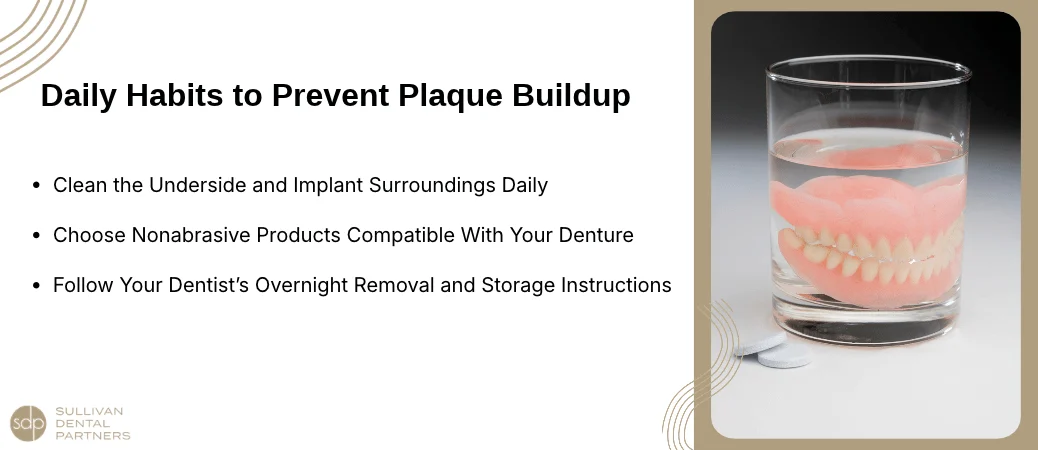
Clean the Underside and Implant Surroundings Daily
Remove your denture as instructed so you can reach the entire tissue-facing surface. You should clean your dentures daily to remove food particles and bacteria, including the underside.
Use the brush or other tools your clinician recommends around the exposed implant parts and gumline.
Your routine for maintaining dental implants should also include cleaning any remaining natural teeth. If bad breath continues despite careful oral hygiene, bring it up at your appointment.
Choose Nonabrasive Products Compatible With Your Denture
Choose a nonabrasive cleanser approved for your denture’s materials and attachment system. Some dentures contain metal parts or soft liners that need specific care.
Avoid household bleach, harsh powders, and abrasive whitening toothpaste unless your clinician gives specific product instructions.
Keep denture-cleaning solutions outside your mouth, follow the labeled soaking time, and rinse thoroughly before wearing your denture again.
Follow Your Dentist’s Overnight Removal and Storage Instructions
Follow your dentist’s directions for giving your gum tissue a break overnight. If you recently had treatment, your short-term wearing instructions might differ from your long-term routine.
Ask whether your particular denture belongs in plain water or a compatible soaking solution when removed. Keep it away from hot water, and confirm any storage restrictions for its attachment parts or liner.
When Should a Dentist Check the Fit and Design?
Schedule a fit assessment when food repeatedly packs beneath the base despite careful cleaning or when your usual pattern changes.
Your dentist needs to examine how the denture meets your gums, even if it still snaps securely into place.
Persistent Food Packing Despite Careful Cleaning
Arrange a visit if you repeatedly need to interrupt meals to remove packed food. Tell your dentist where it collects, which foods trigger it, and when the problem began.
During dental cleanings and exams, your dental team at Sullivan Dental Partners can assess your gum tissue and the denture’s underside.
Bring your denture and the names of your cleaning products so the discussion stays specific.
Pain, Swelling, Bleeding, or Lasting Odor
Contact your dentist promptly if you notice pain, swelling, bleeding, or odor that continues after cleaning. These symptoms warrant an examination for irritation or inflammation around your implants.
Seek prompt dental evaluation if you notice pus, movement of an implant, or worsening swelling. If swelling interferes with breathing or swallowing, seek emergency medical attention immediately.
When Contour Changes, a Reline, or Replacement May Help
Your dentist might reshape an area that directs food beneath the base or adjust a pressure point. A reline changes the tissue-facing surface to improve its fit against your current gum shape.
Replacement becomes an option when the base or bite needs more extensive correction. Keep your regular dental checkups so these changes receive attention, and leave filing or relining to your dental team.
Less Food Buildup Starts With Cleaning and a Fit Check

Food getting stuck under snap-in dentures does not automatically mean your implants are failing.
Small gaps between the denture base and gum tissue can allow food to collect, while changes in fit or attachment components may contribute to repeated buildup.
Gentle daily cleaning, thoughtful eating habits, and regular dental evaluations can help keep your dentures comfortable.
If food repeatedly becomes trapped or you notice soreness, swelling, or changes in retention, a professional assessment can help identify the cause.
Frequently Asked Questions
Your next step depends on whether you wear removable snap-in dentures, a fixed restoration, or partial dentures. The way you reach and clean beneath each design differs.
Does food under snap-in dentures mean the implants are failing?
Food beneath your snap-in dentures alone does not mean your implants are failing. Your dentist should check persistent trapping, especially when you also notice pain, bleeding, swelling, or movement of an implant.
Can a nonstick coating stop food collecting beneath my dentures?
You should not rely on a nonstick coating to prevent food from collecting beneath your dentures.
A coating leaves any gap between your base and gum tissue unchanged, so ask your dentist to assess the fit before applying any surface product.
Does food collect under fixed All-on-4 restorations too?
Yes, food also collects beneath fixed All-on-4 restorations, including in spaces provided for cleaning access. You clean beneath that fixed bridge with tools selected by your dental team; removal belongs to your clinician.
Is food trapping under partial dentures the same problem?
You face a similar gap-related issue with partial dentures, with added cleaning needs around clasps and remaining teeth.
Clean those natural teeth carefully and have repeated trapping checked, because plaque near the supporting teeth raises your risk of decay and gum problems.