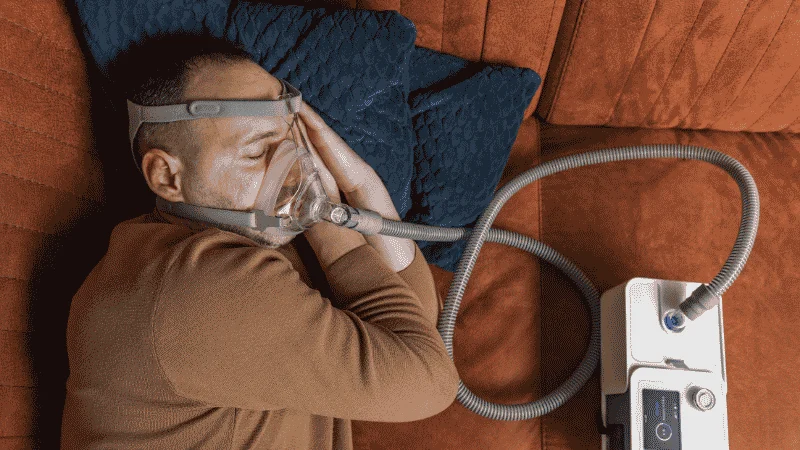
If you struggle with a CPAP mask at night, you are not alone. Many people with sleep apnea want a simpler option that still helps them breathe better while they sleep.
Oral appliances treat obstructive sleep apnea by gently moving your jaw or tongue forward to keep your airway open, so you can breathe without using a CPAP machine.
These small devices fit in your mouth like a sports guard. You wear an oral appliance while you sleep, and it helps reduce airway blockage linked to OSA.
You have different options for sleep apnea treatment, from mandibular advancement devices to tongue-stabilizing devices.
Some people with mild to moderate obstructive sleep apnea find that oral appliances offer a more comfortable and easier way to manage symptoms compared to CPAP.
Understanding how they work can help you decide if this approach fits your needs.
Key Takeaways
- Oral appliances help keep your airway open during sleep without a CPAP machine.
- They work best for many people with mild to moderate obstructive sleep apnea.
- Different types of oral appliances fit different comfort and dental needs.
Table of Content:
- Understanding Sleep Apnea and Its Health Impacts
- How Oral Appliances Manage Obstructive Sleep Apnea
- Types of Oral Appliances: Options for Different Needs
- Comparing Oral Appliances With CPAP and Other Alternatives
- Benefits, Risks, and Considerations for Oral Appliance Users
- Frequently Asked Questions
Understanding Sleep Apnea and Its Health Impacts
Sleep apnea is a form of sleep-disordered breathing that disrupts your airflow and lowers your oxygen levels at night. These repeated pauses in breathing strain your heart, brain, and blood vessels and often leave you tired during the day.
Types of Sleep Apnea: OSA vs. Central Sleep Apnea
There are two main types of sleep apnea: obstructive sleep apnea (OSA) and central sleep apnea.
OSA is the most common type. It happens when the muscles in the back of your throat relax too much during sleep.
This causes your airway to narrow or close, which blocks airflow even though your body tries to breathe. Loud snoring is common with OSA, along with choking or gasping sounds.
When airflow stops, your oxygen levels drop. Your brain briefly wakes you to reopen your airway. You may not remember these awakenings, but they can happen dozens of times each hour.
Central sleep apnea works differently. Your airway stays open, but your brain fails to send steady signals to your breathing muscles.
Because of this signaling problem, you stop breathing for short periods. Oral appliances treat OSA, but they do not treat central sleep apnea.
Recognizing Sleep Apnea Symptoms and Risks

Sleep apnea symptoms often show up at night and during the day.
Common signs include:
- Loud, chronic snoring
- Pauses in breathing witnessed by a partner
- Gasping or choking during sleep
- Morning headaches
- Dry mouth upon waking
During the day, you may notice daytime fatigue, trouble focusing, or irritability. You might fall asleep while watching TV or even while driving.
Some people face higher risk. You may be more likely to develop OSA if you carry extra weight, have a large neck size, or have a family history of sleep apnea.
Men and older adults also face higher rates, though women can develop it as well, especially after menopause.
Consequences of Untreated Sleep Apnea
Untreated obstructive sleep apnea does more than make you tired. Repeated drops in oxygen levels stress your cardiovascular system.
Over time, this strain can raise your risk of:
- High blood pressure
- Stroke
- Atrial fibrillation and other heart rhythm problems
- Heart disease
Each breathing pause forces your body into a stress response. Your heart rate rises, and your blood pressure spikes. When this happens night after night, the damage builds.
Low oxygen levels and poor sleep quality also affect your brain. You may struggle with memory, decision-making, and mood. Treating sleep apnea can lower these risks and help protect your long-term health.



How Oral Appliances Manage Obstructive Sleep Apnea
Oral appliances keep your airway open while you sleep by changing the position of your jaw or tongue. They offer a quiet, mask‑free option when you cannot tolerate CPAP or prefer a smaller device.
Mechanisms: Jaw and Tongue Positioning
Obstructive sleep apnea (OSA) happens when the muscles in your throat relax and block airflow. Oral appliances prevent that collapse by holding your mouth in a stable position.
The most common devices are mandibular advancement devices (MADs), also called mandibular advancement splints, mandibular repositioning appliances, or simply MAS. A mandibular advancement device moves your lower jaw slightly forward.
This forward shift tightens the soft tissues in your throat and reduces airway blockage.
Another option is a tongue-retaining device (TRD), sometimes called a tongue-stabilizing device (TSD). It uses gentle suction to keep your tongue from falling back during sleep. By controlling tongue position, it helps maintain airflow.
Many experts describe how these devices hold the airway open. Most devices fit over your teeth like a retainer and you wear them only at night.
Difference Between Oral Appliances and CPAP Therapy
CPAP therapy uses a bedside machine to push air through a mask into your airway. The steady air pressure prevents soft tissues from collapsing.
Oral appliance therapy (OAT) works differently. It does not use air pressure. Instead, it repositions your jaw or tongue to keep the airway open.
You may find oral appliances smaller and easier to travel with. They make no machine noise and do not require a power source. However, CPAP often works better for severe OSA because it provides constant air support.
Doctors often recommend oral appliance therapy for mild to moderate OSA or when you cannot tolerate CPAP.
Who Is a Good Candidate for Oral Appliance Therapy?
You may be a good candidate if you have mild to moderate obstructive sleep apnea. Many providers describe these devices as a noninvasive option for people who cannot use CPAP comfortably.
You might also benefit if you snore loudly and have confirmed OSA through a sleep study. A sleep doctor will review your apnea-hypopnea index (AHI), symptoms, and medical history before recommending a device.
Oral appliances require healthy teeth and gums for proper fit. If you have severe jaw pain, loose teeth, or advanced gum disease, you may need other treatment first.
Children and adults can use certain devices, but each case needs individual evaluation.
Role of Sleep Specialists and Dental Sleep Medicine
You should not buy a boil‑and‑bite device online without medical guidance. A sleep specialist diagnoses OSA through a sleep study and determines if oral appliance therapy fits your needs.
After diagnosis, a dentist trained in dental sleep medicine designs a custom mandibular repositioning appliance or TRD for you. Custom devices fit better and allow gradual adjustment of jaw position.
Professional groups such as the American Academy of Dental Sleep Medicine explain how trained dentists manage follow‑up care. Your provider will adjust the device, monitor side effects, and track symptom improvement.
You will need regular checkups to check fit, comfort, and long‑term results. This team approach helps you manage sleep apnea safely without relying on a CPAP machine.
Types of Oral Appliances: Options for Different Needs
Different oral appliances for sleep apnea work in different ways. Some move your jaw forward, some hold your tongue in place, and others change how your upper jaw develops.
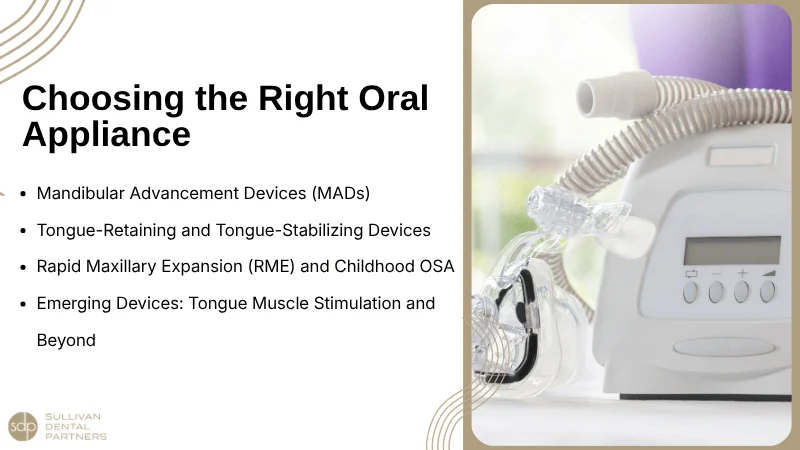
Mandibular Advancement Devices (MADs)
Mandibular advancement devices (MADs) are the most common option for obstructive sleep apnea. You may also hear them called mandibular advancement splints (MAS) or mandibular repositioning appliances.
These devices fit over your upper and lower teeth. They gently move your lower jaw forward while you sleep. This forward position helps keep your airway open and reduces collapse in the throat.
Most people with mild to moderate sleep apnea use a MAD. Many doctors recommend them if you cannot tolerate CPAP.
You can choose between:
- Custom-fitted oral appliances, made by a dentist
- Over-the-counter oral appliances, sold online or in stores
Custom devices cost more, but they fit better and allow small adjustments. A better fit often improves comfort and results.
Tongue-Retaining and Tongue-Stabilizing Devices
Tongue-retaining devices (TRDs) and tongue-stabilizing devices (TSDs) work differently than MADs. Instead of moving your jaw, they hold your tongue forward.
These devices use a soft suction bulb that gently keeps your tongue from falling back into your throat. When your tongue stays forward, your airway stays more open.
You might consider a TRD if you:
- Cannot move your jaw forward comfortably
- Have dental issues that prevent using a MAD
- Do not have enough healthy teeth for a mandibular advancement device
Some people find TRDs bulky at first. You may need time to adjust to the suction feeling on your tongue.
Rapid Maxillary Expansion (RME) and Childhood OSA
Rapid maxillary expansion (RME) mainly treats children with obstructive sleep apnea. It does not work like a typical mouth guard.
An RME device attaches to the upper teeth. It slowly widens the upper jaw over weeks or months. As the jaw expands, the nasal passages often become wider. This change can improve airflow during sleep.
Doctors often use RME when a child has:
- A narrow upper jaw
- Crowded teeth
- Ongoing mouth breathing
RME focuses on growth and development. It aims to correct structural problems early, which may reduce sleep apnea symptoms over time.
Adults usually do not qualify for standard RME because their bones have stopped growing.
Emerging Devices: Tongue Muscle Stimulation and Beyond
New treatments are expanding your options beyond traditional oral appliances. One example is the tongue muscle stimulation device.
These devices stimulate the tongue muscles to help prevent collapse during sleep. Some designs use electrical stimulation to keep the tongue firm and forward.
Other emerging tools combine features of mandibular advancement devices and tongue control. Researchers continue to study how well they work compared to established oral appliances for sleep apnea.
If you struggle with standard devices, ask your sleep specialist about newer technologies. They may not replace CPAP in all cases, but they give you more choices based on your comfort and medical needs.
Comparing Oral Appliances With CPAP and Other Alternatives
You have several choices for sleep apnea treatment. Each option works in a different way, and comfort, cost, and severity of apnea often guide your decision.
CPAP, BiPAP, APAP, and EPAP Therapies
Continuous positive airway pressure (CPAP) pushes a steady stream of air through a mask to keep your airway open. Doctors often call it the most effective treatment for moderate to severe obstructive sleep apnea.
Some people struggle with mask discomfort, dry mouth, or trouble breathing out against pressure. In those cases, your doctor may suggest other PAP devices:
- BiPAP (bilevel positive airway pressure): Uses higher pressure when you inhale and lower pressure when you exhale.
- APAP (auto-adjusting positive airway pressure): Changes pressure levels during the night based on your breathing.
- EPAP (expiratory positive airway pressure): Uses small nasal valves to create resistance when you breathe out, without a full machine.
These are common CPAP alternatives. They still use air pressure, but they may feel more comfortable for some people.
Who Might Prefer CPAP or Oral Appliances?
If you have severe sleep apnea, CPAP therapy often controls breathing events more fully than an oral device. It works well in lab studies and can sharply reduce apnea episodes when you use it every night.
However, you must wear it consistently. Many people remove the mask during sleep or skip nights.
Oral appliances, such as mandibular advancement devices, move your lower jaw forward to keep your airway open. They work best for mild to moderate cases. Studies show that while CPAP clears the airway more strongly, oral appliances can lead to similar real‑world results because people are more likely to wear them.
If you travel often, dislike masks, or cannot tolerate air pressure, you may prefer an oral appliance. If your apnea is severe or linked to other health risks, your doctor may guide you toward CPAP.
Positional and Lifestyle Therapies
Some people experience more apnea events when they sleep on their back. Positional therapy trains you to use side sleeping instead.
Devices can vibrate when you roll onto your back. Simple methods, like sewing a tennis ball into your sleep shirt, can also help. These methods work best if your apnea mostly happens in the supine position.
Lifestyle changes also matter. Weight loss can reduce airway blockage, but it rarely cures moderate or severe apnea on its own. Avoiding alcohol before bed may reduce airway collapse.
Experts describe these steps as part of alternatives to CPAP, but they often support another treatment instead of replacing it.
Surgical and Device-Based Alternatives
If you want a sleep apnea treatment without CPAP and cannot tolerate an oral appliance, you may look at surgical options.
Common procedures include:
- Uvulopalatopharyngoplasty (UPPP): Removes or reshapes soft tissue in the throat.
- Maxillomandibular advancement (MMA): Moves the upper and lower jaws forward to enlarge the airway.
- Hypoglossal nerve stimulation: Implants a device that moves your tongue forward during sleep.
These options fall under sleep apnea surgery. Doctors usually reserve them for people who do not improve with CPAP therapy or other treatments.
Surgery can reduce apnea events, but it carries risks like pain, swelling, and recovery time. You and your sleep specialist should weigh these factors carefully before choosing this alternative to CPAP.
Benefits, Risks, and Considerations for Oral Appliance Users
Oral appliances can reduce snoring and improve sleep, but they also require proper fitting and follow-up. You need to weigh comfort, side effects, and long-term dental health before choosing this option.
Effectiveness for Mild to Moderate OSA
Oral appliances work best if you have mild to moderate sleep apnea. These devices move your lower jaw forward to keep your airway open while you sleep.
Many people notice less snoring and less daytime sleepiness within weeks. Some also see better focus and mood during the day. A follow-up sleep study often checks how well the dental device controls your breathing pauses.
Oral appliances may not control severe sleep apnea as well as CPAP. Your doctor may suggest other treatments if your oxygen levels drop too low at night.
You can improve results with weight loss, healthy sleep habits, and lifestyle changes like limiting alcohol before bed. Some people also benefit from mouth exercises, often called myofunctional therapy, to strengthen throat muscles.
Managing Side Effects and Jaw Health
Most side effects are mild, but you should know what to expect. Common issues include dry mouth, excess saliva, or mild gum irritation.
Some people feel jaw pain or tightness in the morning. The device shifts your lower jaw forward, which can stress the temporomandibular joint. If you already have TMJ problems, talk with your dentist before starting treatment.
You may also notice changes in your bite over time. Small tooth movements can happen with long-term use.
If you have bruxism or teeth grinding, tell your provider. Some devices help protect teeth, but others may need special adjustments. Regular dental visits help catch problems early and lower the risk of lasting damage.
The Importance of Custom Fitting and Follow-Up

You should avoid over-the-counter mouthpieces. Custom-fitted oral appliances adjust to your teeth and jaw shape.
A trained dentist measures your bite and designs the device to fit securely. This reduces pain and improves results.
Follow-up visits matter. Your dentist adjusts the device over time to find the best jaw position. Too little movement may not control apnea. Too much can cause jaw strain.
You may need another sleep study after adjustments. This confirms that the dental device lowers breathing pauses and improves oxygen levels.
Pros and Cons: Comfort, Compliance, and Portability
Many people choose oral appliances because they are small and quiet. You do not need a mask, tubing, or a machine. That makes travel simple and setup easy.
Oral appliances offer an alternative to CPAP for mild to moderate sleep apnea. People often use them more consistently because they feel less bulky.
However, oral appliances may not work for everyone. They can cause side effects, and they may not control severe cases.
You should think about:
- Comfort: easier to wear for some people
- Compliance: higher use rates in some users
- Portability: fits in a small case
- Limitations: less effective for severe OSA
Your comfort, medical needs, and dental health should guide your decision.
Frequently Asked Questions
You may wonder how these devices work, who should use them, what they cost, and how they compare to CPAP. Clear answers can help you decide if this treatment fits your needs and health history.
How does a dental sleep device help reduce snoring and sleep apnea symptoms?
A dental sleep device keeps your airway open while you sleep. It moves your lower jaw forward or holds your tongue in place so air can pass through your throat more easily.
The most common type is a mandibular advancement device. These devices gently pull your lower jaw forward, which also moves your tongue forward and creates more space in the back of your throat.
When your airway stays open, you breathe more smoothly. This reduces snoring and lowers the number of breathing pauses linked to obstructive sleep apnea.
Who is a good candidate for a mandibular advancement device, and who shouldn’t use one?
You are often a good candidate if you have mild to moderate obstructive sleep apnea and cannot tolerate CPAP. Many people choose an oral device when they find the mask or air pressure hard to use each night.
Oral appliances work best for obstructive sleep apnea, not central sleep apnea. If you have central sleep apnea or severe obstructive sleep apnea, your doctor may recommend another treatment instead.
You also need healthy teeth and gums. The device fits over your teeth, so weak or missing teeth may limit your options.
How much does a custom dental sleep appliance typically cost, and is it covered by insurance?
A custom dental sleep appliance usually costs more than an over-the-counter mouth guard. The price often reflects the dental exam, fitting, and follow-up visits.
Many medical insurance plans cover oral appliance therapy when a sleep study confirms obstructive sleep apnea. Coverage varies, so you should check your specific plan and ask if the provider must be in-network.
Custom devices tend to work better than store-bought models.
How effective are oral appliances for mild to moderate sleep apnea, and what is the success rate?
Oral appliances improve symptoms in many people with mild to moderate obstructive sleep apnea. They reduce snoring and lower the number of breathing pauses during sleep.
They do not usually work as well as CPAP at fully normalizing breathing. Still, many people use them long term because they feel more comfortable and easier to manage.
Your success depends on proper fitting and follow-up care. A trained dentist should adjust the device over time to improve results and reduce side effects.
What are the pros and cons of choosing a mouth guard-style device compared with CPAP therapy?
A mouth guard-style device is small, portable, and quiet. You do not need a mask, hose, or machine, which makes travel easier.
CPAP uses pressurized air to hold your airway open and is considered the most effective treatment for improving airflow.
On the downside, oral appliances may cause jaw soreness, tooth movement, or bite changes. CPAP may feel bulky, but it often provides stronger control of breathing events, especially in severe cases.
Are there FDA-approved oral appliances for sleep apnea, and how do I know I’m getting a legitimate one?
Yes, many oral appliances for sleep apnea are cleared by the FDA. A licensed dentist should prescribe and fit the device after reviewing your sleep study.
Legitimate devices are custom-made and adjusted over time. They differ from basic over-the-counter products, which may not treat sleep apnea effectively.
Ask your dentist about the specific brand and its FDA clearance. Make sure you receive ongoing follow-up visits to check fit, comfort, and treatment results.