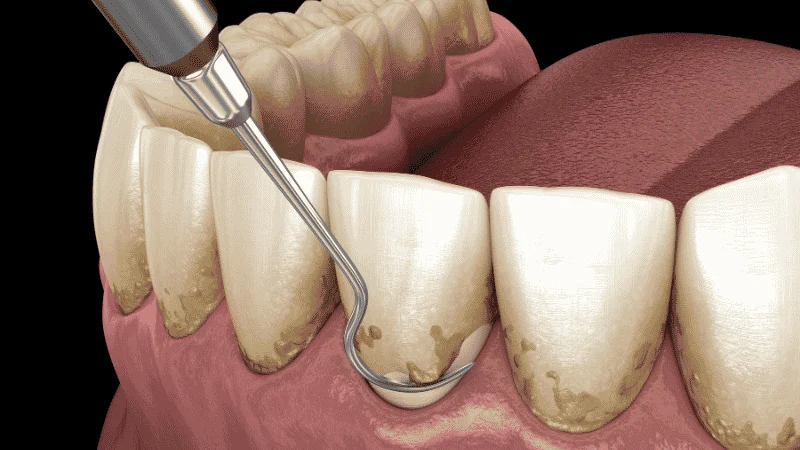
A root canal is supposed to stop your tooth pain, so it can feel scary when the pain shows up again months later. You might wonder if something went wrong or if you need another procedure.
Pain that returns months after root canal treatment usually means there is a new problem with the tooth, like a missed canal, a crack, or a new infection, and it is not something you should ignore.
Some soreness right after treatment is normal, but pain that comes back weeks or months later is different.
It often points to an issue that needs a dentist to check it out, whether that is a small crack, a leaky filling, or bacteria that found a way back in.
This guide walks you through the most common reasons for post-root canal pain, how a dentist figures out what is going on, and what your treatment options might look like.
You will also learn why biting down can make the pain worse, and how to tell if the pain is even coming from the treated tooth at all.
Sometimes tooth pain after a root canal is actually caused by a nearby tooth, your gums, or even your jaw.
Knowing the difference can help you get the right care faster and protect your tooth for the long run.
Key Takeaways
- Pain that returns months after a root canal often signals a new issue that needs a dentist’s attention.
- Several tooth-related problems, including cracks and reinfection, can cause pain to come back, especially when biting or chewing.
- A dentist or endodontist can pinpoint the cause and recommend treatment to protect your tooth long term.
Table of Content
- When Delayed Pain Is Normal and When It Needs Attention
- Common Tooth-Related Reasons for Returning Pain
- Why Biting or Chewing Can Trigger the Pain
- When the Pain Is Not From the Treated Tooth
- How a Dentist or Endodontist Finds the Cause
- Treatment Options and Protecting the Tooth Long Term
- Frequently Asked Questions
When Delayed Pain Is Normal and When It Needs Attention
Not all pain after a root canal means something went wrong. Some soreness is just your mouth healing, but other symptoms are your body telling you to call your dentist right away.
Typical Healing Soreness Versus Returning Symptoms
Mild soreness or sensitivity to hot and cold can stick around for a while after a root canal. This kind of sensitivity is normal and should slowly get better over time.
In fact, occasional mild sensitivity can be normal for up to six months after treatment. This happens because the tissue around your tooth root needs time to calm down and heal.
You might also feel some bite tenderness for a few weeks, especially before you get your permanent crown. This is different from sharp pain when biting, which is not something you should just wait out.
If your discomfort feels steady, dull, or slowly improving, it’s likely just healing. If it’s getting worse, sharp, or throbbing, that’s a different story.
Warning Signs That Need Prompt Dental Care
Some symptoms mean it’s time to call your dentist, not wait it out. A root canal tooth shouldn’t still hurt months or years later without a reason, and your dentist can find out why.
Watch for these signs:
- Sharp pain when biting down or chewing
- A gum pimple near the treated tooth
- A bad taste in your mouth that won’t go away
- Pain that comes and goes but keeps returning
- Toothache that feels like it’s getting worse, not better
A gum pimple, sometimes called a fistula, often means there’s an infection draining nearby. A bad taste can also point to bacteria still hiding in the tooth.
These signs mean it’s time to get checked out soon, since pain months after a root canal isn’t something to ignore.
When Swelling or Fever Is an Emergency
Swelling or fever after a root canal is a bigger deal. These symptoms can mean the infection has spread beyond the tooth itself.
Some patients do experience a flare-up in the first few days, with pain or swelling that peaks within 24 to 48 hours. This is usually not dangerous and often settles down within a week on its own.
But if swelling shows up weeks or months after treatment, along with a fever, don’t wait for it to pass. This combination often means you need antibiotics or another visit to fix the problem at its source.
Call your dentist right away if you notice:
- Swelling in your face, cheek, or jaw
- A fever along with tooth pain
- Trouble swallowing or breathing
- Swelling that spreads quickly
These are signs of a spreading infection, and they need same-day dental or medical care.



Common Tooth-Related Reasons for Returning Pain
Most of the time, pain that comes back after a root canal points to a problem inside or around the treated tooth itself.
Missed canals, new infections, leaky seals, and cracks are the most common culprits, and each one needs a different fix.

Missed or Untreated Canals
Teeth, especially molars, often have more than one canal. Upper molars can have three or four canals, and some are tiny or curved in ways that make them easy to miss.
If your dentist misses a canal during treatment, leftover tissue can stay infected even though the rest of the tooth looks fine on an X-ray. This is one of the most common reasons for a failed root canal.
You might not notice a problem right away. Pain from missed canals can show up weeks or months later as the tissue inside slowly breaks down.
An endodontist can often spot a missed canal using magnification or 3D imaging that wasn’t used during your first treatment.
Persistent or Recurrent Infection
Sometimes bacteria survive the original treatment, even when every canal was found and cleaned. Over time, this can lead to a persistent infection that slowly builds pressure inside the tooth or in the bone around the root tip.
You may notice swelling, a bad taste, or a small bump on your gum near the tooth. In some cases, there are no obvious signs at all until the pain returns.
This type of root canal failure often shows up on an X-ray as a dark spot near the root, which can signal bone loss caused by the infection.
Good oral hygiene helps protect the rest of your mouth, but it can’t fix an infection that’s already sealed inside the tooth. Retreatment or a small surgery called an apicoectomy are the usual next steps.
Leakage Around a Crown, Filling, or Temporary Filling
Your root canal filling material is only effective if it stays sealed off from saliva and bacteria.
If the crown, filling, or temporary filling on top of the tooth develops a gap or crack, bacteria can slip through and reach the canals again.
This is called coronal leakage, and it’s a common cause of pain returning months or even years after treatment.
It tends to happen gradually, so you might not notice a problem until the tooth starts to ache or feels sensitive to pressure.
Cavities that form under a crown can cause the same issue. Regular checkups help catch small gaps early, before bacteria have a chance to cause a new infection.
Cracked Teeth and Vertical Root Fractures
A cracked tooth or cracked root is one of the trickier causes of returning pain because it doesn’t always show up clearly on an X-ray. You might feel sharp pain when chewing, followed by a dull ache that lingers afterward.
Root-canal-treated teeth are more prone to cracking because they lose some structural strength once the pulp is removed. This is especially true for molars, which handle more chewing force than front teeth.
A vertical root fracture usually starts small and gets worse over time. Left untreated, it can lead to gum swelling, bone loss, and eventually loss of the tooth.
Your dentist may use a special light, dye, or a small camera called a microscope to check for cracks that aren’t visible otherwise.
Why Biting or Chewing Can Trigger the Pain
Pain when you bite down often points to something mechanical rather than a new infection. Your bite alignment, tiny cracks in the tooth, and habits like grinding can all put extra pressure on a treated tooth and set off pain.
A High Bite or Occlusal Trauma
A high bite happens when your crown or filling sits just a little too tall. When you bite down, that tooth takes more force than it should, and it can feel sore or tender every time you chew.
This is called occlusal trauma, and it’s actually one of the easier problems to fix. Your dentist can find it with a simple bite test, where you bite on colored paper that marks the spots hitting too hard.
Signs of a high bite include:
- Soreness that shows up right after your root canal or crown was placed
- Pain that gets better on soft foods and worse on hard ones
- Tenderness on one specific tooth, not the whole mouth
Once the high spot is smoothed down, the pain often goes away within a few days.
Pain on Release and Hidden Cracks
Some pain doesn’t happen when you bite down. It happens when you let go, known as pain on release. This is a classic sign of a crack in the tooth.
A crack can let your bite force separate the tooth slightly, which pinches the nerve fibers inside.
This often causes a sharp pain when biting into something like ice, nuts, or a hard piece of bread, followed by a quick jab of pain as you release your bite.
Cracks can be hard to see on regular X-rays, so your dentist may use a special light, a dental scope, or a bite stick test to find the exact spot.
Teeth with large fillings, root canals, or a history of clenching are more likely to develop these cracks.
Grinding, Clenching, and Bite-Related Strain
Bruxism, or grinding and clenching your teeth, puts steady extra pressure on your teeth, especially while you sleep.
This ongoing strain can lead to bite tenderness and soreness around a root canal tooth, even if the treatment itself was done correctly.
Grinding can also make an existing high bite or hairline crack worse over time.
Your dentist can often spot the effects of grinding through palpation of your jaw muscles, checking for tightness or soreness near your temples and jawline.
If bruxism is suspected, symptoms usually include:
- Jaw soreness or tightness in the morning
- Flattened or worn-down teeth
- Headaches near the temples
A night guard is a common way to protect your teeth and ease the strain caused by grinding.
When the Pain Is Not From the Treated Tooth
Sometimes the tooth that had the root canal is not actually the problem. Pain can come from a nearby tooth, your gums, your sinuses, or even your jaw joint.
Dentists call tooth-related pain “odontogenic pain” and pain from other areas “non-odontogenic pain,” and figuring out which one you have is the first step to feeling better.
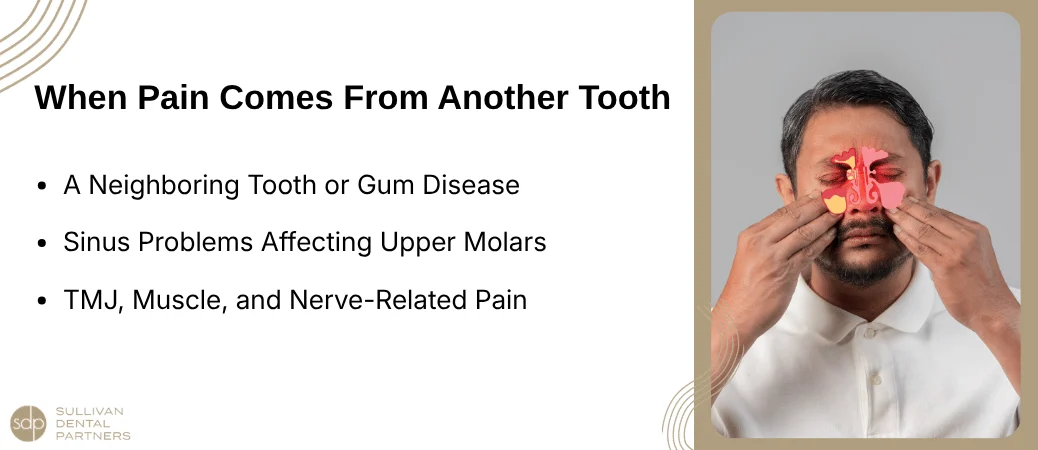
A Neighboring Tooth or Gum Disease
The tooth next to your root canal tooth might be the real source of your pain. Cavities, cracks, or infections in a nearby tooth can feel like they are coming from the treated tooth.
Gum disease is another common cause. If plaque and bacteria build up around your teeth, it can lead to swollen, sore gums that ache when you eat or brush.
Your dentist can check for this with a simple test called palpation, where they gently press on your teeth and gums to find the sore spot.
They may also do vitality testing on nearby teeth to see if the nerve inside is healthy. This test uses cold or electric stimulation to check for a response.
X-rays can also show hidden decay or bone loss from gum disease that you cannot see or feel on your own.
Sinus Problems Affecting Upper Molars
If your pain is in your upper back teeth, your sinuses might be to blame. Your upper molars sit close to your sinuses, and the nerves in this area are connected. This means sinus problems can easily feel like tooth pain.
Sinusitis, or sinus inflammation, happens when your sinuses get infected or irritated, often from a cold or allergies.
This can cause pressure and pain that spreads to your upper teeth, especially when you bend forward or lie down.
Signs that your pain is coming from your sinuses include:
- Pain that gets worse when you move your head
- Pressure around your nose, cheeks, or forehead
- Stuffy or runny nose
- Pain in multiple upper teeth at once, not just one
If you’re not sure whether the pain is coming from your sinuses or a previously treated tooth, Sullivan Dental Partners can help rule out dental causes with a thorough exam and diagnostic imaging.
If the tooth and surrounding tissues look healthy, your dentist can guide you toward the appropriate medical care for possible sinus-related pain.
TMJ, Muscle, and Nerve-Related Pain
Your jaw joint, called the temporomandibular joint, can also cause pain that feels like it’s coming from your teeth.
Problems here, often called TMJ disorders, can cause aching pain, clicking sounds, or trouble opening your mouth wide.
Muscle tension in your jaw and face can add to this pain too. Stress, teeth grinding, or clenching your jaw can tire out these muscles and cause soreness that spreads to your teeth.
In some cases, the pain comes from nerve problems instead. This is called neuropathic pain, and it happens when nerves send pain signals even without a clear injury or infection causing them.
One specific nerve condition, called atypical odontalgia, can cause a burning or electric-shock type of pain that lasts for months. This kind of pain is harder to diagnose because everything may look normal on X-rays.
Your dentist may need to rule out every other cause first before considering this diagnosis.
How a Dentist or Endodontist Finds the Cause
Finding out why your root canal pain came back starts with simple checks and can move to detailed imaging if needed.
Your dentist or endodontist will look at your bite, your gums, and the tooth itself before deciding on next steps.
Dental Exam and Tooth-by-Tooth Testing
Your dentist or endodontist will start by checking more than just the tooth that had the root canal. Pain can come from a different tooth entirely, so testing each one helps rule that out.
Here’s what this usually includes:
- Vitality testing with cold or hot stimuli to see how nearby teeth respond
- Bite test, where you bite down on a small stick to check for sharp pain on release, which can point to a crack
- Palpation, where the dentist gently presses on your gums to check for swelling or tenderness
- A visual check of your gums, crown, and bite alignment
These steps help narrow down whether the pain is truly coming from the treated tooth or somewhere else nearby.
X-Rays, CBCT, and Evaluation of the Root Canal Filling
If the exam doesn’t give a clear answer, your dentist will likely take images. A periapical x-ray gives a flat, two-dimensional view of the tooth and surrounding bone. It’s useful, but it can miss smaller details.
That’s where CBCT comes in. This 3D scan shows the tooth from every angle, which makes it much easier to spot missed canals, hidden cracks, or bone changes that a flat x-ray might not catch.
Your dentist will also check the root canal filling itself to see if it reaches the full length of the canal and seals tightly, since gaps can let bacteria back in over time.
Treatment Options and Protecting the Tooth Long Term
The right fix for returning pain depends on exactly what caused it, from a quick bite tweak to full retreatment or surgery.
Taking care of the tooth afterward with steady oral hygiene and regular checkups goes a long way toward keeping the pain from coming back.
Bite Adjustment, New Filling, or Crown Repair
Sometimes the pain isn’t about infection at all. If your bite feels off or one tooth hits harder than the others, your dentist can smooth down a high spot in just a few minutes.
A cracked or worn filling can also let bacteria sneak back in, a problem called coronal leakage, which slowly leads to root canal failure over time.
If your crown margin has opened up or the filling has thinned, replacing it can stop new bacteria from reaching the treated tooth underneath.
This fix is often the simplest and cheapest option, so it’s worth ruling out before anyone talks about redoing the whole procedure. Ask your dentist to check your bite and restoration first.
Endodontic Retreatment for Reinfection
If a canal was missed the first time, or bacteria snuck back in through a leaky seal, endodontic retreatment is usually the next step.
Your dentist or endodontist reopens the tooth, removes the old filling material, cleans out hidden bacteria, and reshapes the canals before sealing everything again.
This works especially well when a missed canal or coronal leakage is behind the pain, since it removes the actual problem instead of masking it.
Retreatment success rates run between 75 and 85 percent, and they climb higher when a specialist uses a microscope and 3D imaging to spot canals missed the first time.
Antibiotics alone won’t solve this, since bacteria hiding inside the canals need to be physically cleaned out.
Apicoectomy and Root-End Surgery
When infection sits at the very tip of the root and retreatment isn’t possible or hasn’t worked, an apicoectomy may be the recommended option.
This small surgery lets your dentist or endodontist reach the root tip through the gum, remove the infected tissue, and seal the end of the root from the bottom up.
Root-end surgery is usually done under local anesthesia and takes about an hour, with most people back to normal activities within a few days.
It’s a good choice when a post or crown makes it hard to reopen the tooth from the top. Success rates for this kind of microsurgery run above 90 percent.
When Extraction and Tooth Replacement Are Considered

Sometimes the tooth can’t be saved. A root cracked all the way through, or a tooth with too little healthy structure left, usually means extraction is the safer choice.
Trying to force another round of treatment on a tooth like this can waste time and money without fixing the pain.
Once the tooth is removed, you have a few replacement options, including a dental implant, a fixed bridge, or a snap-in denture, depending on your budget and the health of the surrounding teeth.
Keeping up steady oral hygiene around whichever option you choose helps protect the neighboring teeth and any dental work for years to come.
Frequently Asked Questions
Pain that shows up months after a root canal usually points to a specific, findable cause, and knowing what to look for can help you get the right answer faster.
Here are the questions people ask most often about delayed root canal pain.
Is it normal for a root canal tooth to start hurting again months later?
No, it’s not something you should just live with. A healthy root canal tooth shouldn’t hurt on its own once healing is done.
If pain shows up weeks or months later, it usually means something new is going on. This could be bacteria getting back into the tooth through a leaky crown, a crack, or an infection that never fully cleared.
What are the signs that a root canal may have failed?
A few warning signs tend to show up together. Watch for tenderness when you chew, swelling or a small bump on the gum near the tooth, and sensitivity to hot or cold that lingers.
You might also notice a bad taste in your mouth or a dull, ongoing ache. Any of these on their own is worth mentioning to your dentist, but a combination of them is a stronger signal that something needs a closer look.
Why does my root canal tooth hurt when I bite down or apply pressure?
Pain with pressure often points to something mechanical rather than an infection. A cracked root is one common cause, especially in teeth that have a post or crown or in people who grind their teeth at night.
It can also mean the filling material sits a little too high, which puts extra force on the tooth every time you bite. In some cases, it’s a sign that the infection has come back and is irritating the tissue around the root tip.
Can an infection come back after a root canal treatment?
Yes, it can happen even years after treatment feels successful. Bacteria can sneak back in through a cracked filling, a loose crown, or a spot where the seal has worn down over time.
It’s also possible that a small pocket of infection never fully went away in the first place. This is more likely in complex teeth like molars, which have extra canals that are harder to clean out completely.
Why does a root canal tooth feel sore or throb years after treatment?
Soreness or throbbing years later is often tied to a slow-building problem rather than a sudden one. A small, ongoing infection can sit quietly at the root tip for a long time before it starts causing noticeable discomfort.
Other possibilities include a missed canal that was never treated the first time or a crack that’s grown slowly worse. Because these problems tend to be gradual, the pain often builds up rather than appearing all at once.
When should I see a dentist about pain in a previously treated tooth?
Call your dentist if pain shows up again after your tooth has healed, even if it’s mild.
You should also reach out right away if you notice swelling, a pimple-like bump on the gum, or pain that gets worse over a few days instead of better.
Waiting usually doesn’t help and can give an infection more time to spread. Getting an X-ray and exam early gives your dentist the best chance of catching the problem while it’s still simple to treat.
Conclusion
Pain months after a root canal usually means something has changed and the tooth needs another look. The cause may be as simple as a high bite or as complex as reinfection, a missed canal, or a crack.
The good news is that many of these problems can still be treated when caught early. If the pain keeps returning, gets worse, or comes with swelling, do not wait it out.
Schedule an evaluation so your dentist can identify the cause and recommend the right next step to protect your tooth.