

Most people deal with a cavity or chipped tooth at some point, but what happens when your dental problems go beyond a simple fix?
If you’re struggling with multiple missing teeth, severe decay throughout your mouth, or constant pain when you eat, you might wonder if something bigger needs to be done.
Full mouth reconstruction becomes necessary when damage, disease, or wear affects most or all of your teeth, and restoring just one or two teeth isn’t enough to bring back proper function and comfort.
This process goes beyond basic dental work. It’s a complete approach to rebuilding your oral health and getting your smile back.
The good news is that full mouth dental reconstruction can solve problems you might have been living with for years.
Whether you’re dealing with extensive decay, missing teeth, severe wear from grinding, or bite problems, understanding when you truly need this treatment can help you make the right choice for your health.
Key Takeaways
- You need full mouth rehab when most or all of your teeth are damaged and basic fixes won’t restore proper function
- The reconstruction process is customized to address both function and appearance through restorative dentistry treatments
- Treatment can take several months to over a year and requires ongoing care to maintain your results
Table of Content
- Understanding Full Mouth Reconstruction
- Who Is a Candidate for Full Mouth Reconstruction?
- Causes and Underlying Issues Requiring Reconstruction
- The Full Mouth Reconstruction Process
- Benefits, Maintenance, and Long-Term Success
- Cost, Considerations, and Finding the Right Dentist
- Frequently Asked Questions
Understanding Full Mouth Reconstruction
Full mouth reconstruction addresses severe dental problems that affect most or all of your teeth through a combination of restorative procedures.
This treatment differs from purely cosmetic work because it focuses on restoring function and health first, though it also improves your smile’s appearance.
What Is Full Mouth Reconstruction?
Full mouth reconstruction is a comprehensive dental treatment that rebuilds or restores all or most of your teeth in both your upper and lower jaws.
It’s also called full mouth restoration, full mouth rehabilitation, oral rehabilitation, or complete mouth restoration.
Unlike single tooth repairs, this approach treats your entire mouth as one connected system. Your dentist evaluates how your teeth, gums, jaw joints, and bite work together.
Full mouth reconstruction becomes necessary when damage, disease, or wear affects most or all of your teeth. It’s considered a medical necessity rather than an elective procedure.
The treatment restores your ability to chew properly, speak clearly, and eliminates pain from damaged or missing teeth.
Full Mouth Rehabilitation vs. Smile Makeover
A smile makeover focuses on cosmetic enhancements to improve how your teeth look. You might choose veneers or whitening to create a more attractive smile even when your teeth are healthy and functional.
Full mouth rehabilitation addresses serious dental problems that impact your health and daily life. This is restorative dentistry that repairs extensive decay, replaces missing teeth, or corrects severe wear from grinding.
The key difference is necessity versus choice. If you can’t eat comfortably or have infections and bone loss, you need dental reconstruction for health reasons. If your teeth work fine but you want them to look better, that’s cosmetic work.
Many full mouth reconstructions include aesthetic improvements, but the primary goal is restoring function and eliminating disease.
Common Procedures Used in Reconstruction
Your treatment plan may include several procedures working together:
Dental crowns are caps that cover and protect damaged teeth. They restore strength to teeth weakened by decay, cracks, or root canal therapy.
Dental bridges replace one or more missing teeth by anchoring artificial teeth to your natural teeth or implants on either side of the gap.
Dental implants are titanium posts placed in your jawbone that act as artificial tooth roots. They can support individual crowns, bridges, or even full dentures. Implant-supported dentures offer much better stability than traditional dentures.
Porcelain veneers are thin shells bonded to your front teeth to improve their shape and color. Inlays and onlays repair moderate decay or damage when a filling isn’t enough but a full crown isn’t necessary.
A prosthodontist specializes in prosthodontics, which focuses on replacing and restoring teeth. Complex cases may also involve oral surgery for implant placement or bone grafting.
Your restorative dentist coordinates all these treatments to rebuild your oral health.



Who Is a Candidate for Full Mouth Reconstruction?
Full mouth reconstruction works best for people dealing with multiple serious dental problems at the same time.
The most common candidates have extensive damaged teeth, several missing teeth, or bone loss that affects their bite alignment and daily comfort.
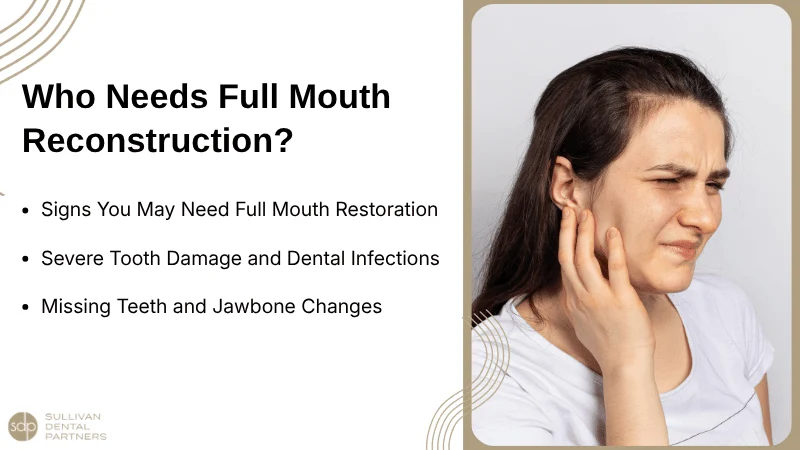
Signs You May Need Full Mouth Restoration
You might need full mouth reconstruction if you have multiple dental issues happening together rather than just one problem tooth.
Many people notice that chewing efficiency has dropped and eating certain foods becomes difficult or painful.
Your teeth may show signs of severe wear from grinding or clenching over many years. This wear can flatten your teeth and change your bite alignment.
You might also have several broken crowns or fillings that keep failing no matter how many times they get fixed.
Chronic jaw pain is another important sign. When your bite doesn’t line up properly, it puts extra stress on your temporomandibular joint and the muscles around your jaw.
Some people experience headaches, limited jaw opening, or soreness that affects daily life.
If old dental work keeps breaking down or you’ve been patching problems one tooth at a time for years, a comprehensive approach may make more sense than continuing with temporary fixes.
Severe Tooth Damage and Dental Infections
Patients with extensive dental damage often need full mouth reconstruction when decay or damage affects most of their teeth. Advanced decay that has spread across multiple teeth can’t be solved with just a few fillings.
Dental infections that reach the roots of several teeth require more than simple treatment. These infections can spread to surrounding bone and gums if left untreated. When you have multiple infected or damaged teeth, removing them and rebuilding your bite often becomes necessary.
Severe tooth damage from accidents or injuries may also require reconstruction. A facial injury can break several teeth and damage the supporting structures all at once.
Acid erosion from medical conditions or dietary habits can wear away tooth structure until teeth become sensitive and weak.
Missing Teeth and Jawbone Changes
Tooth loss changes more than just your smile. When you’re missing several teeth, the remaining teeth can shift and drift out of position. This changes your bite and puts uneven pressure on your jaw.
Bone loss happens naturally after tooth loss. Your jawbone needs the stimulation from tooth roots to stay healthy and strong. Without that stimulation, the bone gradually shrinks away.
This bone loss can change the shape of your face and make your jaw look shorter or more collapsed.
Multiple missing teeth affect your chewing efficiency and can limit what foods you can eat comfortably. The remaining teeth have to work harder, which can lead to more wear and damage over time.
Bite problems from missing teeth also put extra stress on your temporomandibular joint, which can cause jaw pain and discomfort.
Causes and Underlying Issues Requiring Reconstruction
Several serious dental conditions can damage your mouth so extensively that isolated treatments won’t fix the problem. Advanced gum disease, bite problems, and major injuries often require a complete approach to restore your oral health.
Advanced Gum Disease and Bone Loss
Untreated gum disease can destroy the foundation that holds your teeth in place. When bacteria build up along your gum line, they cause inflammation that eats away at your gums and jawbone.
This condition often starts quietly, but it can progress to severe bone loss.
A periodontist specializes in treating gum disease and can assess how much damage has occurred. Advanced cases may require laser gum treatment or traditional gum therapy to remove infection and promote healing.
However, when bone loss becomes severe, you might need bone grafting to rebuild the structure before getting implants or other restorations.
Poor oral hygiene often leads to chronic periodontitis affecting multiple teeth at once. Once the bone surrounding your teeth deteriorates significantly, individual gum treatments may not be enough.
Full mouth reconstruction addresses both the infected tissue and the need to replace teeth that can’t be saved.
Bite Misalignment and Orthodontic Needs
Your bite alignment affects how your teeth come together when you chew. When your upper and lower teeth don’t meet properly, it can cause excessive wear, jaw pain, and damage to your teeth over time.
Some people develop bite problems from missing teeth, while others have structural issues from birth.
Orthodontics plays an important role in many reconstruction cases. You might need braces to move your teeth into better positions before getting crowns, bridges, or implants. Correcting your bite prevents future damage to your new restorations.
Severe bite misalignment can make it hard to eat, speak clearly, or even close your mouth comfortably. When multiple teeth are worn down or damaged from grinding and uneven pressure, fixing individual teeth won’t solve the underlying problem.
Your dentist needs to address the whole system to create a stable, functional bite.
Trauma, Accidents, and Congenital Issues
Car accidents, sports injuries, and falls can fracture or knock out several teeth at once. These traumatic events often damage not just your teeth but also your gums, jawbone, and surrounding tissues.
Single-tooth repairs won’t restore function when you’ve lost multiple teeth in different areas of your mouth.
Some people are born with congenital conditions affecting their teeth, such as missing teeth or improperly formed enamel. These developmental disorders require comprehensive treatment to create a complete, functional smile.
Extensive tooth decay from neglect or medical conditions can also destroy most of your teeth. When cavities reach the pulp of multiple teeth, you might need several root canal therapy procedures.
If too many teeth are damaged beyond repair, reconstruction becomes necessary to restore your ability to eat and speak normally.
The Full Mouth Reconstruction Process
The process follows a structured approach that begins with detailed diagnostics and ends with a fully restored smile. Your dentist will work with you through each phase, from initial examination to final recovery.

Comprehensive Dental Examination
Your journey starts with a thorough evaluation of your oral health. A full mouth reconstruction dentist will take X-rays, 3D scans, and photographs of your teeth and jaw.
They’ll check for decay, gum disease, bone loss, and bite alignment issues. You’ll also discuss your medical history and any medications you take. This helps your dentist spot potential complications before treatment begins.
The exam typically includes measurements of your jaw joints and how your teeth fit together. Your dentist will note which teeth are missing, damaged, or worn down. They’ll also evaluate your facial structure and how it affects your smile.
After your examination, your dentist creates a comprehensive treatment plan tailored to your specific needs. This plan outlines which procedures you need and in what order they’ll happen.
Your plan might include dental implants, crowns, bridges, dentures, gum therapy, or bone grafting. Each procedure addresses different problems found during your exam.
Your dentist will explain why each treatment is necessary and what results to expect.
You’ll receive a timeline showing how long the entire process will take. The plan also includes cost estimates and payment options. Your dentist will answer your questions and adjust the plan based on your budget and priorities.
Phased Treatment and Recovery Time
Most full mouth reconstructions happen in stages rather than all at once. Treatment length varies based on which procedures you need and how complex your case is.
Simple treatments like crowns or veneers may only take a few visits over several weeks. More involved plans with dental implants or oral surgery can take several months to a year. Your teeth and gums need time to heal between procedures.
Recovery time depends on what treatments you receive. Minor procedures might cause soreness for just a few days. Surgeries like implant placement require longer healing periods of several weeks or months before the next phase begins.
Role of Dental Specialists
Your reconstruction may involve multiple dental specialists working together. A prosthodontist often leads the treatment plan since they specialize in restoring and replacing teeth.
You might also see an oral surgeon for implant placement or extractions. A periodontist treats gum disease and performs bone grafts. An orthodontist can help align your bite if needed.
These specialists coordinate their work to ensure the best results. When you schedule a consultation, your dentist will explain which specialists you’ll see and what each one does. This team approach ensures every aspect of your reconstruction receives expert care.
Benefits, Maintenance, and Long-Term Success
Full mouth reconstruction delivers lasting improvements in both function and appearance while protecting your oral health for years to come. Proper care and maintenance habits help ensure your investment continues to pay off.
Functional and Aesthetic Improvements
A full mouth reconstruction restores your ability to eat comfortably and speak clearly. Your chewing efficiency improves dramatically when all your teeth work together properly with a stronger bite.
You’ll notice the difference right away when eating foods that were previously difficult or painful. The reconstruction addresses bite problems that may have caused jaw pain or headaches for years.
The aesthetic benefits are just as significant. Rebuilding your smile with properly shaped and colored teeth can transform your appearance. You’ll feel more confident in social and professional situations.
Key improvements include:
- Properly aligned teeth that fit together correctly
- Natural-looking restorations that match your facial structure
- Improved facial support that can reduce the appearance of aging
- Enhanced self-esteem from a smile you’re proud to show
Long-Term Oral Health and Preventing Complications
Better oral health starts with addressing all existing problems at once rather than treating issues as they pop up. This comprehensive approach prevents small problems from turning into larger, more expensive ones down the road.
Your reconstruction creates a stable foundation that protects against future decay and gum disease. Properly fitted restorations are easier to clean and maintain than damaged or misaligned teeth.
Long-term oral health depends on how well your teeth, gums, and jaw work together. When bite issues are corrected, you reduce unnecessary wear on your teeth and stress on your jaw joints.
This prevents complications like TMJ disorders and premature wearing of your restorations.
The procedures included in full mouth dental restoration work together to create a healthy oral environment. Regular checkups help catch any potential issues early, extending the life of your restorations for decades.
Oral Hygiene Practices for New Restorations

Your new restorations need consistent care to stay healthy and functional. Brush twice daily with a soft-bristled toothbrush and fluoride toothpaste, paying special attention to where restorations meet your natural gum line.
Flossing remains essential even with crowns, bridges, or implants. A water flosser can make cleaning around complex restorations easier and more effective.
Interdental brushes work well for cleaning hard-to-reach areas between teeth and around bridgework.
Daily maintenance routine:
- Brush for two minutes in the morning and before bed
- Floss or use a water flosser at least once daily
- Rinse with an antimicrobial mouthwash if recommended
- Clean around implants with specialized tools as directed
Visit your dentist every six months for professional cleanings and examinations. These appointments allow your dental team to monitor your restorations and catch any problems before they become serious.
Some restorations may need occasional adjustments to maintain optimal function.
Cost, Considerations, and Finding the Right Dentist
Full mouth reconstruction requires careful financial planning and selecting a qualified dental professional who can deliver the complex care you need.
Understanding price ranges and what to look for in a provider will help you make informed decisions about your treatment.
Cost of Full Mouth Reconstruction
The cost of full mouth reconstruction ranges from $20,000 to $80,000 or more, depending on what your mouth needs. Several factors affect the final price you’ll pay.
The number of teeth requiring treatment makes a big difference. If you need work on just one arch (upper or lower), you’ll pay less than treating both arches.
The specific procedures you need also impact cost.
Full-arch dental implants typically cost $18,000 to $36,000 per arch, while individual dental implants with crowns range from $5,000 to $7,500. Adding bone grafts, extractions, or gum treatments increases the total.
Materials matter too. High-quality zirconia restorations cost more than traditional materials but offer better durability.
Most dental insurance plans provide limited coverage for reconstructive work, though some procedures may qualify for partial reimbursement.
Many dental offices offer payment plans or work with financing companies to make treatment more affordable.
Choosing the Right Restorative Dentist
Finding the right restorative dentist is one of your most important decisions. You want someone with extensive experience in complex cases like yours.
Look for a prosthodontist or general dentist with advanced training in full mouth reconstruction. Prosthodontists complete three additional years of specialized education focused on restoring and replacing teeth.
Ask about their experience with cases similar to yours and request before-and-after photos of previous patients.
Check if they use modern technology like 3D imaging and digital treatment planning. These tools help create more precise, predictable results. Read online reviews and ask for patient references if possible.
Your dentist should take time to explain your options clearly and answer all your questions. They should present a detailed treatment plan with timeline and costs before you commit to anything.
Steps to Get Started
Your first step is to schedule a consultation with a qualified restorative dentist. Many offices offer free initial consultations where you can discuss your concerns and goals.
During this visit, the dentist will examine your mouth and may take X-rays or 3D scans. They’ll evaluate your teeth, gums, bite, and jaw structure to determine what treatments you need.
After your evaluation, you’ll receive a customized treatment plan. This plan should outline each procedure, the expected timeline, and detailed cost breakdowns. Don’t hesitate to ask questions about anything you don’t understand.
If you’re comfortable moving forward, you can discuss scheduling and payment options. Some treatments happen in stages over several months, so understanding the full timeline helps you plan accordingly.
Frequently Asked Questions
Many patients want to know about specific dental issues that require full mouth work, how dentists choose treatments, what the process involves, and how to handle costs.
These questions cover the practical details you need before starting this type of care.
What dental problems usually mean someone might need extensive restorative work across many or all teeth?
You might need full mouth reconstruction if severe tooth decay affects most of your teeth and simple fillings won’t fix the damage. When decay goes deep into the tooth structure, it weakens teeth until they break or can’t be saved.
Missing multiple teeth is another common reason. When you lose several teeth, your bite shifts and puts uneven pressure on the remaining ones.
Advanced gum disease destroys the bone and tissue that hold your teeth in place. Your teeth may loosen, shift, or fall out as the condition gets worse.
Severe injury from accidents can break or knock out many teeth at once. Sometimes the jawbone gets damaged too.
Chronic bite problems and jaw pain often signal that your teeth aren’t aligned properly. This creates uneven wear and can crack or damage most of your teeth over time.
How do dentists decide whether to recommend crowns, implants, veneers, or dentures for a complex smile rebuild?
Your dentist looks at which teeth can be saved and which need replacing. If a tooth is damaged but the root is healthy, a crown can protect and strengthen it.
Dental implants work best when you have enough jawbone to support them. Your dentist checks bone density and may suggest bone grafting if needed before placing implants.
Bridges fill gaps from missing teeth by anchoring to nearby teeth or implants. They’re a good choice when you still have strong natural teeth on both sides of the gap.
Veneers fix chips, stains, or minor alignment issues on teeth that are otherwise healthy. They work well for cosmetic improvements when the tooth structure underneath is sound.
Dentures replace all teeth in an arch when most or all are missing. Implant-supported dentures provide better stability than traditional ones that rest on your gums.
Your dentist also considers your bite, jaw alignment, and gum health. All these factors determine which combination of treatments will restore both function and appearance.
What does the typical timeline look like from consultation to final results for a full-arch or full-smile restoration?
The treatment can take anywhere from a few months to over a year depending on how complex your case is. Your first visit includes exams, X-rays, and sometimes 3D scans to plan the work.
If you have gum disease, your dentist treats that first before doing any restorative work. This healing period adds extra time to the overall process.
Dental implants require a healing period after surgery before the final crowns attach. This typically takes several months for the implant to bond with your jawbone.
Some procedures happen in stages with breaks between them. This gives your mouth time to heal and helps prevent complications.
You may wear temporary restorations while waiting for permanent ones. These protect your teeth and let you eat and speak normally during treatment.
How much does a comprehensive dental reconstruction usually cost, and what factors make the price go up or down?
Full mouth reconstruction costs range from $15,000 to over $50,000 depending on several factors. The final price depends on how many teeth need work and what types of procedures you need.
Dental implants cost more than bridges or dentures. The material you choose for crowns and veneers also affects the price.
If you need bone grafting or gum treatment before the main work, that adds to the total cost. Complex cases with jaw alignment issues or extensive damage require more time and procedures.
The dentist’s experience and location can influence pricing too. Specialists like prosthodontists may charge more than general dentists.
Does dental insurance typically help with major restorative treatment, and what kind of coverage limits should I expect?
Insurance may cover part of the cost if procedures are medically necessary, such as repairing damage from trauma or disease. Coverage for cosmetic work is usually limited or not included.
Most dental plans have annual maximum limits, often between $1,000 and $2,000. This means you’ll likely pay a significant portion out of pocket even with coverage.
Your insurance might cover a percentage of certain procedures like crowns or extractions. The percentage varies by plan and procedure type.
Some plans require pre-authorization before approving expensive treatments. Your dentist’s office can submit a treatment plan to see what your insurance will cover before you start.
What financing or payment options are common if I can’t afford the full treatment cost upfront?
Many dental offices offer monthly payment plans through third-party financing companies. These plans often come with low or zero interest if you pay within a set time period.
Healthcare credit cards like CareCredit let you spread payments over several months or years. Interest rates and terms vary based on your credit.
Some dentists have in-house payment plans that let you pay in installments directly to the office. This option might have more flexible terms than traditional financing.
Personal loans from banks or credit unions can cover the full cost upfront. You then repay the loan over time with fixed monthly payments.
Health savings accounts (HSAs) or flexible spending accounts (FSAs) let you use pre-tax money for dental work. This can lower your overall cost if your employer offers these benefits.