
When you’re unhappy with your smile, you want results fast. Both veneers and clear aligners can improve how your teeth look, but they work in completely different ways and take different amounts of time.
Veneers are typically faster to complete in 2-4 weeks, while clear aligners usually take 4-18 months depending on your specific case.
The speed difference seems clear, but faster isn’t always better for your situation. Veneers change the appearance of your teeth without fixing the position, while aligners actually move your teeth into the right spots.
Understanding what each treatment does and which problems they solve will help you pick the right option for your goals.
Your choice depends on what you’re trying to fix, how much time you have, and whether you want to address the root cause or just improve appearance.
This guide breaks down the speed, benefits, and drawbacks of each option so you can make the best decision for your smile.
Key Takeaways
- Veneers take 2-4 weeks to complete but only cover teeth without fixing alignment problems
- Clear aligners take 4-18 months but actually move your teeth into better positions
- The best choice depends on whether you need to fix crooked teeth or just want to change how your teeth look
Understanding What Each Treatment Does
Clear aligners move your teeth into better positions over time, while veneers cover the front surface of your teeth to change how they look right away. Each treatment tackles different dental problems and works in its own way.
How Clear Aligners Work
Clear aligners are custom-made plastic trays that fit over your teeth. You wear them for 20 to 22 hours each day, and they apply gentle pressure to shift your teeth gradually.
The aligner treatment process works by moving your teeth in small steps. You switch to a new set of aligners every one to two weeks. Each new tray moves your teeth a little closer to their final position.
This orthodontic treatment fixes gaps between teeth, crowding, and bite problems. The aligners are removable, so you can take them out to eat and brush your teeth.
Most people finish their treatment in six months to a year, depending on how much their teeth need to move.
What Veneers Offer
Veneers are thin shells that a dentist bonds to the front of your teeth. They change the color, shape, and size of your teeth in just a few visits.
This cosmetic dentistry option provides an instant transformation of your smile. Veneers can cover stained teeth that don’t respond to whitening, fix chips or cracks, and make uneven teeth look uniform.
They also work well for closing small gaps.
Your dentist removes a small amount of enamel from your teeth to make room for the veneers. This step is permanent because you can’t undo the enamel removal. Veneers typically last 10 to 15 years before you need to replace them.
Types of Veneers: Porcelain and Composite
Porcelain veneers are the most durable and natural-looking option. They resist stains better than natural teeth and reflect light like real enamel does. Your dentist makes them in a lab, which usually takes two to three weeks.
Composite veneers use a composite resin material that your dentist can apply in one visit. They cost less than porcelain but don’t last as long. Composite typically lasts five to seven years and stains more easily than porcelain.
| Feature | Porcelain | Composite Resin |
| Durability | 10-15 years | 5-7 years |
| Stain Resistance | Excellent | Moderate |
| Number of Visits | 2-3 visits | 1 visit |
| Cost | Higher | Lower |
Both types of veneers can give you the smile you want, but porcelain offers better long-term results for most people.
Comparing Speed: How Fast Will You See Results?
Clear aligners require months of gradual movement to straighten teeth, while veneers deliver visible changes in just weeks. Your timeline depends on whether you want to fix the actual position of your teeth or simply change how they look.
Treatment Timeline for Clear Aligners
Clear aligners move your teeth slowly into better positions over time. Most people wear them for 12 to 18 months to complete their treatment.
The exact length depends on how much your teeth need to move. Simple cases with mild crowding might finish in 3 to 6 months. More complex issues take longer.
You’ll notice small changes every few weeks as you switch to new aligner trays. But the full results don’t appear until you finish wearing all your aligners.
Invisalign treatment requires regular checkups every 6 to 8 weeks. You need to wear your aligners 20 to 22 hours each day for them to work properly.
After your teeth reach their final positions, you’ll wear retainers to keep them in place. This maintains your results for years to come.
Veneers and Immediate Cosmetic Changes
Veneers transform your smile much faster than aligners. Porcelain veneers take 2 to 4 weeks from start to finish. Composite veneers can be completed in a single appointment.
Your dentist prepares your teeth at the first visit and places temporary veneers while the permanent ones are made. The lab needs about two weeks to create custom porcelain veneers that match your desired look.
You’ll see an instant transformation once your permanent veneers are bonded to your teeth. They immediately cover stains, chips, and minor crookedness.
The quick timeline makes veneers appealing if you have an upcoming event. But remember that veneers don’t actually move your teeth into healthier positions like aligners do.
Oral Health, Longevity, and Maintenance Considerations
Both treatments affect your natural teeth differently and require specific care routines. Understanding how each option impacts your oral health and what maintenance you’ll need helps you make a choice that fits your lifestyle.

Impact on Natural Teeth and Tooth Preparation
Clear aligners work with your existing teeth without changing their structure. The removable trays apply gentle pressure to shift your teeth into better positions over time.
You can take them out to brush and floss normally, which helps you maintain good oral health throughout treatment.
Veneers require tooth preparation before they can be placed. Your dentist must reshape the front surface of your teeth to create room for the thin shells.
This process is part of restorative dentistry and permanently alters your natural teeth. Once your teeth are prepared, you’ll always need some type of covering on them.
The difference matters for your long-term dental health. Aligners preserve your natural tooth structure completely, while veneers change it forever.
Enamel Removal and Irreversibility
Your dentist removes a thin layer of enamel during veneer preparation, typically between 0.5 to 0.7 millimeters. This enamel removal cannot be reversed.
Your teeth become more sensitive after the procedure because the protective outer layer is reduced.
Clear aligners don’t require any enamel removal in most cases. Your teeth stay intact throughout the entire process.
Small attachments might be temporarily bonded to your teeth, but these are removed when treatment ends without affecting your enamel.
You need to carefully consider this permanence with veneers. If a veneer breaks or needs replacement, you’ll need a new one because your natural tooth can’t function properly without coverage.
Aftercare for Aligners and Veneers
You’ll wear a retainer after finishing clear aligner treatment to keep your teeth in their new positions. Retainers help maintain your results and protect the investment you made in straightening your teeth.
Most people wear retainers at night indefinitely.
Veneers need regular dental exams and good daily hygiene. You should brush twice daily and floss carefully around the edges where the veneer meets your natural tooth.
With proper maintenance, veneers can last 10 to 15 years before needing replacement.
Both options demand commitment to oral hygiene. The main difference is that aligners require ongoing retainer use, while veneers eventually need replacement due to normal wear.
Which Dental Concerns Are Best Treated With Each Option?
Clear aligners and veneers address different dental problems, so choosing the right treatment depends on what you’re trying to fix.
Aligners work by moving your natural teeth into better positions, while veneers cover the front surface of your teeth to change how they look.
Addressing Misaligned, Crowded, and Crooked Teeth
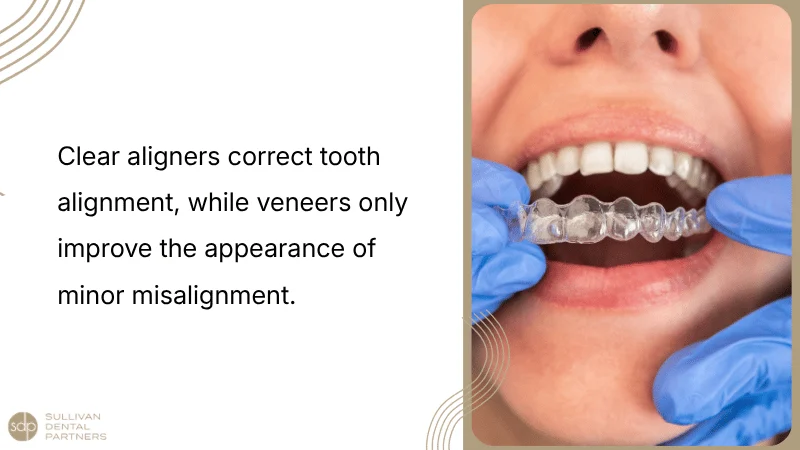
Clear aligners are the go-to solution when you have crooked teeth, crowded teeth, or gaps between teeth. They apply gentle pressure to shift your teeth into proper alignment over time.
This means your natural teeth actually move into straighter positions.
Treatment typically takes 3 to 18 months depending on how severe your case is. The aligners can handle everything from mild spacing issues to more complex crowding problems.
Veneers don’t actually straighten misaligned teeth. They just make crooked teeth look straighter by covering them with thin shells.
This only works if your teeth are very slightly crooked. If you have significant crowding or misalignment, veneers won’t solve the underlying problem.
Treating Bite Issues: Overbite, Underbite, and Crossbite
Clear aligners can correct various bite issues including overbite, underbite, crossbite, and overjets. They gradually move your teeth and can adjust how your upper and lower teeth meet.
This fixes the actual problem with how your teeth come together when you bite.
The treatment addresses the root cause of your bite problems rather than just covering them up. Your jaw alignment improves along with the position of your teeth.
Veneers cannot fix bite issues at all. They’re purely cosmetic and don’t change how your teeth align when you close your mouth.
If you have malocclusion or bite problems, you’re not an ideal candidate for veneers without getting orthodontic treatment first.
Improving Tooth Shape, Size, and Color
Veneers excel at changing tooth shape, size, and color all at once. They can cover stained, chipped, or oddly shaped teeth instantly. Veneers also fill small gaps and make your teeth appear whiter and more uniform.
The thin porcelain or composite shells are custom-made to give you the exact look you want. They’re perfect for teeth whitening that doesn’t respond to traditional methods.
Clear aligners only straighten your natural teeth. They don’t change the color, shape, or size of your teeth. If you want a straighter smile and whiter teeth, you’d need to combine aligners with separate whitening treatments.
However, you can get veneers after clear aligner treatment if you want both straight teeth and cosmetic improvements.
Aligners vs Veneers in Cosmetic Dentistry: Key Pros and Cons
Both treatments can transform your smile, but they work differently and come with distinct advantages.
Clear aligners focus on moving your natural teeth into better positions, while veneers cover your existing teeth with thin shells for instant cosmetic improvement.
Aesthetics and Achieving a Natural-Looking Smile

Clear aligners straighten your actual teeth over time, giving you results that look completely natural. Your smile will be genuinely yours, just properly aligned.
The aligners themselves are nearly invisible while you wear them, so most people won’t even notice you’re undergoing treatment.
Veneers also create attractive results, but they work by covering your teeth rather than repositioning them. Modern porcelain veneers have light-reflective properties that closely match natural teeth, making them look realistic.
However, composite veneers can stain over time, which may affect their appearance.
With aligners, you keep your natural tooth structure and enamel intact. The treatment addresses alignment at the root rather than just masking imperfections.
If you want a natural-looking smile that’s truly your own teeth, aligners offer this benefit. Veneers can sometimes look slightly different from your natural teeth, especially if the color or shape doesn’t perfectly match.
Conservative vs. Invasive Approaches
The biggest difference between these treatments is how much they affect your natural teeth. Clear aligners are completely reversible and non-invasive.
They don’t require your cosmetic dentist to remove or alter any tooth structure. You simply wear the custom trays that gradually shift your teeth.
Veneers usually require your dentist to shave down some of your natural enamel so the shells don’t look bulky when placed over your teeth.
This process is permanent and irreversible in most cases. Once you get veneers, you’ll need to maintain them and eventually replace them since they typically last 10-15 years for porcelain or 4-8 years for composite versions.
If preserving your natural tooth structure matters to you, aligners offer a more conservative approach. You can complete treatment and maintain results with retainers without permanently changing your teeth.
Budget Considerations and Long-Term Value
When comparing veneers or aligners, cost plays a big role. Veneers range from £100 to £1,000 per tooth depending on the material.
If you need multiple teeth covered, costs add up quickly. A full set of eight veneers could cost £800 to £8,000.
Clear aligner treatment typically costs £3,500 to £5,500 for your entire mouth. This one-time investment can provide results that last indefinitely if you wear your retainer as recommended.
Many providers offer a free smile assessment to help you understand your options and costs.
Long-term value matters too. Veneers need replacement every several years, meaning additional costs down the road. Aligners require only retainer maintenance after treatment ends.
Some aligner companies offer payment plans or financing to spread out the upfront cost. Your total investment depends on how many teeth you’re treating and which option best fits your dental goals.
Frequently Asked Questions
People considering smile improvements often wonder about speed, age limits, and long-term maintenance. Treatment timelines and replacement needs vary significantly between these two options.
How quickly can I see noticeable results with veneers compared to clear aligners?
Veneers deliver instant cosmetic changes. You’ll see your new smile as soon as they’re bonded to your teeth, which typically happens within 2-3 weeks after your initial consultation.
Clear aligners work gradually over time. You might notice changes in as little as six months, though many treatments take 12-18 months to complete. The exact timeline depends on how much your teeth need to move.
Which option is better if I want to fix gaps, crowding, or a crooked smile?
Clear aligners are designed specifically to straighten teeth and correct alignment issues like gaps, crowding, and crooked teeth. They physically move your teeth into better positions over time.
Veneers can mask the appearance of minor gaps or slightly crooked teeth. However, they don’t actually straighten your teeth. They just cover the front surface to create the illusion of a straighter smile.
Do veneers or clear aligners work faster for improving tooth shape and color?
Veneers win for speed when it comes to changing tooth shape and color. They can completely transform discolored, chipped, or oddly shaped teeth in just a few weeks.
Clear aligners focus on tooth position, not color or shape. They won’t change stained or discolored teeth. You’d need separate whitening treatments or other cosmetic work to address those concerns.
What does the timeline look like from consultation to final smile for each treatment?
The veneer process starts with removing a small amount of enamel from your teeth. Your dentist takes impressions to create custom veneers, which can take a few weeks.
You might wear temporary veneers during this time, and once ready, the permanent ones are bonded to your teeth.
Clear aligner treatment begins with a 3D scan of your teeth. You’ll receive custom aligners that you change every 1-2 weeks. You’ll have regular check-ups to monitor progress, and once treatment ends, you’ll wear retainers to maintain results.
What happens to veneers after 10–20 years, and will they need replacement?
Veneers typically last 10 to 15 years with proper care. After this time, they may need replacement due to wear, chipping, or discoloration around the edges.
Since veneers require removing natural enamel, this is a permanent commitment. You’ll need to maintain them with replacements throughout your life. Each replacement involves similar preparation and costs.
Am I too old to start clear aligner treatment, and does age affect how fast it works?
You’re not too old for clear aligners. Adults of all ages can successfully straighten their teeth with this treatment option.
Age can slightly affect treatment speed since adult bones are fully developed. However, clear aligners still work effectively for adults. Your overall oral health matters more than your age when determining if you’re a good candidate.