A week out, you expect your new crown to feel completely normal by now. Instead, you’re still noticing something odd every time you bite down, and you’re wondering if that’s a problem or just part of the process.
In most cases, some strangeness at the one-week mark is still normal, but ongoing pain, a tooth that clearly hits first, or swelling means it’s time to call your dentist.
Your mouth needs time to adjust to any dental work, and a permanent crown can feel slightly different from your natural tooth for several days after crown placement.
The tricky part is knowing when that adjustment period is ending and when something actually needs a fix.
This guide walks you through what’s expected a week after getting a dental crown, the most common reasons things still feel off, and the specific signs that mean you should pick up the phone instead of waiting it out.
You’ll also learn what actually happens during a bite adjustment, so you know what to expect if you do need one.
Key Takeaways
- Some odd sensations one week after crown placement can still be part of normal healing.
- Pain, uneven biting, or swelling are signs you should contact your dentist rather than wait.
- A quick, painless bite check can resolve most lingering issues with your crown.
Table of Content
- What Is Normal at the One-Week Mark?
- Common Reasons a Crown Does Not Feel Right
- Signs You Should Call the Dentist Now
- How a Dentist Checks and Corrects the Bite
- What to Do While You Wait for an Appointment
- Frequently Asked Questions
What Is Normal at the One-Week Mark?
A week after getting a crown, some strange feelings are still normal. Your mouth needs time to get used to the new tooth, and mild sensitivity can stick around a little longer than you might expect.

Getting Used to a New Tooth Shape
Your tongue and cheeks are very good at noticing changes. Even a small difference in shape can feel big at first.
This is one reason why it’s common for patients to notice their bite feels off after getting a dental crown. Your brain has a map of how your old tooth felt, and it takes time to update that map.
Give your mouth a chance to relax around the new shape. Chew on both sides of your mouth evenly. Keep up with your normal oral hygiene routine, including brushing and flossing around the crown.
Most people stop noticing the new shape within one to two weeks.
Expected Mild Tooth Sensitivity
Some tooth sensitivity is expected after a crown. Hot, cold, or sweet foods might feel a little sharp at first.
This happens because the tooth under the crown was recently reshaped. The nerve inside can stay a bit sensitive while it heals.
Gum tissue near the crown may also be slightly irritated from the procedure.
If your crown was placed on a treated tooth, understanding how a dental crown is done after a root canal can also help you know what to expect during recovery.
Mild sensitivity that slowly improves is a good sign. It means your tooth and gums are healing the way they should.
If sensitivity gets worse instead of better after a week, that’s different from normal healing and worth mentioning to your dentist.



Temporary Crown Versus Permanent Crown Sensations
A temporary crown and a permanent crown can feel very different. Temporary crowns are often bulkier and less precise, so soreness or a slightly odd bite is common while you wear one.
Once your permanent crown is placed, most of that discomfort should fade. Permanent crowns are custom-made to match your bite and the shape of your other teeth.
Some feelings can still overlap between the two:
- Mild pressure when biting down
- Slight sensitivity to temperature
- A “new” feeling as your tongue explores the surface
If your permanent crown still feels like your temporary one after a week, especially with the same pressure or soreness, that’s worth a follow-up call.
Common Reasons a Crown Does Not Feel Right
A crown that feels strange a week in usually comes down to one of a few things: pressure, positioning, gum health, or the fit of the crown itself. Here’s a closer look at what might be going on.
A High Spot Creating Uneven Pressure
One of the most common culprits is a high crown. This happens when the crown sits just slightly taller than your surrounding teeth, so it takes on more pressure than it should when you bite down.
You might notice this as pressure when biting, especially on that one tooth compared to the others around it.
Sometimes it’s obvious right away, but other times it takes a few days of chewing before you notice the difference.
A high bite like this can also cause soreness in the jaw muscles, since your mouth tries to work around the uneven surface.
If your crown feels too high, it’s usually a quick fix. Your dentist can adjust a crown that feels too high in just a few minutes with some minor reshaping.
Changes in Occlusion and Bite Alignment
Your bite is a delicate system, and even a small change to one tooth can throw off the whole thing. This is called a shift in occlusion, and it affects how your upper and lower teeth meet.
An uneven bite can develop if the crown sits even slightly off from your natural tooth shape. This creates bite misalignment, which may cause you to unconsciously chew differently to avoid discomfort.
Over time, this can lead to soreness, clicking, or tension in your jaw joint. Bite alignment issues are usually noticeable within the first one to two weeks after getting a crown.
The good news is that bite adjustments after a crown are common and simple to correct with a short visit.
Gum or Cement-Related Irritation
Sometimes the problem isn’t the crown itself, but the tissue around it. Gum irritation can happen if the crown’s edge sits too close to the gum line or if leftover dental cement wasn’t fully removed during placement.
This can cause tenderness, slight swelling, or a feeling that something is “in the way” when you bite or floss.
It’s common for the gum tissue to stay a little inflamed for several days after the procedure, which can make the bite feel different than it will once healing is complete.
If irritation continues past a week or gets worse, it’s worth having your dentist check for leftover cement or a poorly fitting crown edge.
Loose Contacts, Food Traps, or Crown Damage
If food keeps getting stuck between your crown and the next tooth, this could mean the contact point isn’t quite right.
This is one of the more common reasons a crown keeps feeling loose or shifting slightly, even if it hasn’t actually fallen out.
Crown damage, like small chips or cracks, can also cause a rough or uneven feeling against your tongue or cheek. A poorly fitting crown may rock slightly when you bite, which can feel unstable even if it’s still fully attached.
Any of these signs are worth mentioning to your dentist, since small fixes now can prevent bigger problems later.
Signs You Should Call the Dentist Now
Most crown discomfort fades within a few days, but some symptoms mean it’s time to pick up the phone. Here’s what to watch for and why it matters.
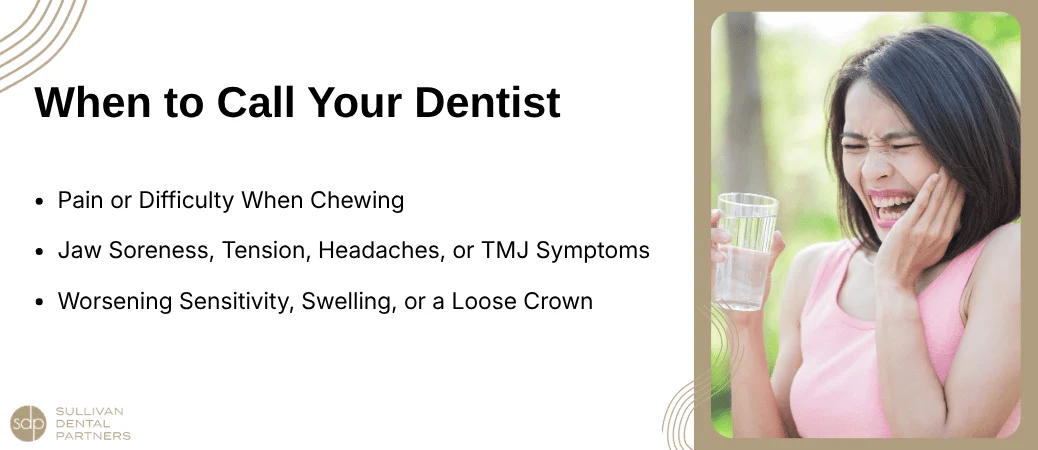
Pain or Difficulty When Chewing
If you have real pain or difficulty chewing on the side with your new crown, that’s a signal worth acting on. This often means one tooth is hitting before the others when you bite down.
You might notice you’re avoiding that side of your mouth completely. Or maybe certain foods, like anything crunchy or chewy, cause a sharp jab of pain.
This kind of pain when biting down can be a sign the filling or crown is high, and it usually needs a small adjustment. Don’t try to push through it or chew harder on that tooth to “wear it in.”
Call your dentist and describe exactly which tooth hurts and when.
Jaw Soreness, Tension, Headaches, or TMJ Symptoms
Jaw soreness that shows up after getting a crown can point to bite problems your jaw muscles are trying to compensate for.
When one tooth sits too high, your jaw muscles work harder to find a comfortable way to close your mouth.
This extra effort can lead to jaw tension, jaw strain, or even soreness that spreads to your temples as a headache. Some people also notice clicking, popping, or tightness near the jaw joint, which can signal TMJ strain.
These symptoms don’t always mean something serious is wrong. But they’re worth mentioning to your dentist, especially if the soreness sticks around for more than a few days or gets worse instead of better.
Worsening Sensitivity, Swelling, or a Loose Crown
Mild tooth sensitivity is common right after a crown is placed, but it should slowly get better, not worse. If cold or hot foods cause sharp pain that lingers, or if sensitivity is increasing a week later, call your dentist.
Swelling around the gum near your crown is another red flag. So is any looseness or movement when you touch the crown with your tongue or floss around it.
A crown that feels loose shouldn’t be ignored, even if it hasn’t fully come off yet. Search for a restorative dentist or dentist near you who can check the crown quickly, since waiting can allow bacteria to get underneath it.
How a Dentist Checks and Corrects the Bite
Fixing a bite that feels off is usually quick and painless. Your restorative dentist will check exactly where your teeth touch, then make small changes until everything feels even again.
The Bite Check With Articulating Paper
Your dentist will ask you to bite down on a thin piece of colored articulating paper. This paper leaves marks on your teeth showing exactly where contact happens first and hardest.
You will bite down a few times, and your dentist will look at the marks left on your crown and nearby teeth. Dark or thick marks usually mean too much pressure in one spot.
This simple bite check takes just a few minutes but gives your dentist clear information. It removes the guesswork and shows exactly what needs to change, rather than relying on how your bite feels alone.
Occlusal Adjustment for a High Crown
If the marks show your crown is sitting too high, your dentist will gently reshape it using a small drill. This is called an occlusal adjustment, and it removes tiny amounts of material from the high spots only.
You will bite on the paper again after each adjustment. This back-and-forth process continues until your bite feels balanced and even on both sides.
Most bite adjustments take only a few tries and cause no discomfort. Your dentist works carefully so your crown keeps its shape and strength while fixing the uneven pressure that causes discomfort.
When Re-Cementing, Repair, or Replacement Is Needed
Sometimes the problem is not the shape of the crown but how it sits on your tooth. If the dental cement has broken down or shifted, your dentist may need to remove the crown and re-cement it in the correct position.
In rare cases, your bite still feels wrong even after several adjustments. This can mean the crown needs to be reshaped more, repaired, or replaced entirely.
Your dentist will explain your options clearly. Bite adjustments and repairs are often enough, but follow-up appointments help confirm your crown placement is solid and your bite stays comfortable long-term.
What to Do While You Wait for an Appointment
A few days of waiting doesn’t mean you have to suffer through pain or risk making the problem worse.
Small changes to your diet and habits can protect your crown and ease your discomfort until your dentist can take a closer look.
Choose Soft Foods and Avoid Heavy Biting
Stick to soft foods for the next few days. Think mashed potatoes, scrambled eggs, yogurt, soup, and smoothies.
These options won’t put pressure on your crown while you chew. You should also try to eat on the opposite side of your mouth when possible.
This gives the crown a break and reduces the chance of feeling pressure when biting down. If you wear dentures alongside a crown, be extra careful, since the added pressure from adjusting dentures can make things feel worse.
Cutting food into smaller pieces also helps. Smaller bites mean less force on the crown, which can lower your risk of discomfort or damage while you wait for your appointment.
Avoid Hard and Sticky Foods

Hard foods like nuts, ice, and hard candy can crack or loosen a crown. Sticky foods like caramel, gum, and taffy can pull at the crown and make it shift.
Both types of food put your crown at risk, so it’s best to skip them for now. This is one of the common problems and solutions dentists point out when a crown feels off.
Even foods that seem harmless, like crusty bread or raw carrots, can cause trouble. Play it safe and stick to foods you can chew without much effort.
Your goal right now is to protect the crown, not test its strength.
Protect the Crown From Clenching and Grinding
Stress and tension often show up as jaw clenching or teeth grinding, especially at night. This puts extra force on your crown and can make an “off” feeling worse.
Try to notice if you clench your jaw during the day. Simple habits, like relaxing your jaw when you feel tense, can help.
At night, a mouthguard can protect your crown from grinding. If you don’t already have one, ask your dentist if a temporary guard makes sense until your appointment.
Jaw tension can also come from stress, so light stretching or relaxing your face muscles before bed may help too. Reducing this pressure gives your crown a better chance of settling properly.
Keep Notes on Symptoms and Bite Changes
Write down what you notice each day. Include details like when the discomfort happens, how long it lasts, and whether it feels sharp, dull, or like pressure.
Also note any changes in your bite. For example, does one tooth touch before the others when you bite down?
This kind of detail is helpful. Small shifts in bite alignment can affect comfort in ways that are easy to miss without paying close attention.
Keeping good oral hygiene habits, like gentle brushing and flossing around the crown, is also worth noting if you feel any sensitivity while cleaning.
This information helps your dentist figure out the exact cause once you’re seen.
Frequently Asked Questions
Here are quick answers to common questions about how your crown should feel and when it might need a closer look.
Is it normal for a new crown to feel strange or bulky after a week?
Yes, this is very common. Your tongue is used to your old tooth shape, so the new crown can feel bigger or bulkier at first, even though it’s actually the correct size for your tooth.
Your brain needs time to update its map of your bite. This strange feeling after new dental work usually fades as you get used to the new shape.
How long does it usually take to get used to a dental crown?
Most people adjust within one to two weeks. Your mouth needs this time to relearn how your teeth fit together and how your tongue reads the new surface.
If it has been longer than two weeks and things still feel off, it’s worth checking in with your dentist about a possible adjustment.
What signs mean my crown may be too high or not fitting correctly?
A crown that sits too high often causes your tooth to touch first when you bite down, before your other teeth make contact. This can make chewing feel uneven or cause a dull ache in that tooth.
You might also notice:
- Pain when biting down on that side
- Feeling like that tooth is doing more of the work when you chew
- Jaw soreness after eating
These signs point to a bite that needs fine-tuning, not something you need to just live with.
Should I call my dentist if my bite feels uneven with the new crown?
Yes, call your dentist if your bite feels uneven for more than a few days. An uneven bite after a crown is one of the most common reasons patients come back for a quick adjustment.
This fix is usually simple. Your dentist can spot the exact high point and smooth it down in just a few minutes.
Can sensitivity to hot, cold, or pressure happen after getting a crown?
Yes, some sensitivity is normal for the first week or two. The nerve inside your tooth can stay a little irritated after the procedure, especially if the crown was placed over a deep filling or old cavity.
This type of sensitivity should slowly get better each day. If it’s getting worse instead of better, or lasts more than two weeks, mention it to your dentist.
What symptoms after a crown placement need urgent dental attention?
Some symptoms mean you shouldn’t wait it out. Call your dentist right away if you notice:
- Sharp, shooting pain when you bite down
- A throbbing ache that wakes you up at night
- Swelling in your face or gums
- A crown that feels loose or moves when you touch it
- Pain that keeps getting worse instead of better
These warning signs after crown placement often point to a bite issue or infection that needs prompt care, not something to wait out on your own.
Conclusion
A new crown may need a little time to feel natural, but ongoing pain, pressure, or an uneven bite should not be ignored.
If your dental crown feels wrong after placement, a quick dental evaluation can often identify whether the issue is a high spot, poor fit, gum irritation, or another problem.
In many cases, a small adjustment is all it takes to restore comfort. If symptoms are getting worse instead of better, contact your dentist and have the crown checked before the issue becomes more complicated.