
Dental visits can feel stressful, but sedation dentistry gives you options that help you stay calm and comfortable. Two common choices are IV sedation and oral sedation, and each works differently.
IV sedation goes through a vein and works quickly with a stronger, adjustable effect, while oral sedation is a pill you swallow that creates a lighter, slower level of relaxation.
Both methods aim to ease anxiety, but they differ in how fast they act, how deeply they relax you, and how your dentist monitors you during treatment.
When you understand the difference between IV sedation vs oral sedation dentistry, you can feel more confident about your care. The right choice depends on your comfort level, medical history, and the type of procedure you need.
Key Takeaways
- IV sedation works through a vein and allows deeper, controlled relaxation.
- Oral sedation is a pill that provides mild to moderate calming effects.
- Your health, anxiety level, and procedure type help guide the best choice.
How IV Sedation and Oral Sedation Work
Dentists use different methods to help you relax during treatment. The main difference is how the medicine enters your body and how deeply it affects you.
What Is IV Sedation?
IV sedation, also called intravenous sedation, delivers medicine directly into your bloodstream through a small tube placed in your arm or hand. Because the drug goes straight into your vein, it works within minutes.
Your dentist can adjust the dose during the procedure. This control allows them to keep you in a steady state of moderate sedation, often called conscious sedation.
You stay very relaxed and may feel sleepy, but you can still respond to simple instructions.
Many patients remember little or nothing about the visit. IV sedation also allows the dental team to monitor your breathing, heart rate, and blood pressure closely.
If you want a deeper level of relaxation for a long or complex procedure, IV sedation gives your dentist more control than pills taken by mouth.
What Is Oral Sedation?
Oral sedation uses pills called oral sedatives to help you relax. You take the medication about an hour before your appointment.
Common drugs include Halcion and diazepam (Valium). These medicines reduce anxiety and make you feel calm and drowsy. You remain awake, but you may feel less aware of what is happening.
Unlike IV sedation, your dentist cannot adjust the level once you swallow the pill. The effects depend on your body weight, age, and how you respond to the drug.
Oral sedation works well if you have mild to moderate dental fear and need a shorter procedure. You will still need someone to drive you home because the medicine can affect your coordination and judgment for several hours.
Levels of Sedation: Conscious, Moderate, and Deep Sedation
Sedation falls into clear levels. Each level affects how aware and responsive you feel.
- Conscious sedation (minimal sedation): You feel relaxed but fully awake. You can answer questions and follow directions.
- Moderate sedation: You feel very sleepy and may slur your words. You still respond to touch or verbal cues.
- Deep sedation: You are close to being unconscious and may not respond easily.
Both IV sedation and oral sedation usually aim for conscious or moderate sedation. IV sedation can move closer to deep sedation if needed, because the dentist can adjust the dose in real time.
Your dentist chooses the level based on your health, anxiety level, and the type of dental work you need.
Key Differences Between IV and Oral Sedation
IV sedation and oral sedation differ in how you receive the drug, how fast it works, how much control your provider has, and how aware you feel during care. These details affect your comfort, safety, and recovery time.
Administration Process
With oral sedation, you take a pill before your appointment. Your sedation dentist tells you when to take the oral sedative, often 30 to 60 minutes before treatment.
You swallow the medication with water. After that, the dose cannot change. You still receive local anesthesia to numb the treatment area.
With IV sedation, the dentist or a trained provider places a small line into a vein in your arm or hand. The medication flows directly into your bloodstream. This method is also called intravenous sedation.
IV sedation requires more equipment and training. The team checks your vital signs throughout the visit and keeps emergency tools nearby.
Onset and Duration of Effects
Oral sedation takes time to work. The drug must pass through your stomach and liver before it reaches your bloodstream.
You may start to feel relaxed within 30 to 60 minutes. The drowsy feeling can last for several hours after your visit.
IV sedation works much faster. Because the drug enters your vein directly, you may feel calm within a few minutes.
The dentist can stop the medication when the procedure ends. Even so, you may feel groggy for a few hours. You will need someone to drive you home with either option.
Control Over Sedation and Monitoring
Control is one of the biggest differences between the two methods.
With oral sedation, you take a set dose. Your dentist cannot adjust the level once you swallow the pill. The team still checks your blood pressure, heart rate, and oxygen levels, but the drug level stays the same.
IV sedation allows more precise control. The provider can raise or lower the dose at any time during treatment. This helps if your anxiety increases or if the procedure takes longer than planned.
IV cases often include continuous monitoring. The team tracks oxygen, pulse, and breathing in real time. This close watch improves safety, especially for longer or more complex procedures.
If you want flexible control during treatment, IV sedation gives your sedation dentist more options.
Memory and Awareness During Treatment
Both types of sedation keep you conscious. You can respond to simple instructions, such as opening your mouth or turning your head.
Oral sedation usually creates mild to moderate drowsiness. You may remember parts of the visit, though details can feel blurry.
IV sedation often produces deeper relaxation. Many patients remember very little about the procedure afterward.
Even with IV sedation, you still receive local anesthesia to block pain. The sedation reduces anxiety and awareness, while the numbing medicine controls discomfort.
If you worry about remembering sights, sounds, or sensations, intravenous sedation may reduce those memories more than an oral sedative.
Benefits and Drawbacks of Each Sedation Option
Both oral sedation and IV sedation help you feel calm during dental care. The right choice depends on how anxious you feel, how long your procedure will take, and how much control your dentist needs during treatment.
Advantages of Oral Sedation
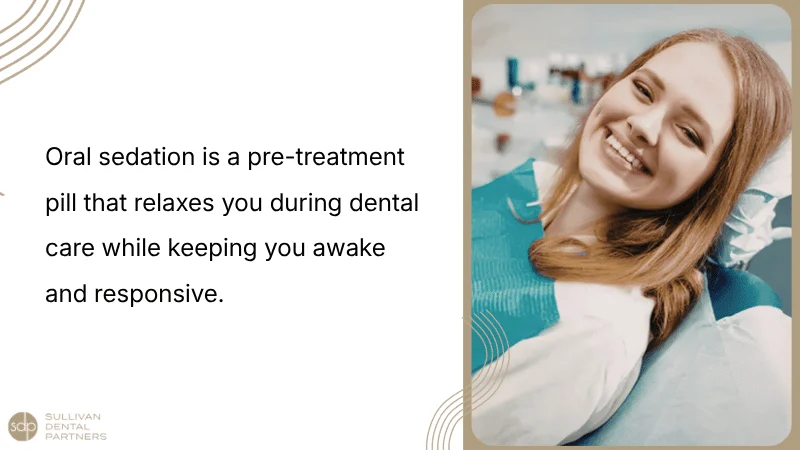
Oral sedation uses a prescribed pill that you take before your visit. Many people like this option because it does not require a needle.
You usually take the oral sedative about 30 to 60 minutes before treatment. The medication helps you feel relaxed and less focused on sounds, smells, or movement in the room. Some people remember little about the visit.
Key benefits of oral sedation include:
- No IV placement
- Lower cost than IV sedation
- Good option for mild to moderate anxiety
- Simple process with fewer tools and equipment
You stay awake and can respond to instructions. This makes oral sedation a practical choice for cleanings, fillings, and shorter procedures.
Advantages of IV Sedation
IV sedation delivers medication directly into your bloodstream through a small line in your arm or hand. It works quickly, often within minutes.
One of the main benefits of IV sedation is control. Your dentist can adjust the level of dental sedation during the procedure. If you need more or less medication, they can respond right away.
IV sedation also creates deeper relaxation. Many patients drift in and out of sleep and remember very little afterward. This makes it helpful for:
- Severe dental anxiety
- Long or complex treatments
- Procedures like implants or wisdom teeth removal
Possible Drawbacks and Limitations
Each option has limits, and you should understand them before choosing.
With oral sedation, your dentist cannot adjust the dose once you take the pill. If the effect feels too weak or too strong, they must manage it without changing the medication level. Recovery can also take several hours, and you will need someone to drive you home.
IV sedation costs more. It requires special training, monitoring equipment, and more staff support. You will also need an IV line, which may bother you if you dislike needles.
Both types of dental sedation require medical screening. Your dentist will review your health history, medications, and conditions like sleep apnea before recommending the safest option.
Choosing the Right Sedation for Your Needs
You should match the type of sedation to your anxiety level, the dental work you need, and your health history. A sedation dentist will review these factors and explain your sedation options in clear terms.
Dental Anxiety and Fear of Needles

Your level of dental anxiety plays a big role in your choice. If you feel nervous but can still sit through a cleaning, oral sedation may give you enough calm without putting you into deep sedation.
Oral sedation uses a pill taken before your visit. It helps you relax and often causes partial memory loss of the appointment.
If you have a strong dental fear or panic, IV sedation may work better. It acts fast and can reach a deeper level of relaxation.
Fear of needles also matters. If the thought of an IV makes you tense, oral sedation avoids injections. If your dental fear is stronger than your fear of needles, IV sedation may still feel like the safer choice.
Type and Complexity of Dental Procedures
The procedure itself often guides your decision. Short and simple treatments, such as fillings or cleanings, usually pair well with oral sedation.
Long or complex treatments may require more control. For example, wisdom tooth removal or dental implants can take more time and involve more steps.
In these cases, many sedation dentists suggest IV sedation because it works quickly and allows real-time dose changes.
IV sedation suits deeper or more complicated procedures. Your dentist can adjust the level during treatment, which helps keep you comfortable from start to finish.
Think about how long you will sit in the chair. The longer and more detailed the work, the more you may benefit from stronger, adjustable sedation options.
Medical History and Personal Preferences
Your health history always comes first. Tell your sedation dentist about heart issues, breathing problems, medications, or past reactions to anesthesia.
Some conditions may limit certain sedation options. IV sedation requires close monitoring of your heart rate, blood pressure, and oxygen levels.
Oral sedation also needs review, especially if you take other drugs that affect the central nervous system.
Personal comfort matters too. Ask yourself:
- Do you want to avoid needles?
- Do you prefer a lighter level of sedation?
- Are you okay with feeling groggy for a few hours after?
You should also consider cost and recovery time. Oral sedation often costs less, while IV sedation may require more equipment and trained staff.
When you share your goals and concerns, your sedation dentist can guide you toward a safe and practical plan in sedation dentistry that fits your needs.
Safety and Monitoring During Sedation Dentistry
Your safety depends on careful monitoring, proper training, and clear communication. Dentists use specific tools and follow strict steps to protect your breathing, heart rate, and comfort during treatment.

Continuous Patient Monitoring
When you receive sedation dentistry, your dental team does more than help you relax. They track your vital signs from start to finish.
With IV sedation, the team uses continuous monitoring equipment. This often includes:
- A blood pressure cuff
- A pulse oximeter to measure oxygen levels
- Heart rate monitors
- In some cases, capnography to track breathing
IV sedation works quickly, so close monitoring allows the dentist to adjust the medication right away. That control makes IV sedation different from oral sedation, which you take as a pill and cannot fine-tune once swallowed.
Even with oral sedation, your team still checks your breathing, pulse, and responsiveness. You remain conscious with both oral sedation and most IV sedation.
This differs from general anesthesia, where you are fully unconscious and need advanced airway support.
Your dentist also uses local anesthesia to numb the treatment area. Sedation reduces anxiety, while local anesthesia blocks pain.
Risks and Side Effects
All forms of sedation carry some risk, but problems are rare when trained providers follow safety steps. You may feel drowsy, dizzy, or mildly nauseated after treatment.
Common side effects include:
- Dry mouth
- Headache
- Temporary memory gaps
- Slower reaction time
IV sedation can cause deeper relaxation, so breathing may slow if not carefully watched. That is why monitoring equipment stays in place the entire time.
Oral sedation may last longer in your system because the body must process the medication through the stomach and liver.
Serious complications are uncommon. They are more likely if you have untreated health conditions, take certain medications, or do not follow pre-visit instructions like fasting when required.
Role of the Sedation Dentist
A trained sedation dentist completes advanced education in sedation techniques, emergency care, and airway management. This training goes beyond standard dental school instruction.
Before your appointment, your dentist reviews:
- Your medical history
- Current medications
- Allergies
- Past reactions to anesthesia
This screening lowers your risk. During the procedure, the dentist adjusts IV medication as needed or evaluates how you respond to oral sedation.
IV sedation allows more precise control over depth and response. That control supports safety during longer or more complex procedures.
Your dentist also prepares for emergencies. The office keeps oxygen, reversal medications, and resuscitation equipment on hand. With proper training and equipment, you receive sedation in a controlled and carefully managed setting.
Frequently Asked Questions
You may wonder how fast each option works, how sleepy you will feel, and which choice fits your procedure. These answers explain clear differences in timing, depth, medications, and common uses like wisdom tooth removal.
How does IV sedation compare to oral sedation in terms of how quickly it starts working?
IV sedation works within seconds because the medication goes straight into your bloodstream. You usually feel relaxed almost right away.
Oral sedation takes longer. You swallow a pill about 30 to 60 minutes before your procedure, and your body must digest it before you feel the effects. The start time can vary from person to person.
What level of sleepiness can I expect with IV sedation versus oral sedation?
With oral sedation, you stay awake but feel calm and drowsy. You can answer questions and follow simple instructions.
With IV sedation, you feel much sleepier. Many patients drift in and out of light sleep and remember little or nothing about the procedure.
You still breathe on your own with both methods. Your dental team monitors your heart rate, oxygen level, and blood pressure the entire time.
Will I feel pain during a dental procedure with oral sedation?
Oral sedation reduces anxiety, not pain. Your dentist will still numb the treatment area with a local anesthetic.
You may feel pressure or movement, but you should not feel sharp pain. If you feel discomfort, you can tell your dentist, and they can adjust the numbing medication.
What medications are commonly used for IV sedation in dentistry?
Dentists often use medications from the benzodiazepine family for IV sedation. Midazolam is a common example because it works quickly and helps you relax.
In some cases, the dentist may combine medications to control anxiety and improve comfort. They adjust the dose during the procedure to keep you at a safe and steady level of sedation.
How is IV sedation different from general anesthesia for dental treatment?
IV sedation keeps you in a deeply relaxed state, but you are not fully unconscious. You breathe on your own and can respond to strong verbal cues.
General anesthesia makes you completely unconscious. It often requires airway support and is usually done in a hospital or surgical center.
IV sedation is less invasive than general anesthesia. It also has a shorter recovery time in most dental settings.
Which option is typically recommended for wisdom tooth removal: IV sedation or oral sedation?
Dentists often recommend IV sedation for wisdom tooth removal, especially if the teeth are impacted or the surgery will take a long time. IV sedation allows the dentist to adjust the medication during the procedure.
Oral sedation may work for simple extractions if your anxiety is mild to moderate. Your dentist will consider the length of the procedure, your comfort level, and your medical history before making a recommendation.