
If you’re considering laser gum treatment or have just had the procedure, you’re probably wondering how long it will take for your mouth to feel normal again.
Most people can expect their gums to take between 4 to 6 weeks to fully heal after laser treatment, though you’ll likely feel much better within the first week.
The good news is that laser therapy offers a much faster recovery than traditional gum surgery.
The healing process happens in stages, and understanding what to expect can help you feel more confident about your treatment.
Your initial recovery is usually quick, with many patients returning to normal activities within 24 to 48 hours. However, the complete regeneration of your gum tissue continues working beneath the surface for several weeks.
Your individual healing time depends on several factors, including how severe your gum disease was before treatment and how well you follow your aftercare instructions.
By knowing what affects your recovery and how to care for your gums properly, you can help ensure the best possible outcome from your laser gum treatment.
Key Takeaways
- Gums typically take 4 to 6 weeks to completely heal after laser treatment, with most patients resuming normal activities within 24 to 48 hours
- Recovery time varies based on the severity of gum disease, your overall health, oral hygiene habits, and whether you use tobacco products
- Proper aftercare including gentle cleaning, antimicrobial rinses, and following your dentist’s instructions helps speed up healing and prevents complications
Schedule your LANAP consultation in Nashville, TN for faster gum disease recovery.
Healing Time After Laser Gum Treatment
Most patients recover from laser gum therapy within 24 to 48 hours for initial healing, though complete tissue regeneration takes several months.
The recovery from laser gum treatment is typically much faster than traditional surgery methods.
Typical Recovery Timeline
You can expect to return to normal activities within one to two days after your laser gum treatment. The first week involves the most noticeable changes as new blood clots form and organize into healthy tissue.
Most people resume regular eating and drinking within a few days. You might prefer soft foods initially for comfort. Your gums continue improving over the following weeks and months.
Recovery Milestones:
- 24-48 hours: Return to daily activities
- 3-7 days: Resume normal diet
- 2-4 weeks: Noticeable gum improvements
- 3-6 months: Full tissue regeneration complete
The laser periodontal therapy healing process shows continued benefits throughout the recovery period. You’ll notice reduced bleeding and firmer gum attachment as healing progresses.
Stages of Healing: Immediate, Short-Term, and Full Recovery
Right after your LANAP procedure, you’ll experience mild sensitivity and slight swelling. Unlike traditional surgery, bleeding is minimal because the laser seals blood vessels during treatment.
Your teeth may feel temporarily loose as supporting tissues heal and reattach. This sensation is normal and shows the regenerative process is working. Many patients notice immediate comfort improvements in their gums.
During the short-term phase (weeks 2-4), pocket depths decrease and gum health improves noticeably. You’ll see reduced inflammation and better attachment to tooth surfaces.
The final stage spans several months as bone and tissue fully regenerate around your teeth.
Differences From Traditional Gum Surgery
Laser gum surgery recovery requires no scalpels or sutures, which means significantly less post-treatment discomfort. Traditional periodontal surgery often requires 2-4 weeks before normal activities resume.
You’ll experience less bleeding with laser dentistry because the technology cauterizes as it works. Traditional methods can cause considerable bleeding and swelling that lasts for days.
Pain management is simpler after laser treatment. Most patients need only over-the-counter pain relievers for a day or two, while traditional surgery patients often require prescription medications for a week or longer.
Visit our Nashville, TN office to learn about LANAP recovery and benefits.
Factors Influencing Gum Healing Duration
Several key factors determine how quickly your gums recover after laser treatment, including how serious your gum disease is, your overall health status, and how much tissue needed treatment.
Severity of Gum Disease or Condition
The extent of your gum disease directly impacts how long healing takes. If you have mild gingivitis, your gums may heal in just 2-3 weeks because less tissue needs removal.
More advanced periodontitis requires removing larger amounts of diseased tissue. This means your gums need 4-6 weeks to fully heal after more extensive treatment.
The depth of gum pockets around your teeth also matters. Shallow pockets heal faster than deep ones that extend far below the gum line.
Your dentist removes more tissue when treating severe cases, which naturally extends recovery time.
Patient Health and Immune System
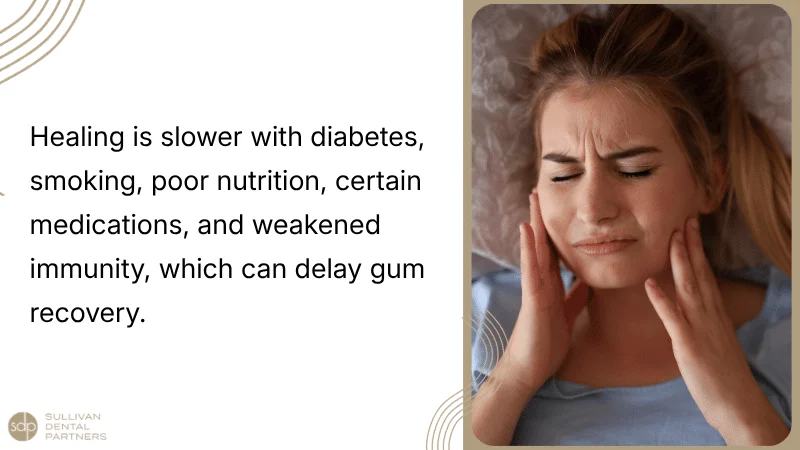
Your body’s ability to heal plays a major role in recovery speed. If you have diabetes, your gums typically take longer to heal because high blood sugar slows tissue repair.
Certain medications like steroids can impair the healing process by affecting your immune response. Smoking is particularly harmful because it restricts blood flow to your gums.
Your age affects healing too. Younger patients generally recover faster than older adults. Good nutrition supports healing, so eating protein-rich foods and staying hydrated helps your gums repair themselves more efficiently.
Factors that slow healing:
- Diabetes or other chronic conditions
- Smoking or tobacco use
- Poor nutrition
- Certain medications
- Weakened immune system
Area and Extent of Treatment
The size of the treated area determines your recovery timeline. Small touch-ups on one or two teeth heal much faster than full-mouth procedures.
If your dentist treated just your front teeth, you might feel normal within 2-3 weeks. Treatment covering multiple quadrants of your mouth requires more time because more tissue needs to regenerate.
The number of teeth involved matters too. Treating gum tissue around 4-5 teeth is less invasive than addressing problems affecting your entire mouth.
Larger treatment areas mean more soreness and a longer period before you can return to normal oral hygiene routines.
Start your gum healing journey; schedule your LANAP consultation today.
Post-Operative Care for Faster Recovery
Following proper care guidelines after laser gum treatment helps your mouth heal quickly and reduces discomfort. Your diet, cleaning routine, and daily activities all play important roles in your recovery.
Recommended Diet and Foods

Your gums need special care through what you eat during the first few days after treatment. An all-liquid diet is typically recommended for the first three days when your treated gums are most sensitive.
After the initial three days, you can move to soft foods. Good options include:
- Eggs (scrambled or soft-boiled)
- Yogurt and cottage cheese
- Avocados
- Ice cream
- Mashed potatoes
- Smoothies
- Oatmeal
Many people stick with soft foods for up to two weeks to give their gums enough time to heal properly. Avoid hot, spicy, crunchy, or acidic foods that could irritate the treated areas.
Cold foods can actually feel soothing and help reduce any swelling you might experience.
Oral Hygiene Best Practices
Your dentist may tell you not to brush or floss the treated area for up to 10 days. This gives the tissue time to heal without disruption. You can still gently clean other parts of your mouth during this time.
When you do resume cleaning, use a soft-bristled toothbrush and gentle motions. Avoid aggressive scrubbing near the treated gums.
Your dentist will give you specific instructions about when and how to start cleaning the area again.
Some light bleeding and slight swelling are normal signs that blood flow is increasing to help with healing. If you notice signs of infection like severe pain, pus, or fever, contact your dentist right away.
Physical Activity and Lifestyle Adjustments
Avoid exercise for 48 hours after your procedure. Physical activity increases blood pressure and can cause bleeding or swelling in the treated areas.
Over-the-counter pain relievers can help manage discomfort during your recovery. Your dentist may also prescribe medication if needed. Take all medications exactly as directed.
Get plenty of rest during the first few days. Your body uses this time to focus energy on healing. Avoid smoking and alcohol, as both slow down the healing process and increase your risk of complications.
Managing Pain and Monitoring for Complications
Most people experience mild to moderate discomfort after laser gum treatment, but proper pain management and knowing when to call your dentist can make your recovery smoother.
Watching for warning signs helps you catch potential problems early.
Pain Relief Methods After Laser Gum Therapy
Your dentist will likely recommend over-the-counter pain relievers like ibuprofen or acetaminophen to manage soreness after your procedure.
Take these medications as directed on the package or according to your dentist’s instructions.
You can also try these methods to reduce discomfort:
- Apply a cold compress to your face for 15 minutes at a time
- Rinse gently with warm salt water 2-3 times daily
- Stick to soft, cool foods that won’t irritate your gums
- Avoid hot beverages and spicy foods for the first few days
Most pain from laser gum surgery peaks within the first 24-48 hours and then steadily improves. If you find that standard pain medication isn’t helping enough, contact your dentist.
They may prescribe stronger medication or check to make sure everything is healing properly.
Rest is also important for your recovery. Avoid strenuous activities for at least 24-48 hours after your periodontal treatment to prevent increased bleeding or swelling.
When to Seek Professional Attention
While some discomfort is normal, certain symptoms require immediate professional attention after laser gum procedures. Call your dentist right away if you notice:
- Severe pain that doesn’t improve with medication
- Heavy bleeding that won’t stop after applying gentle pressure
- High fever above 101°F
- Significant swelling that worsens after 48 hours
- Pus or discharge from the treatment area
- Numbness that lasts more than a few hours
These symptoms could indicate an infection or other complication that needs treatment. Don’t wait to see if things improve on their own.
Early intervention can prevent minor issues from becoming serious problems and helps ensure your gums heal correctly.
Long-Term Results and Ongoing Gum Health
While you’ll notice improvements within weeks, the complete healing process continues for months as your gums rebuild and strengthen.
Understanding what happens during tissue regeneration and how to protect your results helps you maintain healthy gums for years to come.

Tissue & Bone Regeneration Process
Your body continues working to repair and strengthen your gums long after the initial healing period ends. The tissue and bone regeneration process takes up to six months to complete fully.
During the first few weeks, new gum tissue forms and attaches to your teeth. This early tissue is delicate and needs proper care to develop correctly.
After about two months, you’ll see continued improvement in how your gums look and feel.
The laser-assisted new attachment procedure (LANAP) is particularly effective at promoting bone growth around your teeth. Unlike traditional surgery,
LANAP stimulates your body’s natural healing response without cutting away healthy tissue. The laser energy encourages stem cells in your gums to create new bone and tissue attachments.
Your gum pockets will gradually become shallower as tissue reattaches to your teeth. This process reduces spaces where bacteria can hide and cause future infections.
Benefits of Laser-Assisted New Attachment Procedure
LANAP offers lasting improvements to your oral health beyond just treating current gum disease. This periodontal treatment addresses the root causes of gum problems while preserving healthy tissue.
You’ll experience reduced bleeding and swelling that lasts long after treatment. Your tooth sensitivity decreases significantly as your gums heal and provide better protection for tooth roots.
The procedure also improves your chewing ability over time.
The precision of laser treatment means less damage to surrounding areas. This targeted approach results in better tissue regeneration compared to traditional gum surgery.
Your gums maintain a more natural appearance after healing.
Key long-term benefits include:
- Stronger attachment between gums and teeth
- Lower risk of future gum infections
- Better bone density around teeth
- Improved overall gum health
Preventing Re-Infection and Maintaining Results
Protecting your results requires consistent daily care and regular dental visits. Your home care routine plays a huge role in keeping your gums healthy after laser treatment.
Brush twice daily with a soft-bristled toothbrush and floss carefully around all teeth. Use an antimicrobial mouthwash if your dentist recommends it.
These simple steps prevent bacteria from building up and causing new infections.
Schedule professional cleanings every three to four months during the first year after treatment. Your dentist will monitor how well your gums are healing and catch any problems early.
Good brushing and flossing habits help maintain your gums’ health in the long term.
Avoid smoking, as it significantly slows healing and increases your risk of re-infection. Manage health conditions like diabetes that can affect gum health.
Eat a balanced diet with plenty of vitamins and minerals that support tissue repair.
Frequently Asked Questions
Most people heal from laser gum therapy within 1-2 weeks for initial recovery, though complete tissue regeneration can take up to 6 months.
You’ll need to stick to soft foods, avoid smoking, and follow specific oral care instructions during the healing period.
What can I expect in terms of recovery time following laser gum therapy?
You can expect your gums to feel better within the first few days after treatment. Initial healing typically occurs within 1-2 days, when mild discomfort, swelling, or redness starts to go away.
Most patients experience full healing within 1-2 weeks after their procedure. During this time, you’ll need to follow your dentist’s care instructions carefully to help your gums heal properly.
The complete recovery process takes longer than you might think. Your tissue and bone continue to regenerate over several months, and it can take a full 4 to 6 weeks for gums to completely heal after laser treatment.
Your healing time depends on several factors. The severity of your gum disease, your overall health, and how well you follow post-treatment care all affect how quickly you recover.
What should I avoid doing after undergoing laser gum treatment?
You should avoid hard, crunchy, or hot foods for the first few days after your procedure. These types of foods can irritate the treated area and slow down healing.
Smoking is one of the most important things to avoid during recovery. It interferes with healing and increases your risk of infection.
Don’t brush or floss the treated area too hard. You need to maintain good oral hygiene, but being too rough can damage the healing tissue.
Avoid using straws or making sucking motions with your mouth. These actions can disturb the treated area and cause complications.
Is it possible for gums to regenerate after being treated with a laser, and how can I encourage this?
Yes, your gums can regenerate after laser treatment. The laser actually helps stimulate the healing of healthy gum tissue while removing damaged or diseased areas.
You can encourage regeneration by following your dentist’s aftercare plan exactly as prescribed. This may include using special mouth rinses that help keep the area clean and free from bacteria.
Eating a nutritious diet supports tissue regeneration. Your body needs proper nutrients to rebuild healthy gum tissue and bone.
Keeping the treated area clean is essential for regeneration. However, you should use the specific brushing routine your dentist recommends rather than your normal routine.
When is it safe to resume normal oral hygiene practices, like toothbrushing, after laser gum surgery?
You can usually start brushing again within a day or two after your procedure. However, you’ll need to be gentle around the treated area and may need to modify your technique.
Your dentist will give you specific instructions about when and how to brush. Some areas may need to be avoided entirely for a few days, while others can be cleaned gently.
Normal brushing and flossing can typically resume after 1-2 weeks. The exact timing depends on how well your gums are healing and what your dentist sees at your follow-up appointment.
Don’t rush back to your regular routine too quickly. Being patient with your oral hygiene during the healing period helps ensure better long-term results.
What are the potential side effects I should be aware of after laser gum surgery?
You’ll likely experience mild discomfort after your procedure. This is normal and usually goes away within a day or two.
Some swelling and redness around the treated area are common side effects. Your dentist may recommend over-the-counter pain relievers or ice packs to manage these symptoms.
Minimal bleeding can occur, though laser treatment results in less bleeding than traditional gum surgery. The laser seals blood vessels during treatment, which reduces this side effect.
Watch for signs of infection like increased pain, excessive swelling, or unusual discharge. If you notice any of these symptoms, contact your dentist right away.
Could you suggest suitable dietary options post-laser gum treatment?
Soft, lukewarm foods are your best choice for the first few days after treatment. Try options like yogurt, smoothies, mashed potatoes, or scrambled eggs.
Soups are good options as long as they’re not too hot. Let them cool down to a comfortable temperature before eating to avoid irritating your gums.
Protein-rich foods help support healing. Soft fish, tofu, and well-cooked beans are gentle options that provide nutrients your body needs.
Avoid spicy foods during the early recovery period. They can irritate the treated area and cause discomfort. You can gradually return to your normal diet as your gums heal and your dentist gives you the okay.