If you have osteoporosis or take bone medication, you may wonder if dental implants are still an option. You want a strong, lasting way to replace missing teeth, but you also want to protect your health.
You can often get dental implants with osteoporosis or while taking bone medication, but your dentist must review your bone health and medication history first.
Research shows that osteoporosis alone does not seem to lower implant survival rates in many cases, including findings from a recent meta-analysis on osteoporosis and dental implant outcomes.
Some medications, such as bisphosphonates or denosumab, can affect bone healing and may raise the risk of rare problems like jaw bone damage.
You need a careful exam, possible bone density review, and a clear treatment plan to lower risks and improve success.
Key Takeaways
- You can often get dental implants even if you have osteoporosis.
- Bone medications may affect healing, so your dentist must review your health history.
- Careful planning and monitoring help improve implant success.
Table of Content
- Understanding Osteoporosis and Bone Health
- Dental Implants for People With Osteoporosis
- Impact of Osteoporosis Medications on Dental Implants
- Evaluation, Consultation, and Treatment Planning
- Enhancing Implant Success in Osteoporotic Patients
- Frequently Asked Questions
Understanding Osteoporosis and Bone Health
Your bone strength depends on how much mineral your bones hold and how well they rebuild over time. When bone density drops, your risk of fractures rises, and this can affect dental implant planning.
What Is Osteoporosis?
Osteoporosis is a disease that causes your bones to lose strength and structure. The inside of the bone becomes more porous, which makes it easier to break.
You may not feel symptoms at first. Many people learn they have osteoporosis only after a fracture.
The condition affects millions of adults, especially postmenopausal women. Lower estrogen levels after menopause speed up bone loss.
Doctors often describe bone loss in stages:
- Normal bone
- Osteopenia (mild bone loss)
- Osteoporosis (more severe bone loss)
Osteopenia does not mean your bones will break, but it does signal lower bone density. Without treatment or lifestyle changes, osteopenia can progress to osteoporosis over time.
Bone Density and Bone Mineral Density (BMD)
Bone density refers to how solid and strong your bones are. Doctors measure this using bone mineral density (BMD) testing.
The most common test is a DXA scan (dual-energy X-ray absorptiometry). It is quick, painless, and uses very low radiation.
Your DXA result includes a T-score. This score compares your bone density to that of a healthy young adult.
Here is how T-scores are grouped:
| T-Score Range | Meaning |
| -1.0 or higher | Normal bone density |
| Between -1.0 and -2.5 | Osteopenia |
| -2.5 or lower | Osteoporosis |
A lower T-score means lower BMD and a higher risk of fractures.
When you consider dental implants, your provider may review your DXA results.
Research shows that osteoporosis alone does not appear to negatively affect dental implant survival, but your overall bone quality still matters for healing.
Risk Factors in Osteoporosis
Several factors increase your risk of low bone density. Some you can change, and some you cannot.
Common risk factors include:
- Being female, especially after menopause
- Age over 50
- Family history of osteoporosis
- Low body weight
- Smoking
- Low calcium or vitamin D intake
- Long-term use of certain medications
Some osteoporosis medications also affect bone turnover. For example, antiresorptive drugs can slow bone breakdown.
A rare but serious condition called jaw bone damage has been linked to prolonged use during invasive dental procedures.
If you have one or more of these risk factors, your dentist and physician should review your medical history before implant surgery.
Dental Implants for People With Osteoporosis
You can still qualify for dental implants if you have osteoporosis, but your dentist must assess your jawbone and overall health with care.
Bone density, healing ability, and medication use all affect implant success and long‑term survival.

Jawbone Health and Implant Candidacy
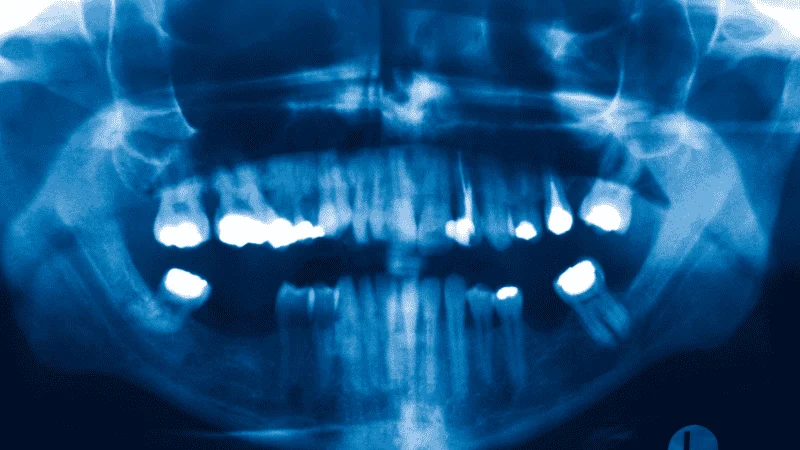
Your dentist will check your jawbone with X‑rays or a 3D scan before placing dental implants. They look at bone height, width, and density.
Osteoporosis lowers bone density throughout your body. It can also affect your jawbone, but it does not automatically disqualify you from treatment.
Many experts note that people with osteoporosis can still receive implants when planning is careful.
If you have bone loss in certain areas, your dentist may suggest bone grafting. This builds up weak spots and improves implant stability.
Your medical history also matters. Long‑term use of antiresorptive drugs like bisphosphonates may affect healing, so your dentist and doctor should review your medication plan together.
Osseointegration in Reduced Bone Density
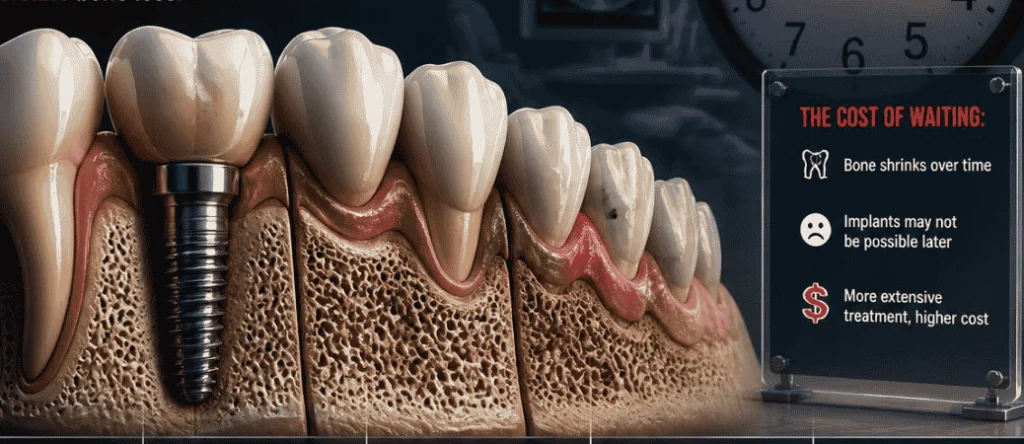
Osseointegration is the process where your jawbone grows around the implant and locks it in place. Strong bone contact is key for long‑term implant success.
With reduced bone density, this process may take longer. Your dentist may delay immediate loading, which means waiting before attaching the final crown.
Giving the implant more time can support better peri‑implant healing.
Research shows that osteoporosis alone does not appear to harm implant outcomes.
A large systematic review and meta-analysis on implant survival in osteoporotic patients found no clear difference in implant survival or failure compared to people without osteoporosis.
Still, healing varies from person to person. Good oral hygiene and regular follow‑ups help protect the bone around the implant.
Success Rates and Implant Survival
You may wonder, can you get dental implants if you have osteoporosis and expect them to last? Current research gives reassuring data.
In many studies, implant survival stays high when dentists plan treatment carefully. This includes:
- Checking bone density
- Adjusting healing time
- Monitoring marginal bone loss
- Coordinating care with your physician
Implant success depends more on surgical technique and follow‑up care than on osteoporosis alone.
Implant Failure Risks
Even with good planning, implant failure can occur. Osteoporosis may increase certain risks, but it does not guarantee problems.
Potential concerns include:
- Slower peri‑implant healing
- Reduced primary stability in weak bone
- Marginal bone loss over time
- Rare complications linked to antiresorptive drugs
Long‑term use of some bone medications has been linked to a rare but serious condition called medication‑related osteonecrosis of the jaw.
This risk stays low in most people treated for osteoporosis, but you should discuss it before surgery.
Regular checkups, daily brushing and flossing, and early treatment of gum inflammation lower your risk.
With careful planning and follow‑up, many people with dental implants and bone loss maintain stable results for years.



Impact of Osteoporosis Medications on Dental Implants
Osteoporosis drugs can change how your jawbone heals after implant surgery. Some medicines slow bone breakdown, which helps prevent fractures but may affect how your implant bonds with bone.
Oral and Intravenous Bisphosphonates
Bisphosphonates slow the activity of cells called osteoclasts. These cells break down bone. By reducing bone loss, drugs like alendronate (Fosamax), risedronate (Actonel), and ibandronate (Boniva) help protect you from fractures.
Most people take these as oral bisphosphonates in pill form. Research shows that many patients on oral drugs can still receive implants with success rates close to people without osteoporosis.
A large review found no major drop in implant survival in patients with osteoporosis alone.
Intravenous bisphosphonates, such as zoledronic acid (Reclast), are stronger and stay in bone longer. Reclast and dental implants require careful planning because IV drugs carry a higher risk of healing problems than pills.
Your dentist will review how long you have taken the drug and your overall health before surgery.
Denosumab and Antiresorptive Therapy
Denosumab is another form of antiresorptive therapy. It works differently from bisphosphonates, but it also slows bone breakdown. Doctors often give it as an injection every six months.
Unlike bisphosphonates, denosumab does not stay in bone for years. Its effects wear off faster after you stop treatment. That timing can matter when you plan implant surgery.
Some reviews report that patients on antiresorptive therapy do not always need to stop treatment before implant placement, especially when used for osteoporosis rather than cancer.
Your dentist and physician should work together. They will weigh your fracture risk against your dental needs before changing any medication.
Potential Complications and Osteonecrosis of the Jaw
The main concern with bisphosphonates and dental implants is a rare condition called osteonecrosis of the jaw (ONJ). It is also known as medication-related osteonecrosis of the jaw (MRONJ).
ONJ happens when part of your jawbone does not heal after surgery and becomes exposed.
It occurs more often in people on high-dose IV drugs for cancer, but it can also happen in osteoporosis treatment, though rarely.
One pooled analysis estimated the risk of MRONJ after implant placement in osteoporosis patients at about 0.5%, or 1 in 200 people.
Other possible issues include delayed healing or implant failure. Still, many patients with osteoporosis complete implant treatment without serious problems.
Drug Holidays and Clinical Considerations
A drug holiday means you stop bisphosphonate therapy for a short time before and after surgery. Some providers suggest this for long-term users, but the evidence is mixed.
Bisphosphonates can stay in your bone for years. Because of that, a short break may not fully remove the risk. For denosumab, timing the injection cycle may be more important since the drug leaves your system faster.
Never stop bisphosphonate therapy or denosumab on your own. Stopping suddenly can raise your risk of fractures.
Your dentist will look at:
- How long you have taken the medication
- Whether you use oral or intravenous bisphosphonates
- Your overall bone density and fracture history
- Your oral health and need for extractions
With careful planning, many people on osteoporosis medication can still move forward with dental implants safely.
Evaluation, Consultation, and Treatment Planning
Getting dental implants with osteoporosis or while on bone medication starts with a careful review of your health, bone strength, and personal risk factors.
Your dentist uses exams, imaging, and medical input to decide if implants are safe and how to plan them.
Role of the Dentist in Assessment
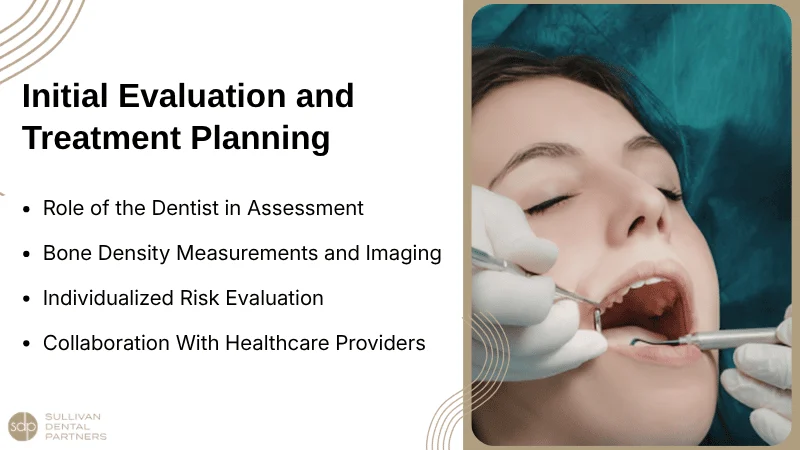
Your dentist leads the evaluation process. They review your full medical history, including any diagnosis of osteoporosis, osteopenia, or past fractures.
You should share details about medications such as bisphosphonates or denosumab. These drugs can affect bone healing and may raise the risk of rare problems like jawbone damage after surgery.
A recent systematic review and meta-analysis on osteoporosis and dental implant survival found no clear drop in implant success rates in patients with osteoporosis alone.
This means your diagnosis does not automatically rule out implants.
Your dentist also checks your gums, bite, and oral hygiene. Healthy gum tissue and good plaque control lower the risk of implant failure.
Bone Density Measurements and Imaging
Bone mineral density helps your dentist understand how strong your bones are. Many people learn their status from a DXA scan (dual-energy X-ray absorptiometry).
A DXA test gives you a T-score:
- -1.0 or higher: normal bone density
- -1.0 to -2.5: osteopenia
- -2.5 or lower: osteoporosis
Your dentist may request a copy of your DXA report. This gives context but does not show jaw bone details.
For implant planning, your dentist often orders a CBCT scan. This 3D image shows bone width and height in the exact implant site.
Some systems estimate bone density using gray values or Hounsfield units (HU), though these are not the same as a DXA score.
This step helps your dentist decide if you need bone grafting or a shorter or wider implant.
Individualized Risk Evaluation
Your treatment plan depends on more than a single T-score. Your dentist looks at:
- Type and duration of bone medication
- History of jaw surgery
- Smoking status
- Diabetes or other health issues
- Oral hygiene habits
Osteoporosis itself is not considered a strict barrier to implants, as explained in this review on osteoporosis and implant candidacy. Still, medication use changes the risk picture.
For example, long-term antiresorptive therapy may slightly increase the risk of delayed healing. Your dentist weighs this against the benefits of replacing missing teeth.
They may adjust the surgical plan. This can include slower drilling, staged placement, or longer healing time before attaching the crown.
Collaboration With Healthcare Providers
Your dentist may contact your primary care doctor or endocrinologist. This step helps confirm your diagnosis and review your current medication plan.
In some cases, your doctor may advise on timing. They might suggest delaying implant surgery or reviewing drug schedules, especially if you take high-dose or long-term antiresorptive drugs.
You should never stop bone medication on your own. Any change must come from your prescribing doctor.
Clear communication between your dentist and medical team supports safe care. When everyone understands your bone health and treatment goals, you can move forward with a plan that fits your specific needs.
Enhancing Implant Success in Osteoporotic Patients
You can improve implant success even if you have low bone density or take bone medication. Careful planning, smart design choices, and close follow-up care all play a direct role in long-term results.
Bone Grafting Techniques
If your jawbone lacks enough width or height, your dentist may recommend bone grafting before implant placement. This step builds a stronger base so the implant can anchor firmly.
Common graft materials include:
- Your own bone (autograft)
- Donor bone (allograft)
- Synthetic bone substitutes
These materials support new bone growth and help osteoblast cells form healthy bone around the implant. Strong bone growth improves implant stability and lowers early failure risk.
Your dentist may also use guided bone regeneration. This method places a barrier membrane over the graft to protect it while new bone forms.
Research shows that osteoporosis alone does not lower implant survival rates, according to a review on the impact of osteoporosis on dental implant survival and failure.
Even so, careful graft planning remains important when bone volume is low.
Healing time after grafting often ranges from 3 to 6 months. Your provider will confirm that the graft has integrated before placing the implant.
Stability and Implant Design Options
Strong implant stability at placement is one of the most important success factors. Your surgeon may adjust the drilling technique to preserve as much bone as possible.
Implants with roughened or treated surfaces help bone cells attach more easily. These surfaces support faster peri-implant healing and better bone contact.
Wider or longer implants may improve stability if your bone size allows. In softer bone, tapered implants often provide better initial grip.
Immediate loading, where a crown is placed soon after surgery, may not suit everyone with osteoporosis. Your dentist will measure insertion torque and bone quality before deciding.
In some cases, waiting several months before adding chewing pressure protects the healing bone.
If you take antiresorptive drugs such as bisphosphonates or denosumab, your provider will assess your risk for medication-related jaw problems.
Some guidance suggests that patients can still receive implants without stopping therapy.
Monitoring and Maintenance After Implant Placement

Regular follow-up visits help detect small problems before they grow. Your dentist will check:
- Gum health
- Bone levels on X-rays
- Implant mobility
Peri-implant bone loss can occur slowly. Early detection allows quick treatment.
You should brush twice daily and clean around the implant with floss or special brushes. Good plaque control lowers inflammation and protects the bone around the implant.
If you take bone medication, inform both your dentist and physician about any oral pain or delayed healing. While serious problems are rare, antiresorptive drugs have been linked to jaw complications in certain cases.
Professional cleanings every 3 to 6 months often work best for higher-risk patients.
Adjunctive Medications and Future Trends
Some medications may support bone healing around implants. Teriparatide, an anabolic drug, stimulates osteoblast activity and promotes new bone formation.
Doctors sometimes prescribe teriparatide for severe osteoporosis. Early research suggests it may improve bone repair, but dentists must coordinate closely with your medical team before any changes.
Researchers continue to study implant surface coatings that attract bone cells and speed peri-implant healing. Growth factors and bioactive materials may further improve integration in patients with low bone density.
If you receive bisphosphonates, some evidence suggests they may not harm implant survival and may even help preserve bone around implants when managed carefully.
Clear communication between you, your dentist, and your physician remains the most important step in improving results.
Frequently Asked Questions
Many people with osteoporosis still qualify for dental implants with careful planning. Your bone health, medication history, and imaging results guide the final decision.
Is osteoporosis a deal-breaker for getting dental implants?
No, osteoporosis does not automatically rule you out. Research shows that implants can still succeed in people with low bone density, though bone around the implant may thin more over time.
Osteoporosis did not lead to higher overall implant failure rates. Your dentist will check how much healthy jawbone you have before moving forward.
If your jawbone is too thin in certain areas, you may need a bone graft first.
How do osteoporosis medicines affect implant healing and success?
Some medicines, especially bisphosphonates and denosumab, slow bone breakdown. That helps prevent fractures, but it can also affect how your jaw heals after surgery.
In rare cases, these drugs link to a condition called osteonecrosis of the jaw, where bone does not heal properly. The risk appears higher with intravenous treatment than with pills.
What should I tell my dentist about my bone medication history before implant surgery?
Tell your dentist the exact name of the drug, how long you have taken it, and the dose. Share whether you take pills or receive IV infusions.
Also mention any past dental surgeries and how you healed. This helps your dentist judge your risk and plan safe treatment.
Some clinics explain how they review medical history and bone health in detail before surgery.
Do I need a bone density test or special scans before considering implants?
Your dentist usually orders detailed imaging of your jaw, such as a 3D cone beam CT scan. This shows bone height, width, and density at the implant site.
If you already have a DEXA scan for osteoporosis, bring the results. Some providers also review bone scans and CT imaging as part of planning.
These tests help your dentist decide if you need grafting or a different implant approach.
What are the risks of jawbone complications when taking bisphosphonates or similar drugs?
The main concern is osteonecrosis of the jaw. This condition is rare, but it can cause delayed healing and exposed bone after surgery.
Your risk depends on the type of drug, the dose, and how long you have used it. IV therapy and long-term use carry higher risk than short-term oral treatment.
Good oral hygiene and careful surgical planning lower your risk.
Are there safer implant or grafting options for people with low bone density?
If your jawbone lacks volume, your dentist may suggest bone grafting to build a stronger base. Research shows that many implant surgeries involve grafting when bone is thin.
Your dentist may also choose wider or longer implants, or place them in areas with thicker bone. Careful placement and follow-up visits improve long-term stability.